The promises and pitfalls of GLP-1 drugs
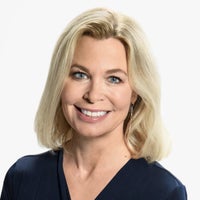
It's that season again – the most uncovered time of the year. For some, swimsuits can be an issue, but not for Carly Anderson. The former elementary schoolteacher is now an online influencer, whose content celebrates people of all shapes, including her own.
"Years and years ago, I started an online community called Just Wear the Suit," she said, "and it was really just encouraging women to work on being comfortable where they were. It was really about female empowerment and just feeling at home in our bodies."
But her own body was holding her back. For years, she suffered from chronic, incapacitating inflammation of her joints. "I remember telling my husband, this is what it felt like to be old," she said. "I would wake up with severe back pain every single morning. It was to the point where I thought, well, I guess this is just life now at 46."
So, after trying practically every remedy out there, Anderson's doctor suggested that her inflammation might be helped by an off-label use of a GLP-1. To her, it was "one-hundred percent a last resort. I think, as someone that had done so much work myself on feeling at home in the size of my body, I was very resistant."
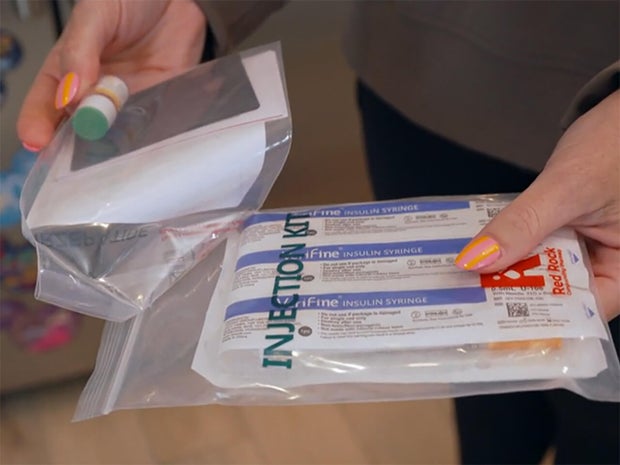
But then, "I gave myself the first dose of this medication, and within three hours I started to think, something's happening. And I could literally feel inflammation start to leave my body. It was the most wild experience I think I've ever had in my life. Within four or five days, I did not have – I was having joint pain in my back – it was gone. Literally gone. And then it just, over time, got better and better."
She said the joint pain went away even before she lost 40 pounds.
Anderson has joined more than 30 million people in the U.S. who are on GLP-1s. The drugs were approved 20 years ago as a treatment for diabetes, until researchers noticed that patients were also losing some pretty significant weight.
There are now more than a dozen approved GLP-1 drugs, some in pill form, and there are newer versions on the way.
Yale endocrinologist Dr. Ania Jastreboff said they're transforming every aspect of the lives of her patients: "Their health, being able to chase your grandkids, being able to tie your shoes, being able to wrap a towel around your body."
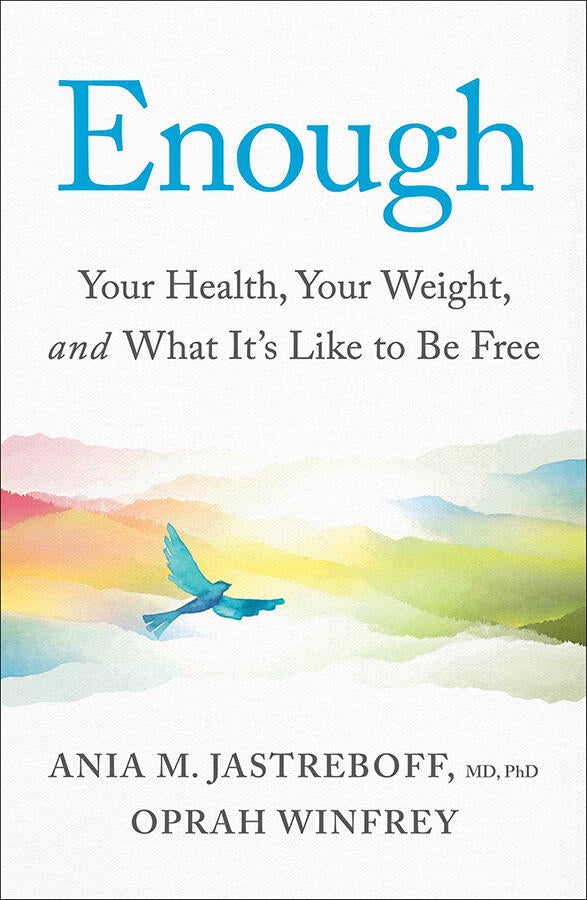
Jastreboff is author of "Enough," a book she co-wrote with Oprah Winfrey about causes and treatments for obesity. She says it's still too early to claim victory, but in the U.S., obesity rates appear to be heading downward. And the drugs might be useful in ways that haven't been fully studied yet.
Jastreboff says that she believes, by treating obesity early, we're going to prevent, mitigate, and treat hundreds of other diseases, such as high blood pressure and diabetes. "It's going to take a lot more time and more studies to really understand how treating obesity will impact those types of diseases, like cancer," she said. "But think about the potential. … By treating obesity, if we're impacting obesity and potentially 200 obesity-related diseases and complications, these medicines will save millions of lives."
Like any drug, GLP-1s could have side effects, the most common being gastrointestinal distress. And a small group of patients reported experiencing something called anhedonia, nicknamed ozempic personality.
Dave Knapp, founder of the obesity care podcast On the Pen, says when he first started on GLPs he lost interest in things he used to be obsessed with. "It's just that a lot of the things that used to interest me, just, I could take or leave," he said. "Interestingly enough, the biggest tip-off for me was Chicago Cubs baseball, something that I had followed very closely for many, many years. And I realized it's been a couple years since I really followed it at all."
After he'd adjusted his medication, Knapp said, "I noticed after a few weeks my head started to clear up. The sun started to shine a little bit brighter. The birds chirped a little bit louder. I noticed that my zest for some of those things started to come back, including Cubs baseball, even though it was just in time for them to hit a big losing streak."
Of course, another issue with these medications is cost. While Medicare and Medicaid will start covering these drugs this summer, many patients on private insurance can't afford a once-a-week shot.
That's one of the reasons a doctor at Scripps Clinic in San Diego is studying ways to get around that. In a very informal study, obesity specialist Mitch Biermann found that some of his patients maintained their weight loss even if they spaced their weekly shots out to two or three times a month.
"It's not a randomized control trial, and in particular it's not a controlled trial; this is just people's weight, you know, before they started and then, you know, once they started doing every other week," Biermann said.
Now, Biermann says, "I tell people that they don't have to be on it every week for the rest of their life. Most people who reach a normal weight on Ozempic or tirzepatide, Zepbound, Semaglutide, will maintain that weight if they space it out to every other week."
He says he hopes to do a clinical trial in the near future.
As a distance runner, Carly Anderson may be setting the pace for the future of GLPs. "I've cut like a minute off my mile. That's pretty significant. Anyone who runs knows, that's a lot."
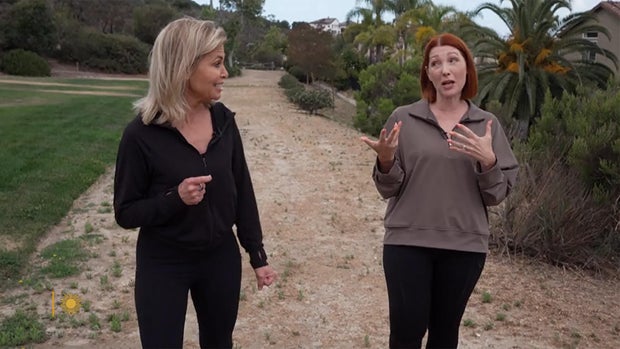
For her, it's not about what she's lost, but what she's gained. "I thought, okay, the worst-case scenario is, I take this medication (it's a weekly dosage) once or twice, I feel awful, I don't like it, and I never take it again. The best case is that future me thanks current me. And I remember saying to someone, 'What if six months from now I look back and say, this is the best thing I've done for myself?'"
So, how life-changing has this GLP-1 been for her? "It is mind-boggling how different I feel every day, every single day," Anderson said.
READ AN EXCERPT: "Enough" by Dr. Ania Jastreboff and Oprah Winfrey
For more info:
- Carly Anderson on Instagram
- "Enough: Your Health, Your Weight, and What It's Like To Be Free" by Ania M. Jastreboff, M.D., Ph.D., and Oprah Winfrey (Avid Reader Press), in Hardcover, eBook and Audio formats, available via Amazon, Barnes & Noble and Bookshop.org
- Ania Jastreboff, M.D., Ph.D., Yale School of Medicine
- Dave Knapp, "On The Pen" Podcast
- Obesity specialist Dr. Mitch Biermann, Scripps Clinic Carmel Valley, San Diego
Story produced by John D'Amelio. Editor: Remington Korper.