Illustrating myths: The Lucas Museum of Narrative Art opens

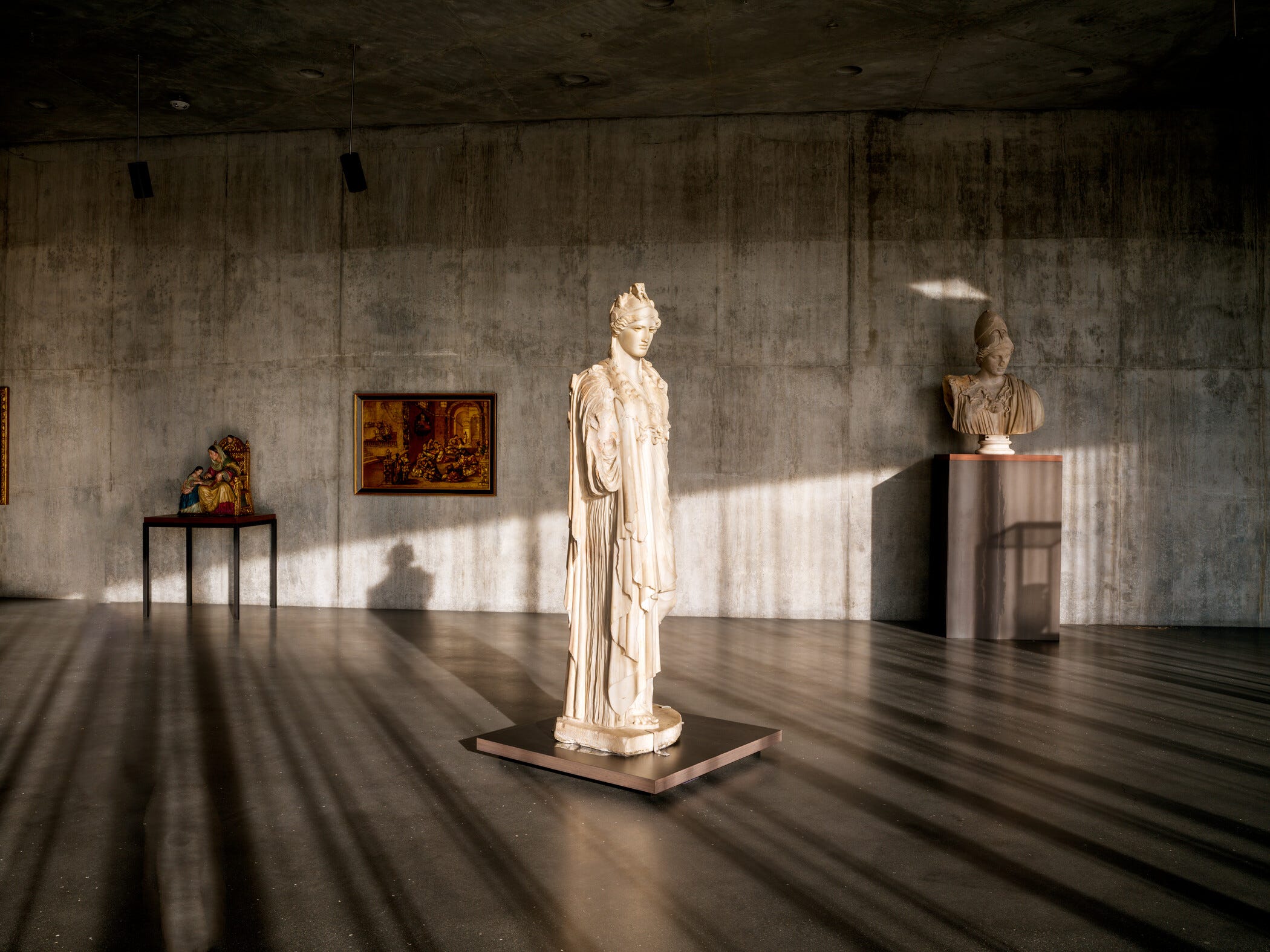
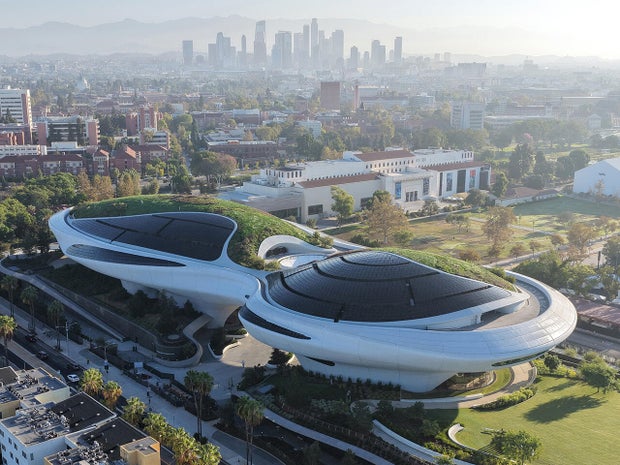
Just south of downtown Los Angeles, there's something new, something that looks like it came from a galaxy far, far away. No, it's not the next Millennium Falcon; this 300,000-square-foot building is the Lucas Museum of Narrative Art, where more than 1,300 pieces of art are on display.
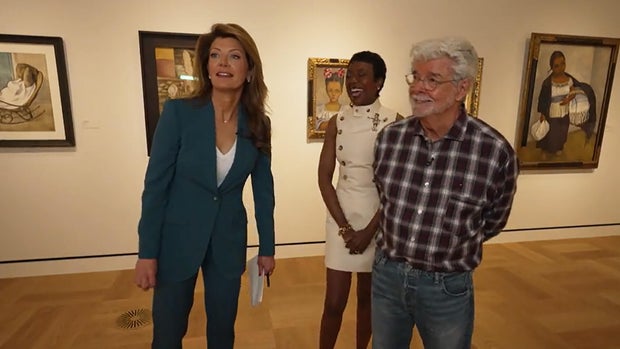
Our tour guides: The co-founders, "Star Wars" creator George Lucas, and his wife, businesswoman Mellody Hobson, giving CBS News their only interview.
"No matter what you look at here, it's emotional," Lucas said. "I kept saying, 'It's not a 'Star Wars' museum, it's a narrative art museum. It's about telling stories.' When we finally found a home here in L.A., I said, 'Well, we can't not have some "Star Wars" stuff in it, because that's what's driving a certain group of people that love "Star Wars" into the museum.'"
According to Hobson, the sci-fi franchise only accounts for about seven percent of the art in the museum, "but it packs a punch. It's beautiful."
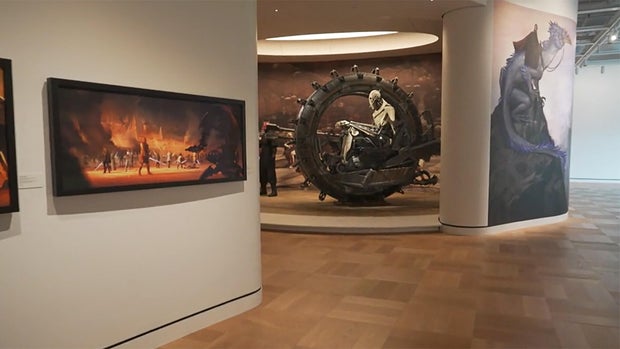
The other 90-ish percent of the museum focuses on what Lucas and Hobson call "myths," with 33 galleries organized around themes such as motherhood, work, family and love.
"We're using the word myth a lot," said Hobson. "Myths are things you believe, but they're not necessarily true."
"But you believe them because they're emotionally true," Lucas added.
Is love a myth? "Love is complex," Lucas said. "Love isn't something that's easy."
Hobson said, "Most depictions of love that we see are the happy versions of love. It's the romanticized view of love. Love is actually heartbreak, pain, anguish, but the myth of love is happiness and joy."
The journey to building Lucas' brainchild took nearly two decades, a number of setbacks, multiple proposed locations, and at least $1 billion of Lucas' own money. And Lucas says, while Hobson considered shelving the project, he did not.
Hobson recalled a very intense moment: "I said, 'George, let's just give the art to another museum and, like, call it a day.' And he looked at me and he said, 'I am building this museum!' And it was like the most intense version of him I had ever seen. We're not ones to argue. And I was like, 'OK, we're building a museum.' I was like, got it. This is a non-negotiable."
Lucas said the reason was his strong desire to honor illustrators: "I did tours of major museums, and the director would say, 'Well, I hear you're building a museum. What kind of museum is it?' I said, 'It's narrative art.' He said, 'I've never heard of that.' I said, 'Well, it's art that illustrates a story.'"
Filmmaker Steven Spielberg has been best friends with Lucas for almost 60 years, and serves on the museum's board of directors. He said, "George has changed the world with some of his ideas, as he's going to change the world with the Lucas Museum of Narrative Art. Give people a place to go to see illustration art, to see muralists, to see comic art, to see children's art. He's giving a forum, a venue for artists that are not always accepted in the institutions of the art world."
The two share a love of not just movies, but also Norman Rockwell. "George has about three times the number of [Rockwell] paintings as I have," Spielberg said. "I think I began collecting Rockwell first, and then George caught up, and then went way beyond me."
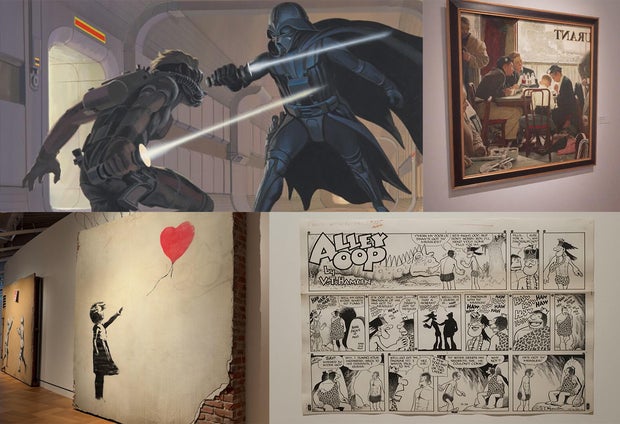
Around each bend is something interesting to look at: A Rockwell, depicting a museum-goer taking in a Jackson Pollack. There's Batman, a rare Frida Khalo, and the first piece of art Lucas ever collected, an "Ally Oop" comic strip, purchased while he was in college for about $35. "It's the only thing I could afford," he said.
He can now afford much more. The 82-year-old is not only known for blockbuster franchises like "Star Wars" and "Indiana Jones," but his companies pioneered digital editing and revolutionized special effects.
Asked if he sees the museum that bears his name as his legacy, Lucas replied, "I don't think about legacies. I'm not a big one for awards, I'm not a good one for reputation or legacies or anything."
"He's not sentimental," said Hobson. "There's no nostalgia, zero. We put Lucas on the building to get people to come."
The museum opens to the public on Tuesday, and Hobson has a new hope: "I want them to leave the building and say, anything is possible. It's a masterpiece. You can create your own masterpieces. Anyone can, all of us can do it. We just have to be as …"
"Stubborn!" said Lucas.
"… absolutely committed," said Hobson, "as he has been in this process. And if one child, 10 children, 100,000 children walk out with that point of view, we will have done something remarkable."
Remarkable, and – true to Lucas' career – innovative. "I'm a contrarian," he said. "Contrarians are the ones that nobody likes, because they're thinking outside the box, and they're doing things that nobody's ever done before, so they always assume that it's wrong. You know, those are people who said, 'I don't care. I know it seems impossible, but I'm gonna do it.'"
The Lucas Museum of Narrative Art in Los Angeles opens Sept. 22.
WEB EXCLUSIVE: Watch an extended interview with George Lucas and Mellody Hobson (Video)
Story produced by Julie Morse Goff and Robert Marston. Editor: Carol Ross.