Study: Steep hurdles for voters in states with ID laws
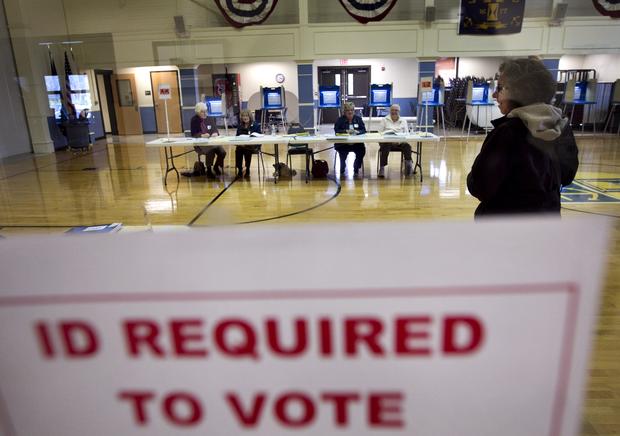
(CBS News) Amid ongoing controversy surrounding a spate of new voter ID laws being enacted in the U.S., a new study by the Brennan Center for Justice at the New York University School of Law argues that the laws sets up a series of hurdles that could prevent thousands of voters from getting to the polls this fall.
Ten such state laws have so far passed in the United States, adding fuel to the debate over whether or not voter ID laws prevent fraud, as proponents argue, or lead to disenfranchisement, as opponents contend.
The study, written by NYU's Keesha Gaskins and Sundeep Iyer, who oppose voter ID laws, supports the latter argument, contending that free photo IDs are not equally accessible to all voters - particularly those who live in areas with high poverty rates, black and Hispanic voters, and voters who don't have cars.
"We really are talking about a population of individuals that could very well influence the outcome" of the November elections, said Gaskins, in a Wednesday conference call. "These laws undermine the principles of fairness and equality promised by the Constitution."
Citing long distances between state ID-issuing offices, limited hours of operation during which these offices are open, the high costs of documents needed to obtain an ID, and government bureaucracy, Gaskins and Iyer say thousands of voters will be unable to vote in upcoming elections due to their lack of government-issued ID.
According to the study, there are about 500,000 eligible voters without access to a vehicle who live more than 10 miles from a state ID-issuing office open more than two days a week.
For instance, in Wisconsin, Alabama, and Mississippi -- three of the states that have passed these voter ID laws -- fewer than half of all ID-issuing offices are open five days a week, according to the report, and none are open on the weekends. Some offices, the report states, maintain what it calls "truly unusual" hours, such as the ID-issuing office in Woodville, Mississippi, which is open only on the second Thursday of each month.
Pointing to counties in Alabama and Texas, the report also posits that black and Hispanic voters in certain rural populations will have an especially hard time accessing an open ID-issuing station, which they say are few and far between. Upon accessing these stations, the authors argue, the documentation needed to actually obtain a free voter ID are prohibitively steep.
"Instead of making it more difficult for citizens to go to the polls, we need new laws to modernize our voting system so all eligible Americans can vote on Election Day while reducing the potential for fraud or abuse," said Iyer.
"There will very likely be a significant number of citizens who will struggle to obtain voter ID due to structural barriers," added Gaskins.
The laws are currently in effect in only five of the ten states. In the other five states, the laws are either awaiting federal approval, on appeal after being found unconstitutional, or not scheduled to go into effect until after 2012.
Read the full report here.