Stem-Cell Cornea Fix: "Miracle" Treatment Restores Sight in People Blinded by Chemical Burns
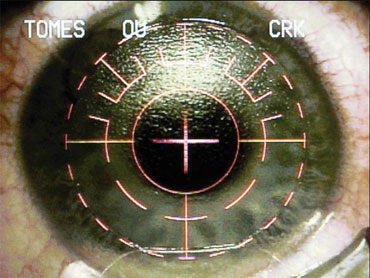
(CBS/AP) Dozens of people who were blinded or otherwise suffered severe eye damage when they were splashed with caustic chemicals had their sight restored with transplants of their own stem cells - a stunning success for the burgeoning cell-therapy field, Italian researchers reported Wednesday.
"This is a roaring success," said ophthalmologist Dr. Ivan Schwab of the University of California, Davis, who had no role in the study - the longest and largest of its kind.
The treatment worked completely in 82 of 107 eyes and partially in 14 others, with benefits lasting up to a decade so far. One man whose eyes were severely damaged more than 60 years ago now has near-normal vision.
Stem cell transplants offer hope to the thousands of people worldwide every year who suffer chemical burns on their corneas.
The approach, however, would not help people with damage to the optic nerve or macular degeneration, which involves the retina. Nor would it work in people who are completely blind in both eyes, because doctors need at least some healthy tissue that they can transplant.
In the study, published online by the New England Journal of Medicine, researchers took a small number of stem cells from a patient's healthy eye, multiplied them in the lab and placed the into the burned eye, where they were able to grow new corneal tissue to replace what had been damaged.
Since the stem cells are from their own bodies, the patients do not need to take anti-rejection drugs.
The Italian study involved 106 patients treated between 1998 and 2007. Most had extensive damage in one eye, and some had such limited vision that they could only sense light, count fingers or perceive hand motions. Many had been blind for years and had had unsuccessful operations to restore their vision.
Adult stem cells have been used for decades to cure blood cancers such as leukemia and diseases like sickle cell anemia. But fixing a problem like damaged eyes is a relatively new use.
Researchers have been studying cell therapy for a host of other diseases, including diabetes and heart failure, with limited success.
Adult stem cells, which are found around the body, are different from embryonic stem cells, which come from human embryos and have stirred ethical concerns because removing the cells requires destroying the embryos.
Those patients with restored site "were incredibly happy. Some said it was a miracle," said one of the study leaders, Graziella Pellegrini of the University of Modena's Center for Regenerative Medicine in Italy. "It was not a miracle. It was simply a technique."