Everything we know about Minnesota's massive fraud schemes
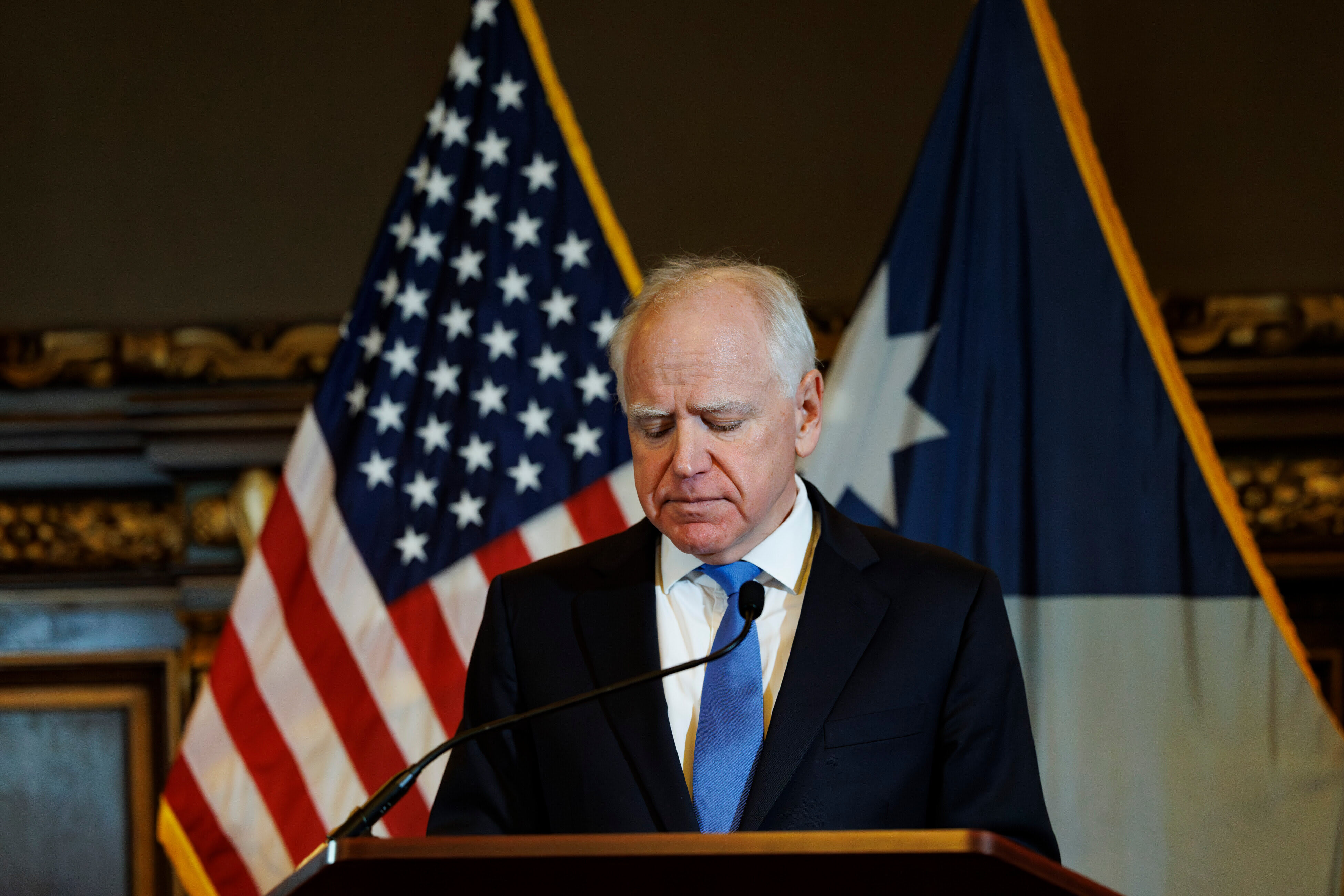
As national attention focuses on the growing fraud scandal in Minnesota, which federal prosecutors estimate could top $9 billion, the state's Democratic Governor Tim Walz announced he is dropping his reelection campaign.
Right before New Year's, a viral social media video by YouTuber Nick Shirley, which was amplified by Elon Musk, Vice President J.D. Vance and Attorney General Pam Bondi, pushed the fraud story into the center of the national conversation, stoking a scandal that has been brewing in state politics for years.
In the wake of the video, the Trump administration announced it is pausing federal funding to child care in Minnesota, with President Trump calling Minnesota a "hub of fraudulent money laundering activity." The U.S. Department of Health and Human Services also announced sweeping changes to how all states must submit claims for Medicaid-supported daycares, including requiring "a justification and a receipt or photo evidence before we send money to a state."
Even before the video spread far across the internet, however, scandal plagued Minnesota. In 2021, federal law enforcement first probed a series of multimillion dollar fraud schemes. Those fraud schemes have led to federal charges against 92 people with 62 convicted — and counting.
President Trump and other Republican lawmakers have focused attention on the state's large Somali community, as most of the fraud defendants are of Somali descent, drawing stiff criticism from local officials, including Walz, who denounced Mr. Trump's criticism as "vile, racist lies and slander towards our fellow Minnesotans."
Walz, meanwhile, has faced intense scrutiny from both inside and outside Minnesota over his administration's handling of the crisis. The governor has acknowledged in recent weeks that the fraud problem could stretch into the billions, but disputed the $9 billion figure cited by prosecutors.
While Shirley's video focused on allegations of fraud in daycares in Minneapolis, federal investigators told CBS News child care is only "vaguely" a priority for prosecutors, and attention and resources are instead focused on more than a dozen other social services programs in Minnesota, including nutrition, housing and behavioral health.
Here's what you need to know:
Feeding Our Future: The case that started it all
- This COVID-era $250 million scheme — which now includes upwards of 75 defendants — revolved around a nonprofit group called Feeding Our Future. The group claimed to work with restaurants and caterers to distribute meals to schools and extracurricular programs but instead submitted fake meal count sheets and invoices, raking in millions in administrative fees and getting kickbacks from people who ran their meal distribution sites, prosecutors said.
- Feeding Our Future founder Aimee Bock was convicted in March 2025, and more than 60 others involved in the scheme have pleaded guilty or been convicted.
- Early on, Minnesota officials questioned some of the group's filings and slowed approvals of reimbursements, prompting Feeding Our Future to file a lawsuit accusing the state of racial discrimination. The state auditor's office found that "the threat of legal consequences and negative media attention" affected the state's decision-making process about regulatory action against Feeding Our Future.
- What federal prosecutors called "the largest pandemic era fraud in the United States" is "just the tip of a very large iceberg," according to FBI Director Kash Patel.
Fraud in a housing program with "low barriers to entry"
- In August 2025, state officials shut down a fairly new program designed to help seniors and people with disabilities find housing after discovering "large-scale fraud."
- A month later, federal prosecutors charged eight people with defrauding the program, which was run through the state's Medicaid service, by enrolling as providers and submitting millions in "fake and inflated bills."
- Another five people were charged with bilking the housing program in mid-December — including two Pennsylvanians with no clear connections to Minnesota who allegedly traveled there in what prosecutors described as "fraud tourism."
- Prosecutors said the housing stabilization program was susceptible to fraud because it intentionally had "low barriers to entry" and few record-keeping requirements. They also noted that spending on the program had ballooned to more than $100 million last year, despite initial estimates that it would cost around $2.6 million a year.
Autism program fraud
- In recent months, two people were charged with defrauding a third state program — in this case, one that provides services to children with autism. Both defendants were accused of hiring unqualified "behavioral technicians" and submitting false claims to the state that indicated the staff had worked with children enrolled in the program. They also allegedly paid kickbacks to parents who agreed to enroll their children in the program, in some cases sending them as much as $1,500, prosecutors said.
- One of the autism services defendants, Asha Farhan Hassan, was also charged with running a fraudulent food distribution site as part of the Feeding Our Future scheme. She pleaded guilty to wire fraud in December.
- First Assistant U.S. Attorney for the District of Minnesota Joseph H. Thompson said the autism services case "is not an isolated scheme." In total, 14 Medicaid services are under audit and deemed "high risk" for fraud.
Fraud claims against day care centers
- YouTuber Nick Shirley drew tens of millions of views in late December when he posted a video that showed him visiting federally supported child care centers around Minneapolis and finding no children present. He alleged nearly a dozen day care centers were not actually providing any service and suggested owners were pocketing the taxpayer funds.
- CBS News conducted its own analysis and visited several of the day care centers mentioned by Shirley: all but two have active licenses, according to state records, and all active locations were visited by state regulators within the last six months. One was subjected to an unannounced inspection as recently as Dec. 4. Our review found dozens of citations related to safety, cleanliness, equipment and staff training, but there was no recorded evidence of fraud. Another day care shared security footage of people dropping off young children the same day that Shirley arrived and claimed the day care was empty.
- Minnesota's Office of Inspector General carried out on-site compliance checks at nine of the centers and confirmed they were "operating as expected," officials said Jan. 2. Eight of the centers had children present, and one had not opened yet when it was inspected, the state said.
Fallout and response
- Shirley's viral video prompted the U.S. Department of Health and Human Services to freeze federal child care funding for the state of Minnesota, which receives roughly $185 million in federal support for child care.
- President Trump has largely blamed the Somali community, calling Somali immigrants "garbage" who "contribute nothing," which has incensed Minnesota lawmakers, who have accused him of demonizing the community at large. Mr. Trump ended temporary deportation protections for Somali immigrants who live in Minnesota, claiming without evidence that "Somali gangs are terrorizing the people of that great State."
- Minnesota Gov. Tim Walz has drawn widespread scrutiny for his handling of fraud in the state. But Walz has defended his administration's response, saying "we've spent years cracking down on fraudsters" and accusing Mr. Trump of "politicizing the issue to defund programs that help Minnesotans." On Jan. 5, Walz announced he is dropping his bid for a third term.
- Republican Rep. James Comer of Kentucky, the chair of the House Oversight Committee, opened an investigation into fraud in Minnesota's public assistance programs and announced plans for hearings with testimony from Walz and other officials.
- As the scandal took on new life in December, Walz unveiled a new statewide fraud prevention program, naming Tim O'Malley as the new director of program integrity.
Greed or national security risk?
- The Treasury Department is investigating whether tax dollars from Minnesota's public assistance programs made their way to al Qaeda affiliate al Shabaab, a U.S.-designated foreign terrorist organization based in Somalia.
- Multiple federal investigators told CBS News Minnesota there is no evidence taxpayer dollars were directly funneled to al Shabaab. "The vast majority of the money that these folks made went to spending on luxury items for themselves," said Andy Luger, the former U.S. Attorney who led the office which prosecuted the Feeding Our Future case from 2022 until January. "There was never any evidence that this money went to fund terrorism nor was there any evidence that was the intent of the 70 people we indicted."
- A CBS News review of the files shows that defendants spent taxpayer cash on cars, property and luxury travel. They also wired millions in stolen funds overseas, including to banks and companies in China, where finding the recipients of that cash can become an investigative black hole. The defendants also transferred nearly $3 million to accounts in Kenya.