Why a deadly, massive measles outbreak in Bangladesh has some U.S. health experts concerned
A measles outbreak in Bangladesh that has killed almost 400 people is spreading fast, and health experts say it could carry risks even for the U.S., where cases of the disease are already at levels not seen in decades as vaccination rates continue to fall.
Most of those killed by the measles outbreak in Bangladesh in recent weeks have been children. The country's Directorate General of Health Services (DGHS) says the number of suspected cases has surged to over 56,000, with regional media outlets saying many hospitals across the country are overwhelmed.
That number of suspected cases has more than doubled since the beginning of April.
CBS News has asked Bangladesh's public health minister Dr. M A Muhit to comment on the country's handling of the outbreak, but there was no response from his office by the time of publication.
Local news outlets have shown images of overcrowded hospitals, with some patients receiving treatment on floors due to a lack of beds. Aid agencies report that many of the infected are children who were either too young to be vaccinated or were only partially vaccinated.
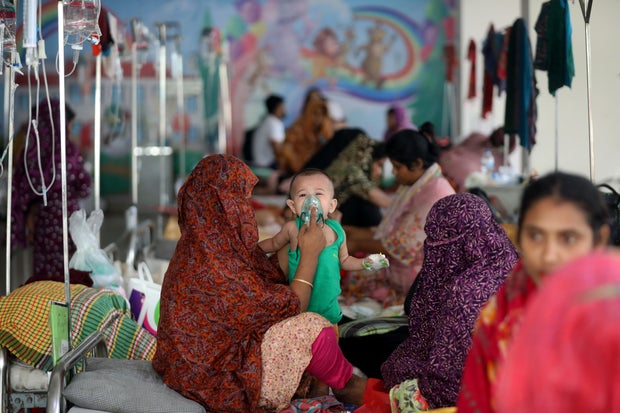
"There was an attempt to change the vaccine supply by the government last year, which led to vaccine delays, and we also observed a worrisome amount of partly or unvaccinated children over the last three years," Miguel Mateos Muñoz, with the United Nations children's charity UNICEF in Bangladesh, told CBS News. "To be effective there should be two doses of the vaccine, but we are seeing children who have received either only one dose of the vaccine or no vaccine at all."
What is measles and why is it dangerous?
Measles is among the most contagious viruses in the world. It is spread human-to-human relatively easily, most often by droplets that can hang in the air for hours when an infected individual coughs or sneezes.
If an unvaccinated person is exposed, there is about a 90% chance of them contracting an infection. Children and the elderly are particularly vulnerable, and the disease can lead to pneumonia symptoms, brain swelling, permanent disability and in a relatively low number of cases, death.
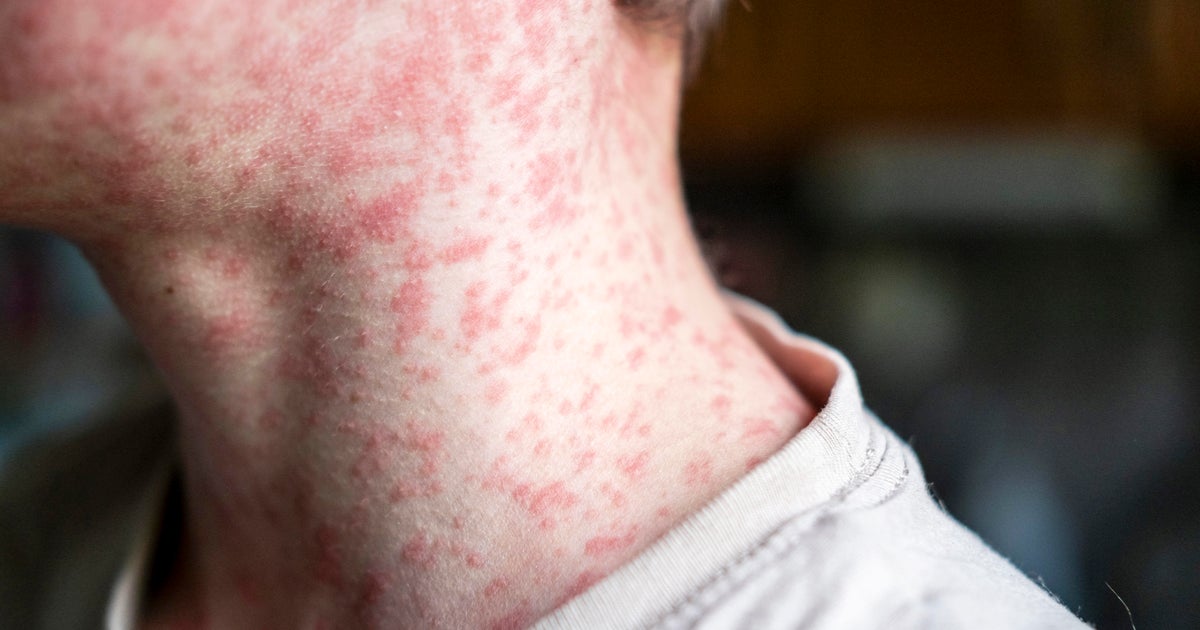
"An infected person can spread measles to others even before knowing they have the disease," according to the U.S. Centers for Disease Control and Prevention (CDC), which says people with the virus can spread it "from 4 days before through 4 days after" the trademark blotchy rash associated with the disease appears.
The World Health Organization notes that there is no specific antiviral treatment for measles, and while most people recover within two or three weeks, "measles can lead to complications such as pneumonia, diarrhoea, secondary ear infection, inflammation of the brain (encephalitis), blindness, and death."
"About two or three deaths may occur for every 1,000 reported cases," according to the WHO, which estimates that nearly 100,000 people died from the virus in 2024, despite the availability of effective vaccines.
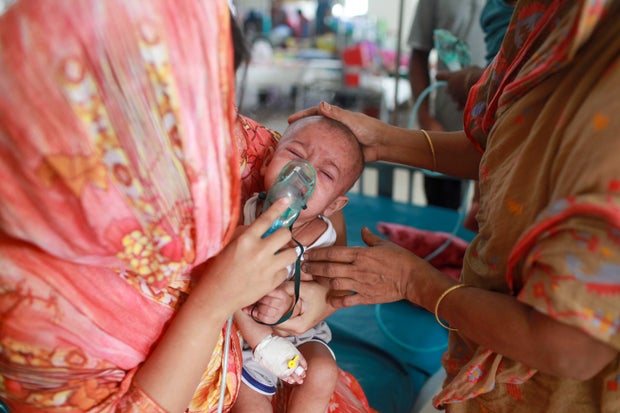
Measles has spread quickly through Bangladesh's densely populated cities and refugee camps, and as UNICEF's Muñoz explained, there's concern that it could spread further.
"Measles has been detected in 58 out of the 64 districts in Bangladesh, so it is across most of the country, and this is a country with movements across porous borders to neighboring countries," he told CBS News.
Cause for concern in the U.S.
The CDC has warned repeatedly that overseas outbreaks pose a direct risk to Americans' health because measles travels so easily across borders. The agency says measles anywhere can pose a threat everywhere, especially to populations with a vaccination coverage rate below 95%.
While measles vaccines have been available and widely administered in the U.S. since the 1960s, that 95% threshold is no longer being met uniformly across the country.
As of May 7, the CDC had recorded 1,842 confirmed measles cases in the U.S. since the beginning of the year, spread across 39 states and jurisdictions. Nearly 93% of those cases were linked to outbreaks, not isolated travel cases. By comparison, the U.S. recorded just 285 cases in all of 2024. In 2025, that case load soared to 2,288, the highest total since 1991.
Most of the people infected in the U.S. have been unvaccinated children or individuals with an unknown vaccination status, according to the agency.
CDC data show uptake of the combined MMR (measles, mumps and rubella) vaccination among U.S. kindergartners has dropped from about 95% before the COVID-19 pandemic, to as low as 92% nationally, leaving hundreds of thousands of children vulnerable.
County level research published last year by Johns Hopkins University showed vaccination rates declining in 78% of the 2,066 U.S. counties where data was gathered.
U.S. authorities only declared measles officially eliminated in 2000, meaning the virus is no longer spreading continuously within the country. But that status is now at risk.
Public health researchers and the Kaiser Family Foundation warn that ongoing outbreaks could lead to more than 12 months of uninterrupted transmission — a threshold that, if crossed, would mean measles was no longer technically eliminated in the U.S.
Canada lost its measles elimination status in late 2025 after a surge in cases not dissimilar to what the U.S. is seeing now.
The CDC says most U.S. outbreaks begin when an unvaccinated traveler brings the virus home from a country experiencing a large outbreak.
According to the CDC, Mexico, Guatemala, parts of South Asia (where Bangladesh is) and Africa are experiencing worrying outbreaks.
CBS News medical correspondent Dr. Céline Gounder said Monday that this summer will bring a major challenge for U.S. health officials as thousands of fans visit for the soccer World Cup championship, which is being jointly hosted by the U.S., Mexico and Canada.
"My biggest concern for the World Cup is actually measles. It's not hantavirus, it is not Ebola. Measles is what has me concerned," Gounder said, noting outbreaks of the highly infectious disease "in different parts of the world."
"We ourselves could be the source of the outbreak, because we have low levels of vaccination in certain pockets of the country, so that is my biggest concern," she said.
Racing the clock in Bangladesh
There is hope that Bangladesh can get its outbreak under control, UNICEF's Muñoz said.
Bangladesh's government, supported by UNICEF and the U.N.'s World Health Organization, has launched an emergency measles vaccination campaign.
"A rapid emergency vaccine campaign has been underway since the 5th May, and it has already reached its target of vaccinating 18 million children," he told CBS News.
He said to prevent future outbreaks, and keep them from spreading around the globe, "the most important thing is to restore immunisation."