Watch Live: Lindsay Clancy trial resumes with cross-examination of psychiatrist Jennifer Tufts

Lindsay Clancy's first psychiatrist is back on the witness stand as the Massachusetts murder trial enters its 10th day Monday.
You can watch the trial live on CBS News Boston in the embedded video or on YouTube.
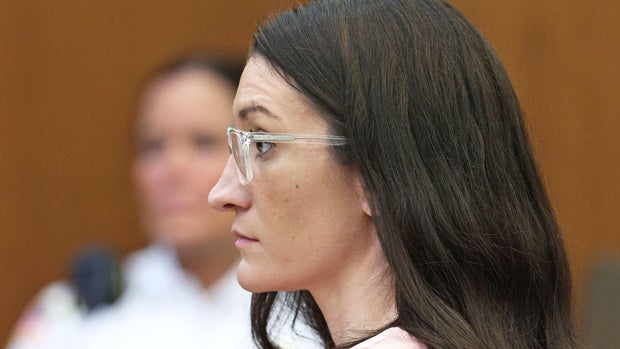
Clancy's attorney said she was overmedicated and suffering from extreme postpartum psychosis when she killed her three children in their home in Duxbury on Jan. 24, 2023. Prosecutors said Clancy knew what she was doing and suggested she faked a suicide attempt after the murders.
Clancy, 35, is charged with first-degree murder in the deaths of 5-year-old Cora, 3-year-old Dawson and 8-month-old Callan.
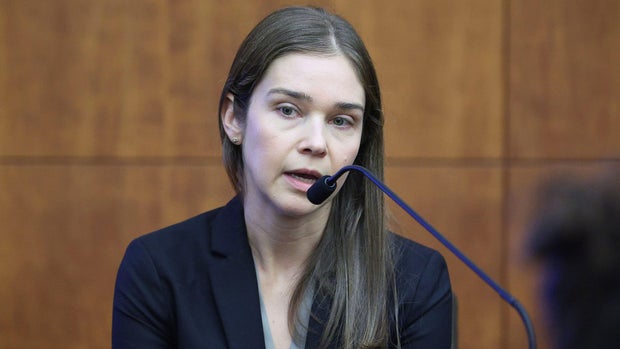
Dr. Jennifer Tufts, who started seeing Clancy as a telehealth patient in September 2022, testified for the prosecution Friday in Plymouth Superior Court. She is now being cross-examined by Clancy's attorney Kevin Reddington.
How medication impacted Lindsay Clancy
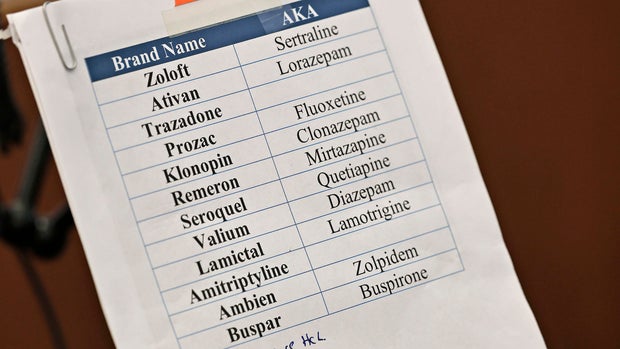
Tufts testified about her notes from conversations with Clancy in 2022 about how she was reacting to prescription medications.
"She felt awful, she couldn't sleep, had insomnia, which became worse when she increased the dose," Tufts said.
The psychiatrist said at one point Clancy noted she was "crying all day yesterday," had mental fog, and "was terrified to start something new."
"Anxiety was really bad even before medication. Now hard to differentiate. Overnight, racing thoughts. Paranoid of getting suicidal thoughts, something bad happening, doesn't want to be alone," Tufts said, reading from her notes.
Reddington asked if this was an indication of a patient in trouble.
"I was concerned, yes," Tufts said.
Calls to suicide hotline
Tufts said that Clancy told her during treatment she "denied feeling suicidal but was close to feeling suicidal."
Reddington asked Tufts if she ever asked Clancy about calling the suicide hotline. Tufts said she did not think she ever asked that question to Clancy.
The defense attorney asked if it would surprise Tufts to learn that Clancy had called the suicide hotline twice but was turned away.
"It does surprise me, yes. It surprises me that she called them twice," Tufts said.
Lindsay Clancy's prescription drug use
Reddington questioned Tufts about her decision to prescribe Zoloft, an antidepressant, to Clancy.
"Did you tell her that one of the normal side effects was suicidal thoughts and actions and ideations?" the defense attorney asked.
"That's specifically in children. So I don't think I mentioned that because it wasn't relevant," Tufts responded.
Reddington disagreed with that answer, noting that there is a "black box warning" for Zoloft.
The defense attorney asked Tufts why it took Clancy a month to decide she wanted to take the prescription for Zoloft.
"I think it took her some time to decide if it was truly what she wanted to do," Tufts said.
Reddington asked Tufts, "She was afraid of the drugs wasn't she?" Tufts said, "She was afraid of the side effects."
"She didn't want to take the pills did she?" Reddington asked.
"She eventually did want to take the pills because she wanted to feel better," Tufts said.
Cross-examination of Dr. Jennifer Tufts
Reddington attempted to show the jury that in her website biography, Tufts advertised that she was an expert in postpartum depression and postpartum psychiatry. But Reddington said Tufts' experience in that area was only one month during her residency.
He asked Tufts if she felt it was negligent to advertise her credentials in that manner.
"I do not believe that I have been negligent," Tufts said. "I think the wording was it was an interest of mine. I don't believe I called myself an expert."
Reddington asked Tufts, "Are you an expert in postpartum?"
"I may be. I don't know. I think it depends on what you define an expert as," Tufts said.
Dr. Jennifer Tufts direct questioning
Tufts told the court on Friday that she saw Clancy in an appointment the day before the murders and that she never mentioned any plans to kill her children. Tufts said Clancy had no motivation and had to force herself to get out of bed and out of the house.
The doctor said she saw Clancy more than a dozen times over the course of five months and noted that Clancy never seemed psychotic.
Tufts told the court Clancy tried at least 10 medications to find the right combination to stop anxiety and depression that was getting worse. She said Clancy was reluctant to take the medicine and blamed the drugs for her deteriorating condition. Tufts testified she thought Clancy was "just depressed."
If convicted of first-degree murder, Lindsay Clancy faces life in prison without parole. If the jury finds that she was not criminally responsible for the deaths of her children, she will be sent to a mental health facility in Massachusetts.
If you or someone you know is in emotional distress or a suicidal crisis, you can reach the 988 Suicide & Crisis Lifeline by calling or texting 988. You can also chat with the 988 Suicide & Crisis Lifeline here.
For more information about mental health care resources and support, The National Alliance on Mental Illness HelpLine can be reached Monday through Friday, 10 a.m.–10 p.m. ET, at 1-800-950-NAMI (6264) or email info@nami.org.