Irene cuts power to 4M homes along East Coast
Last Updated 8:59 a.m. ET
NEW YORK - The number of power outages that can be blamed on Hurricane Irene has surpassed 4 million.
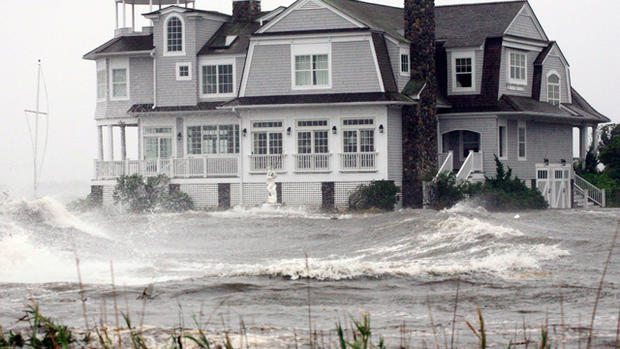
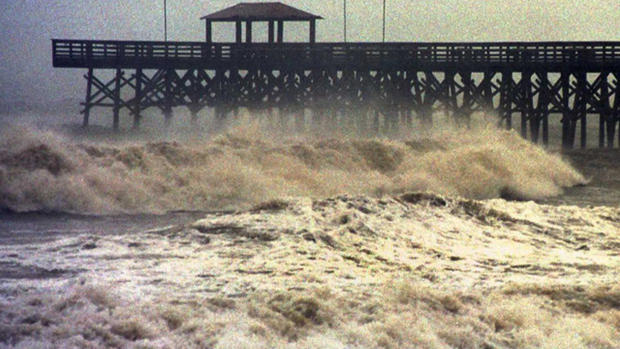
Winds of up to 115 miles per hour whipped across the East Coast, ripping power lines from poles and snapping trees in half.
More than one million of the homes and businesses are without power in Virginia and North Carolina, which bore the brunt of Irene's initial march. There are also at least 1 million customers without electricity in New Jersey and New York.
Maryland, Pennsylvania and Connecticut also have hundreds of thousands of outages.
The core of Irene is skirting the coast of New Jersey and is speeding toward New York and Connecticut.
In the New York City area, more than 480,000 lost electricity as Irene approached the area early Sunday.
Hurricane Irene tracker
Complete Coverage: Hurricane Irene
Con Edison said more than 52,000 New York City customers were without power early Sunday all in outer boroughs.
Con Ed and other utilities are reporting a total of more than 220,000 outages in Long Island and Westchester County. That includes Long Island Power Authority and NYSEG customers.
In New Jersey, utility PSE&G says about 214,000 customers statewide have lost electricity.
It could take days for the power to be restored.
Gasoline supplies also were falling as drivers fill up before leaving town or just top off their tanks as a precaution before the storm hits. Pump prices rose about 3 cents per gallon overnight in New Jersey and Pennsylvania.
Dominion Resources reported outages for more than 900,000 of its customers in Virginia and North Carolina, while Progress Energy reported around 190,000 customers without power.
Pepco, which serves Maryland, Washington D.C., parts of New Jersey and Delaware, reported more than 180,000 outages. Baltimore Gas & Electric said more than 400,000 of its customers were without power.
Video: The urban hurricane
Video: Hurricane wreaks havoc on travel
In eastern Pennsylvania, PECO reported nearly 300,000 customers without power. Along the Jersey shore, Jersey Central Power & Light was reporting more than 80,000 outages.
New York's biggest utility, Consolidated Edison, said it could cut power to the city's most vulnerable areas if the storm causes serious flooding. Salt water and rain can damage electrical equipment.
ConEd operations chief John Miksad said the utility doesn't expect to cut power before the storm hits, but flooding Sunday could bring a shutdown to areas including the southern tip of Manhattan. That would cut off power to major Wall Street institutions through parts of next week.
The New York Stock Exchange has backup generators and can run on its own, a spokesman said. The exchange expects to open as usual Monday morning, though it may change plans depending on the severity of the storm.
New York is regularly blasted by winter storms, but Miksad said this hurricane will be different. Irene's wind will pack a stronger punch than a nor'easter last March that knocked out power to 175,000 customers, he said.
ConEd has called in crews from as far as Colorado to help repair damage from the storm.
Irene is expected to be a brutal test for Middle Atlantic States, which haven't seen a hurricane since 1999. The storm is expected to stay just offshore and thus retain much of its power as it inches up the coast from North Carolina to New England. When a hurricane hits land, wind speeds diminish.
The entire Eastern Seaboard lies in the storm's projected path. Flooding and damage from winds are likely. North Carolina, Virginia, Maryland, New Jersey, New York, Connecticut and Rhode Island have declared emergencies. For the first time, New York City ordered people in low-lying areas to evacuate.

Power companies have called in several hundred workers from surrounding states to help. Crews were rushing out between bands in the hurricane, when the wind and rain ease. They're looking for damage first at towering transmission lines, where an outage could put an entire county in the dark.
The storm has already caused gasoline supplies to fall as refueling barges wait out the storm off the coast. Widespread power outages could lead to fuel shortages as gas stations are no longer able to pump gas or have trouble replenishing their own gas supplies.
"Power is the lifeblood of oil supply on the East Coast," said Ben Brockwell of the Oil Price Information Service, which tracks gasoline shipments around the country.
Some gas stations in New Jersey reported that they'd run out of fuel. Those shortages could become more widespread.
Retail gas prices were mostly unchanged in many cities that are expected to be hit this weekend. Rules against price gouging at gas stations took effect throughout Middle Atlantic states. Authorities will be looking for stations that try to take advantage of panicked drivers.
Pump prices were up slightly overnight, as much as 3 cents per gallon, to $3.44 in Philadelphia and $3.49 in New Jersey's Atlantic-Cape May metro area. They seemed to hold in other areas, rising a penny or so on average in Maryland, Virginia and the Carolinas.
The Colonial Pipeline, which transports gasoline and other fuels from the Gulf Coast to the Northeast, stopped fuel deliveries to Selma, N.C., and to Virginia's Tidewater area as the storm knocked out power. Pipeline spokesman Steve Baker said the pipeline may cut off deliveries further in Virginia and Maryland as the storm moves north.
Refineries, which make fuel from oil, have started to slow operations as Irene approaches.
OPIS says East Coast refineries will cut operating rates 10 to 25 percent in the next few days. Refineries in the Gulf Coast and the West should be able to keep supplies flowing to the rest of the country.
Refineries along the Louisiana Coast produce more than three times the gasoline and fuel of their East Coast counterparts, according to the Energy Information Administration. East Coast demand is going to fall as businesses close and people hunker down at home.