CBS News gas and oil price tracker shows how much energy costs are rising amid the Iran war
The war with Iran is pushing up oil and gas prices, creating widespread financial strain on U.S. motorists, food delivery drivers, farmers as well as the U.S. Postal Service.
Analysts say prices are likely to remain elevated until shipping resumes in the Strait of Hormuz, a key waterway between the Persian Gulf and the Gulf of Oman through which one-fifth of the world's oil supply flows.
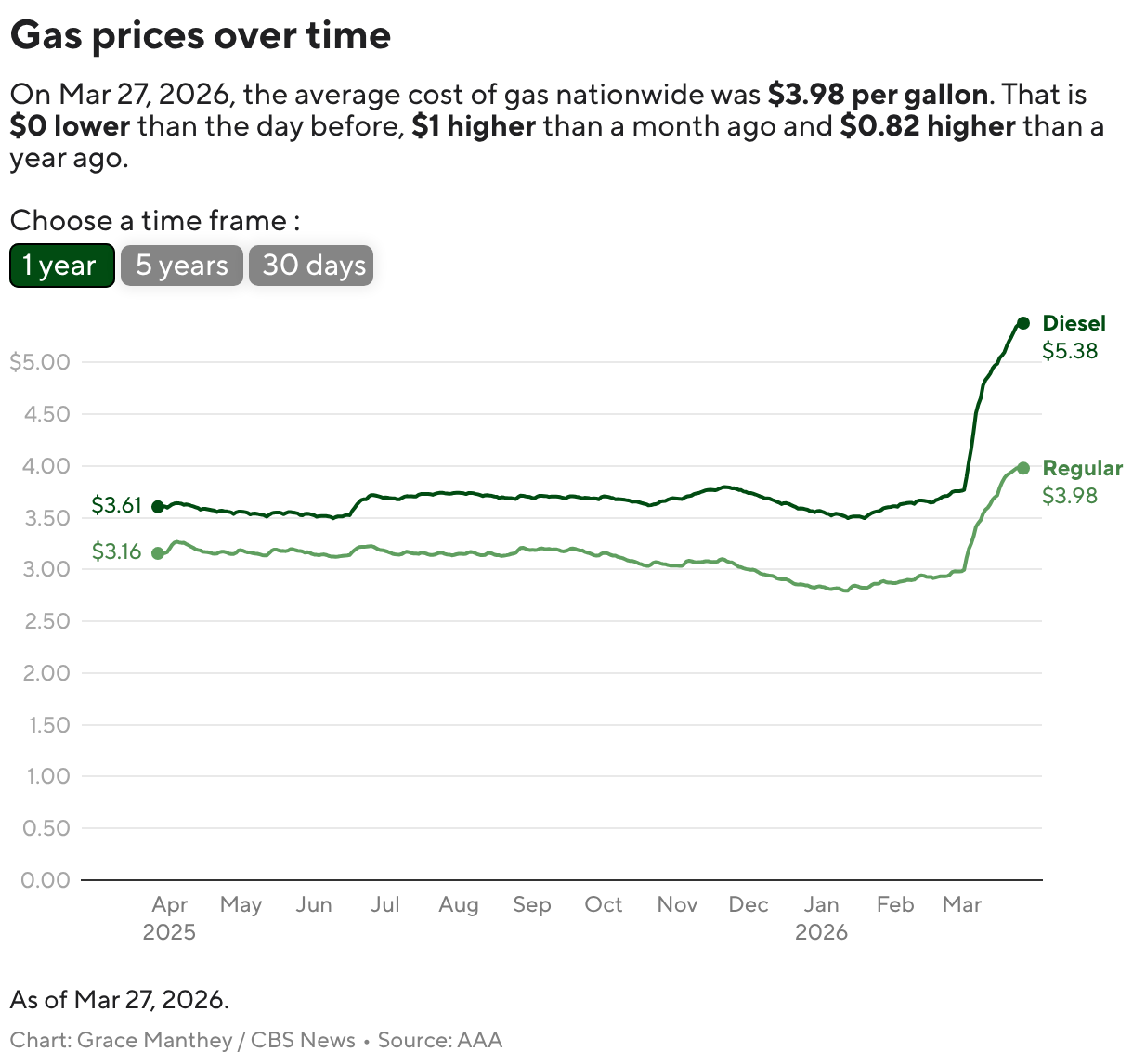
Gas prices are typically higher in California, which relies heavily on oil imports from abroad and has higher taxes on gasoline than other U.S. states. Still, prices have increased across the country.
Diesel, which powers trucks, boats and trains that transport U.S. goods, has risen more quickly than regular gasoline, in part because diesel was already in short supply before the war began.

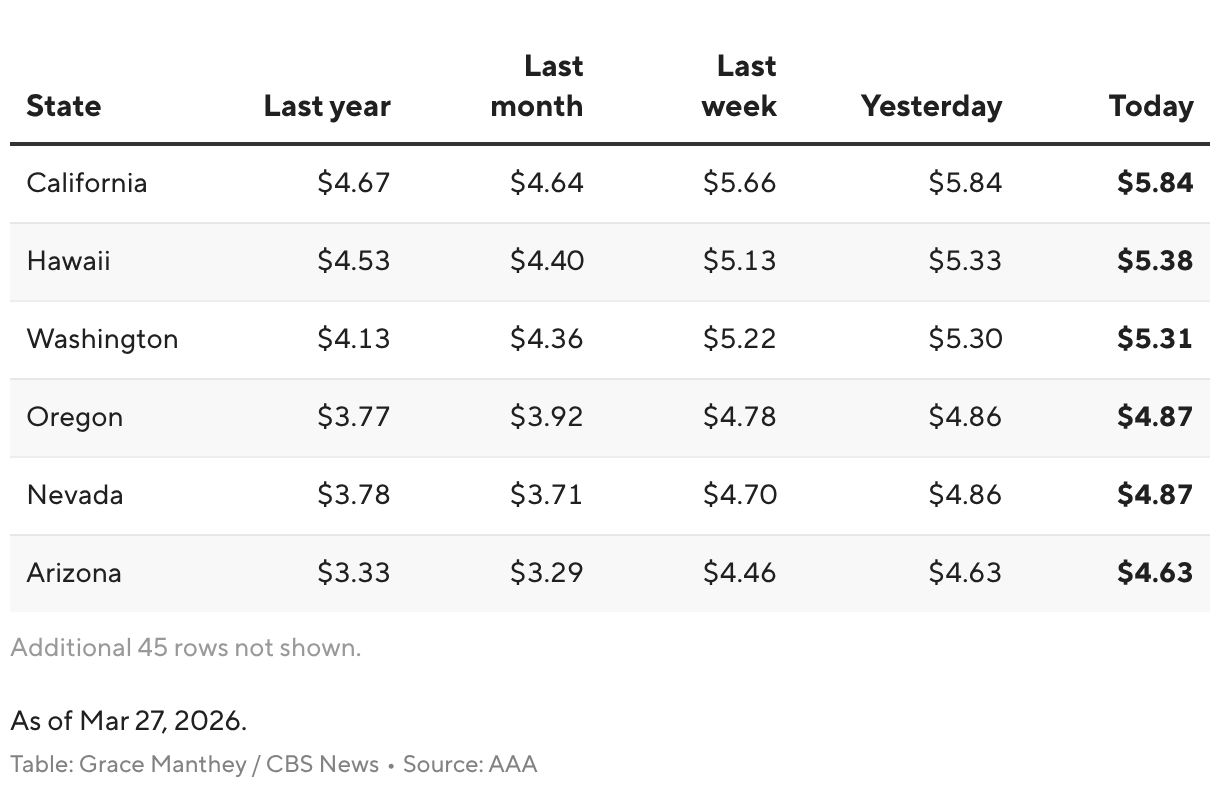
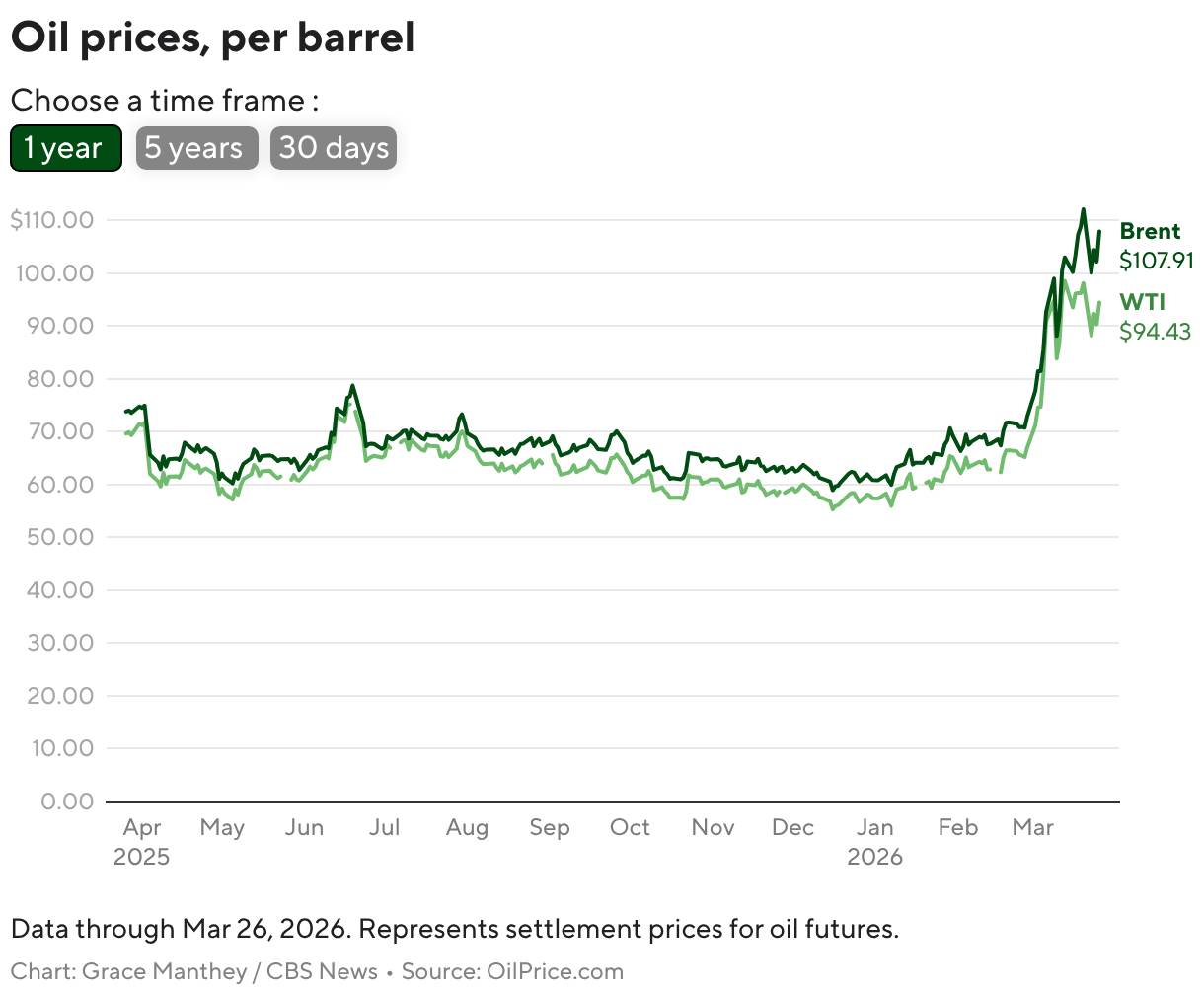
Oil only accounts for half the cost of a gallon of gas. The rest is a combination of refining, taxes and marketing, according to the U.S. Energy Information Administration. The time of year also influences gas prices, as demand for fuel rises during warmer months.
The U.S. is the world's leading oil producer. However, the global market sets the price. Higher oil costs mean higher prices for Americans fueling their cars.
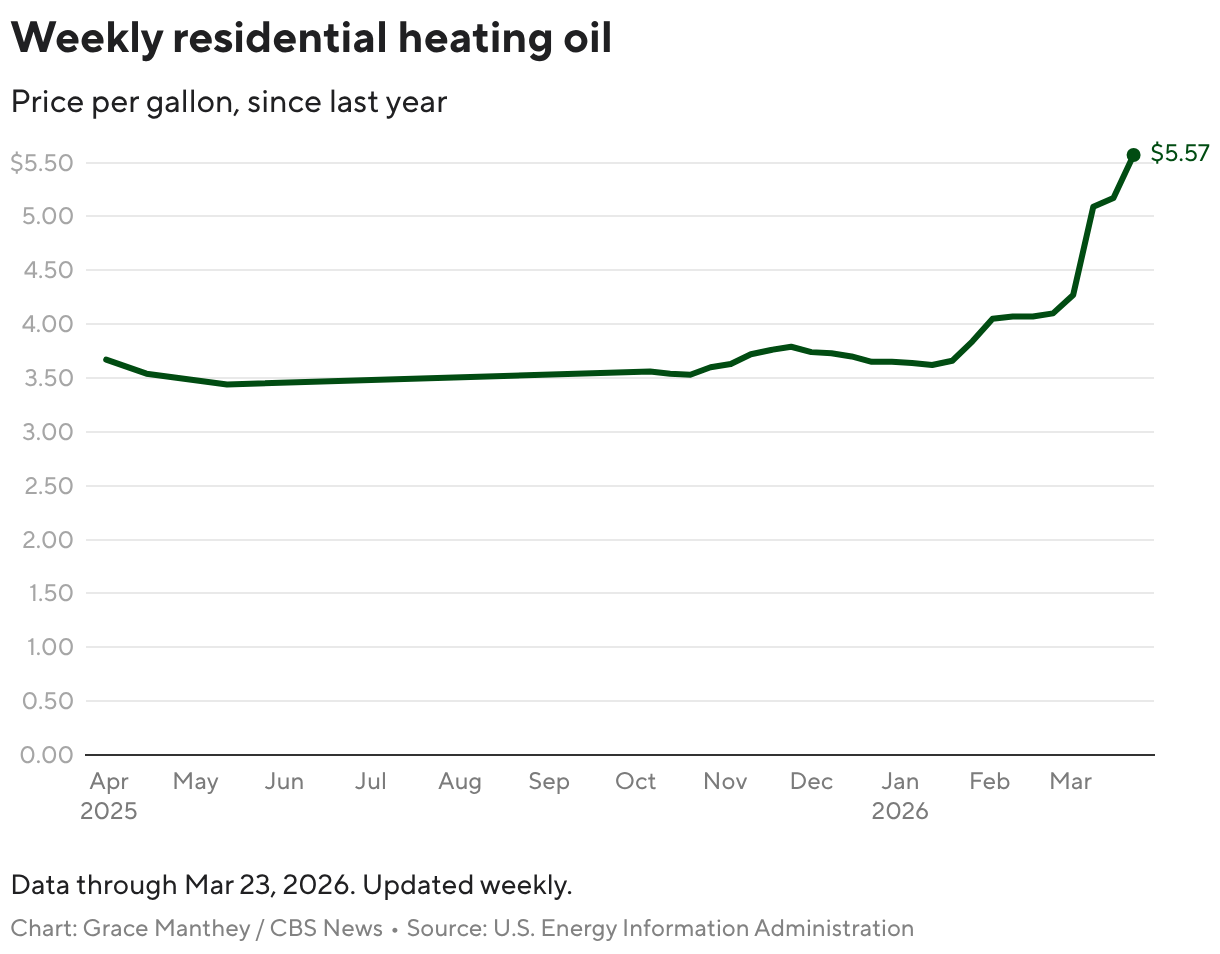
And it's not just gas: Heating bills may be getting more expensive as the price of residential heating oil has begun to climb in response to the war in Iran.