Full transcript of "Face the Nation with Margaret Brennan," Dec. 21, 2025
On this "Face the Nation with Margaret Brennan" broadcast, moderated by Margaret Brennan:
- Reps. Thomas Massie, Republican of Kentucky, and Ro Khanna, Democrat of California
- Anthony Salvanto, CBS News director of elections and surveys
- White House National Economic Council Director Kevin Hassett
- UNICEF executive director Catherine Russell
- Archbishop Paul Coakley, President of the U.S. Conference of Catholic Bishops and Oklahoma City Archbishop
Click here to browse full transcripts from 2025 of "Face the Nation with Margaret Brennan."
MARGARET BRENNAN: I'm Margaret Brennan in Washington. And this week on "FACE THE NATION," the long-awaited release of the Epstein files. And will that good news about inflation improve America's views about President Trump's handling of the economy?
President Trump is wrapping up the year with a tighter focus on the economy and affordability, both in the Oval Office and on the midterm's campaign trail, boasting of his 2025 accomplishments.
(BEGIN VIDEO CLIP)
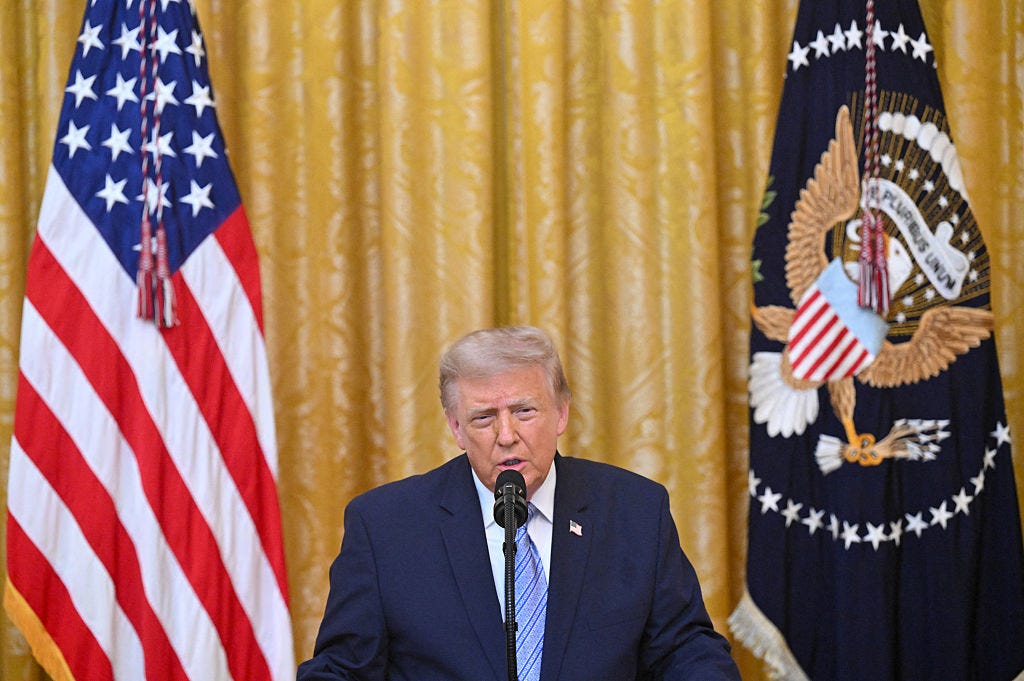
DONALD TRUMP (President of the United States): This is a far better term than it would have been had I done it the most traditional way. It really is. It's more powerful term. It's a more powerful term. And the biggest news of all is yesterday it was announced that inflation is far lower than anybody expected. I told you.
(END VIDEO CLIP)
MARGARET BRENNAN: That's an exaggerated claim, but any sign of prices going lower is good news for Americans. Our new CBS poll shows that half the country says Trump's policies are making them financially worse off. We'll ask White House Chief Economic Advisor Kevin Hassett about that and more.
Plus, a bipartisan conversation with the two members of Congress who pushed to pass the law calling for the Epstein files to be made public. Has the Trump administration obeyed that law? We'll talk about Kentucky Republican Tom Massie and California Democrat Ro Khanna.
Finally, we'll talk with the head of UNICEF, Catherine Russell, about the children of Sudan and Gaza.
It's all just ahead on "FACE THE NATION."
Good morning and welcome to "FACE THE NATION."
So far there have been few surprises in the tens of thousands of documents related to the case against convicted sex offender and accused sex trafficker Jeffrey Epstein and his partner, convicted child sex offender Ghislaine Maxwell. The Justice Department says that 1,200 names identified as victims or their relatives were redacted, along with materials that could result in their identification. Will the release of the documents satisfy Congress and the political forces who lobbied for their disclosure and, much more importantly, will it satisfy the survivors of Jeffrey Epstein and their families?
The two House members who pushed their colleagues into passing the bill to release these documents, Republican Thomas Massie, who's in Garrison, Kentucky, and Democrat Ro Khanna, who joins us this morning from Palo Alto, California.
It's good to have you both of you here.
I want to start with you, Congressman Massie, because in these past 48 hours we have seen the Justice Department acknowledge it's an incomplete release, but they have put out more than 13,000 files. They say more will come.
This isn't everything you asked for just yet, but would you acknowledge that they are supplying with the spirit, if not the intent of your law?
REPRESENTATIVE THOMAS MASSIE (R-KY): No, they're flouting the spirit and the letter of the law. It's very troubling, the posture that they've taken. And I won't be satisfied until the survivors are satisfied.
You know, I said in the hours leading up to this release that we will know if they are complying if they implicate any of the other criminals that are involved in the – suspects that are involved. The witnesses, the victims themselves have given to the FBI, and they've never been mentioned.
MARGARET BRENNAN: Well, there are some disclosures in here that seem new, Congressman Khanna. The documents confirm that the FBI received a complaint about Jeffrey Epstein back in 1996, but the woman whose name is Maria Farmer, who made the complaint, said federal officials failed to follow up. She said the disclosure makes her feel redeemed and that this was one of the best days of her life, to see these documents made public. What action do you want taken around a case like this?
REPRESENTATIVE RO KHANNA (D-CA): That was the single most important disclosure of what we got. I know Maria's sister, she sounded the alarm in 1996. She complained to the FBI. The problem is that Epstein was so connected with law enforcement and powerful politicians, the FBI did nothing for a decade. Frankly, she deserves compensation. She deserves an explanation.
But the broader point is, Blanche was on this morning saying that Massie and I have a problem that it's taking too long. That's not the problem. The problem is, this was a slap in the face of survivors. What do they want? They want to know, who are the rich and powerful men who visited Epstein's rape island and covered up the abuse. And the key documents that our law basically said needed to be released, the 60-count indictment that actually implicates a lot of these people, and the prosecution memo were not released. It's not about the timeline, it's about the selective concealment.
MARGARET BRENNAN: Well, yet, right, the deputy attorney general said there are more disclosures that will be made. You believe that they will not release that particular part? I mean you did give them some leeway for redactions.
REPRESENTATIVE RO KHANNA: Well, first of all, the redactions were excessive. And even Harvard Law professors who have looked at that have said you can't redact internal communications, you can't redact workforce product. And the courts are going to find that these were excessive.
But my point, and I'm sure Congressman Massie can elaborate, is that we want the files out. So, if our sounding the alarm on what is missing is going to help them get those files out, fine. But this shouldn't be a big document dump. There's a pretty simple point, who raped these young girls, who covered it up and why are they getting away with it?
MARGARET BRENNAN: So, you are saying specific things regarding the indictment Congressman Massie, I saw in a video that you posted, you had a very specific benchmark of success here. You said you know there are at least 20 men accused of sex crimes known to the FBI. How do you know that number? And do you know those names?
REPRESENTATIVE THOMAS MASSIE: Yes, the survivors lawyers have told me those numbers and they've described their professions in general. But they've only given me one of those name. And I mentioned that in a congressional hearing, Jeff Staley (ph). So, I searched these documents. I didn't see Jeff Staley's name. Nor did I see 19 other names.
And here's why we shouldn't be optimistic that Blanche or Bondi are going to release these thing. They sent a six-page memo to Congress and said that – they cited pre-existing laws as reasons that they weren't going to follow our law. For instance, our law requires them to release information regardless of embarrassment. But they are trying to say that a previous law prevails when it doesn't. Common sense says it doesn't. The privacy act doesn't protect them from that. And then also, as Ro said, internal communication. Those – they're using a FOIA standard that doesn't apply because our law already says they have to give us internal communications.
MARGARET BRENNAN: Yes. In terms of the gentleman there, you referenced as accused, I mean, being in the document doesn't necessarily prove criminal behavior, right? And in terms of the redactions, what the deputy attorney general said is that they were abiding by your law. And also a judge in New York had ordered them to listen to victims. So, they're claiming that information that they had initially even published Friday, they had to pull down because they were trying to protect victims. You aren't – you don't sound convinced that they are abiding by, you know, this intent.
REPRESENTATIVE THOMAS MASSIE: No, actually – no, they are not abiding. And all three judges who released the grand jury materials said that our law trumps the prior law. That's just common sense. Law school 101. Yet, Todd Blanche is using a different theory that wouldn't survive first contact with any court, which is, he's trying to say that prior laws override our law. That's not the way this works.
MARGARET BRENNAN: OK. What are you going to do about it to force them to comply? I mean can you do anything?
REPRESENTATIVE THOMAS MASSIE: Oh, absolutely. Look, people have talked about – and by the way, Todd Blanche is the face of this. But it's really the attorney general's office, Pam Bondi, who is responsible. And there are several ways to get at this. Some take longer. Some are shorter.
The quickest way, and I think most expeditious way to get justice for these victims is to bring inherent contempt against Pam Bondi. And that doesn't require going through the courts. And give her – you know, and basically Ro Khanna and I are talking about and drafting that right now.
MARGARET BRENNAN: OK. Well, I mean, on another network this morning Democratic Senator Tim Kaine said impeachment or contempt, it is premature, Congressman Khanna. And the depth attorney general said bring it on. They don't seem to be taking it very seriously. And if you just don't have the math in the Senate, including at least now this Democratic senator not being convinced, doesn't that sort of show that you're at the limit of pressure?
REPRESENTATIVE RO KHANNA: No, we only need the House for inherent contempt. And we're building a bipartisan coalition. And it would fine Pam Bondi for every day that she's not releasing these documents.
I'll tell you why – I've talked to the survivors, why this is such a slap in the face. One of the survivors said they released her name accidentally but they still have not released the FBI file about the people who abused her at her request. And the problem here is that there are rich and powerful people – we all know this, there are 1,200 victims, they're rich and powerful people who either engaged in this abuse, covered it up or were on this island. And what the American people want to know is, who are these people. And instead of holding them accountable, Pam Bondi is breaking the law. And this is the corrupt system, the Epstein class that people are sick of.
So, I believe we're going to get bipartisan support in holding her accountable and a committee of Congress should determine whether these redactions are justified or not.
MARGARET BRENNAN: It's sometime in January when you all come back, I assume, that that will happen.
I want to ask you, though, Congressman Khanna, there have been images released in the past 48 hours, some of them include former President Bill Clinton. There's at least one image of Donald Trump. I should say neither man has been accused of any wrongdoing related to Epstein, though they clearly knew him.
But since Friday's publication – we're showing the image here now – one of the pictures was pulled down. There were 15 images total that were then redacted from the DOJ website. And it's kind of hard to see, but it's an open drawer with a photo of President Trump.
Why do you think that was pulled down? Because the deputy attorney general says this was victims saying that their privacy or somehow their integrity was being compromised by having that image published.
REPRESENTATIVE RO KHANNA: Well, I'm less concerned about that photo. I don't know the facts. My concern is the major documents that we know are out there that haven't been released. The 60 count indictment that shows massive financial fraud and foreign interference. The prosecution memo. And look, they put out these Bill Clinton pictures –
MARGARET BRENNAN: Foreign interference?
REPRESENTATIVE RO KHANNA: Well, there are allegations that there are foreign governments that potentially were involved. And that all needs to come out. And it needs to come out in the indictments. It needs to come out in the prosecution memos.
But the reality is, they put out these pictures of Bill Clinton. Fine, put it all out, but don't distract from the fundamental issue, which is, who are these powerful people who visited rape – rape island? I mean there are 1,200 victims. It defies common sense that it was just Epstein and Maxwell. And they're hiding something. And you know why the American people are so upset. My X account had MAGA supporters supporting me for the first time, saying, you know, Pam Bondi whiffed, according to Susan Wiles.
MARGARET BRENNAN: Yes.
REPRESENTATIVE RO KHANNA: She is breaking the law. She needs to be held accountable.
MARGARET BRENNAN: You're referring to the "Vanity Fair" quote that the chief of staff gave, saying, the "whiffed." And she said that Pam Bondi gave them "binders full of nothingness." And then when it came to the client list she said it was on her desk, "there is no client list," quote, "and it sure as hell wasn't on her desk."
Do you see that as an acknowledgment here though that the politics have overtaken the substance?
REPRESENTATIVE RO KHANNA: No. For us it's about the survivors. And if you look at Thomas Massie and my comments the morning of the release, we were giving Todd Blanche the benefit of the doubt. We said if it's not all there, fine, just get the information out. It's when the survivors said that this is an insult, this is a slap in their face, that we aren't getting – the truth about who these men were on the – on rape island, that we started sounding the alarm. And this is more documents of nothingness.
And I guess the question the American people have, even to me, is, is the system so corrupt, is the system so corrupt that Thomas Massie and you defy the odds, pass a bill through a discharge petition, get the Senate, get the president to sign it, and still these rich and powerful people are being protected. Who has this kind of hold on our government? What are they hiding? Why are they not releasing this?
MARGARET BRENNAN: Well, you want, what, people involved in those initial investigations down in Florida reexamined and possibly prosecuted?
REPRESENTATIVE RO KHANNA: I want the information out which was in that prosecution memo that Acosta disregarded, that were in those indictments. There were 60 counts against Epstein. Only two counts were prosecuted. I want to know, who were these other people who were on the Epstein's rape island, who were the people who saw young girls being paraded around at parties, 13, 14, 15-year-olds and didn't say anything, and why is it so hard when there's a law requiring these names to come out. What we're seeing is survivors' names come out but not the men who abuse them. And instead of – instead of holding elites accountable, Pam Bondi is break the law.
MARGARET BRENNAN: Well, we will see when you gentlemen come back to work sometime in January what your next measures are. It sounds like you've made it clear you're moving action against the attorney general.
Thank you both for your reaction today.
"FACE THE NATION" will be back in a minute. Stay with us.
(ANNOUNCEMENTS)
MARGARET BRENNAN: We turn now to the economy and our executive director of elections and surveys, Anthony Salvanto.
Good morning. Good to have you here.
ANTHONY SALVANTO: Good morning.
MARGARET BRENNAN: So, the president was speaking throughout the past week about the economy, even in this Oval Office address. He's trying to reframe public perception of what's going on. We know sentiment has been low for years now. Do people really expect that a president can fix everything in the first year?
ANTONY SALVANTO: So, let me start with that big context because it's so important. Yes, through 2025 people have said they thought the economy was bad. When you talk about going back years, this goes back to before the pandemic was the last time that a majority of Americans said the economy was good. So, we are in this long and a lot of people think structural change that the economy has gone through. Things got more expensive coming out of the pandemic and people still are trying to adjust to those higher costs. That's what underpins all those sentiments.
Now, the political part of this is coming into 2025 more people did think that Donald Trump would fix it. The expectations were high. We measured that back in January. Right now you have this less than one in five that feel like his policies have made them financially better off. And even when you ask people then to look ahead to 2026, it's a little bit better, but it's not overwhelming that people think his policies will make them better off.
So, there's this real disconnect there. And if you come back to the description of the economy, people right now, I ask them to just grade it, and they give it a C, a D or even worse, which is different than a lot of the times the way the administration has described the economy. That sets up the fundamental challenge I think you saw that this week for – in the address.
MARGARET BRENNAN: So, it's not a new tactic for a current president to blame the last one for all the problems of today. But we checked and in that primetime address the president said it was Biden's name, Biden's fault about seven times. Does the public buy that?
ANTONY SALVANTO: Well, when you pick up on what we've just talked about, this long-term trend, the president did inherit economy where people thought – a majority of people thought it was bad. At the same time, right now more people say the current economy is Donald Trump's responsibility. He's the one, it's on his watch right now.
Having said that, he had been declining on his handling of the economy throughout the year. That's leveled off now in recent weeks. And one thing you do find is, yes, there's this disconnect. People think he is describing it as better than it really is. Maybe there's political credit to be gained by starting to address what people are feeling.
MARGARET BRENNAN: So, one thing we know is that health care costs for both private insurance users and government insurance users is going to be up. Congress is still debating what to do about the Obamacare act. But how much public focus is there on this issue?
ANTONY SALVANTO: So, if you look at the most immediate part of that argument, a big majority thinks that Congress should extend those added subsidies. But in the wider context of this, when we asked people, how do you feel about trying to afford all these various aspects, these basics, cost of living, health care is one of the ones that stands out that a lot of people say they have trouble affording.
And I think you're picking that up in the general sentiment of how people process health care, health insurance costs as well. It's a very important part, obviously, of people's budgets, but also one that they tell us that concerns them a whole lot.
MARGARET BRENNAN: So, one of the structural changes you sort of alluded to earlier is the change coming from artificial intelligence. You were looking at this. We've seen a lot of discussion about how it's reshaping things. Are Americans sort of digesting that? How do they understand it?
ANTONY SALVANTO: Yes, we've been following this all year because, right, it's driving stock market gains. There's a lot of investment in it as well.
Right now you see a lot of uncertainty from the public about it. On one hand, when I ask people, what parts of the economic sectors are you most at least optimistic about? Technology stands out as people being optimistic about it in general. But with regard to A.I. in particular, more people tell us they think it's going to decrease jobs than increase them.
MARGARET BRENNAN: And the number of corporations forecasting a lot of spending on technology in the new year.
What do all these dynamics mean politically for the midterm races in 2026?
ANTONY SALVANTO: So, let me start with the president because one thing I asked heading into 2026, is there anything that the president could do to change your mind about them? And there are a substantial number of people that say, yes. Perhaps not surprisingly, when I follow and ask, well, what would that be about, they say it's the economy.
The reason that's important is, in the dynamic here, a president is always key. He's not on the ballot, but he's always on people's minds in a midterm year. So, that's the first thing to watch. But the other one, you know, if you're at your holiday gathering and people are arguing about what's going to happen, who's going to win, I think it's too far to know for certain. But at the same time, we can already see the conditions and the playing field that people will be fighting on. And that's clearly cost of living. It's clearly health care, among other things. And it's the race to define how people evaluate it.
MARGARET BRENNAN: Anthony Salvanto, thank you for this.
ANTONY SALVANTO: Thank you.
MARGARET BRENNAN: We'll be right back.
(ANNOUNCEMENTS)
MARGARET BRENNAN: We go now to the director of the White House National Economic Council Kevin Hassett.
Good morning to you.
KEVIN HASSETT (National Economic Council Director): Good morning.
MARGARET BRENNAN: We took you literally. You said last Sunday you'd come back and talk to us about that household survey, the jobs picture. You said you really trust it. That report came out. It showed America added 64,000 jobs with unemployment ticking up to 4.6 percent.
But we've seen analysis, including from the top economist at U.S. Navy Federal saying the U.S. is in a, quote, "hiring recession. Very few jobs being added since the spring and wage gains are slowing." Are we in a hiring recession?
KEVIN HASSETT: No, I don't think so. I think that basically the number was about what the market expected. It was a number that was less than 100, which is a little bit lower than you'd like. But then, after that, we got the Consumer Price Index numbers, which were really amazing. And so, if you look at the three-month moving average of core consumer prices, then they're running at an annual rate of about 1.6 percent, way below the Fed's target.
And my old friend all the way back to grad school, Austan Goolsbee, who's now one of the Fed governors voting on interest rates, conceded that they should have cut rates faster, and that he's going to do so in the future because of this inflation number.
MARGARET BRENNAN: Right. He was one of the dissenters when the Fed's decision came out.
KEVIN HASSETT: Correct.
MARGARET BRENNAN: But when it comes to inflation, as you just referred to, that number showed there was still a rise in inflation. It was just at a slower pace than expected. If you pull out energy and pull out food, it rose at the slowest pace since 2021, up 2.6 percent in November from a year ago. But then there are quirks in here because it looks like the prices weren't gathered until Thanksgiving discounts kicked in. There was no increase reflected in terms of houses costs. Why do you trust the data now when you haven't in the past?
KEVIN HASSETT: Oh, you know, I think that you're right to always be suspicious about data. And it will look a lot cleaner when we get a full survey, which we didn't have these – that time. But, you know, two of the three numbers, if we go back to the three month moving average, were fine. And so, I think that the error band around the 1.6 percent inflation, about that's the – the pace is running, is probably pretty tight. Surely there will be some revisions, but I think the numbers are about right.
And I usually, Margaret, don't like to go to year over year when we're talking about what's going on with inflation because that includes a lot of high inflation Biden months in the back, and, you know, fewer and fewer as we get, you know, further into the year. But I think that the trajectory right now is best seen by the three month moving average. And that's below two, below the Fed target. So it means the Fed, as Austan Goolsbee said, has plenty of room to cut rates.
MARGARET BRENNAN: Yes. But the president said inflation has stopped. You'd acknowledge that's an exaggeration.
KEVIN HASSETT: Well, I guess the inflation being above the target has stopped for sure. And so inflation is not zero also. That's fair.
MARGARET BRENNAN: OK. He did not give those caveats. He just said, inflation has stopped.
Kevin Hassett, stay with us. I've got to take a quick break and I want to talk about the rest of what we've learned.
KEVIN HASSETT: OK.
MARGARET BRENNAN: Stay with us.
(ANNOUNCEMENTS)
MARGARET BRENNAN: We'll be right back with a lot more "FACE THE NATION." White House Adviser – economic Adviser Kevin Hassett is standing by, and we'll hear from the new head of the U.S. Conference of Catholic Bishops and also Catherine Russell, executive director of UNICEF. She's just back from Sudan.
So, stay with us.
(ANNOUNCEMENTS)
MARGARET BRENNAN: Welcome back to "FACE THE NATION."
And we continue our conversation now with the director of the White House National Economic Council Kevin Hassett. This past week we saw the president announce further changes to immigration policy. He halted diversity visas. There are now 39 countries on this travel ban or restricted list. This is in addition to all the deportations and revocations of asylum.
The business community has made clear that the constant changes make it hard for them to plan, particularly in small business categories. They're concerned about a labor shortage. And we've seen the U.S. workforce lose more than one million foreign-born workers in the past year. Are you hearing those concerns from the business community?
KEVIN HASSETT (DIRECTOR, NATIONAL ECONOMIC COUNCIL): Actually, it's the opposite. So, in the sense that native born workers are up more than two million. And so what we've seen is that as foreign-born workers, and a lot of them, don't forget, were illegal immigrants that have been deported, when foreign-born workers depart, then it creates jobs for people who are native-born.
The interesting thing too, which I'd like to remind everybody, is that native-born Americans aren't necessarily racially distinct at all. And so, the majority of the native-born jobs that have been created over the last year are Hispanic Americans. It's, you know, just basically taking folks that are legally in the country and getting the jobs to them is what we see in the data.
MARGARET BRENNAN: Well, the Associated General Contractors of America didn't say they're replacing those workers easily. They're saying they're having a hard time doing that, and issued a statement saying it's a significant challenge, urging the administration to lock at ways to expand the construction workforce and allow more people to lawfully enter the country.
KEVIN HASSETT: Right. Well, one of the things we're seeing, this is exactly how markets work, right? So, construction workers, their salaries this year have gone up by $3,300 on average according to the latest report. And –
MARGARET BRENNAN: Because of scarcity?
KEVIN HASSETT: Well, but when the price goes up, then people say, oh, I should – I should go and I used to be a construction worker but now I'm doing something else, I should go back to construction work because the salaries are so high. And so we're seeing a lot of that go on. And so we're very bullish on construction and really happy to see that wages are going way back up.
And so, instead of having, you know, basically illegal people come in and take jobs away from native-born Americans at low languages, we're seeing people re-enter the labor force at high wages.
MARGARET BRENNAN: But to be clear, from the business community, part of the question is what is legal because you're changing the definition and pulling back asylum from some groups. So, there is confusion of the constant change in policy. Will there be clarity in the new year?
KEVIN HASSETT: Oh, there will definitely be clarity in the new year. And I think there's clarity now that what we've done is that we've made it so that people are legally residents of the country and legally allowed to work, that they're, you know, basically top of the list when you're looking for somebody to hire.
MARGARET BRENNAN: Let me ask you a bit about tariffs. Since as far back as July we have heard the president refer to this idea of $2,000 checks being given out to households. The treasury secretary said this would go to households making less than $100,000. Should Americans plan to receive those checks in 2026?
KEVIN HASSETT: That's going to depend on what happens with Congress. Congress is going to have to send those monies to those people. But the thing we can say is that since July we've had a lot of positive news about the economy. We've had a couple of quarters of almost four percent growth. We've got a big government surplus actually running for a few months in a row. The deficit relative to last year is down by $600 billion.
And so, in the summer I wasn't so sure that there was space for a check like that, but now I'm pretty sure that there is. And so, I would expect that in the new year the president will bring forth a proposal to Congress to make that happen.
MARGARET BRENNAN: So, a new proposal for these. It's not necessarily coming from existing tariff revenue?
KEVIN HASSETT: Oh, well, it could come from tariff revenue. But in the end, you know, we get taxes, we get tariffs, we get all – revenue from lots of places, and then Congress decides how to spend those monies, that's an appropriation. It's – this would have to be money that would an appropriation.
MARGARET BRENNAN: OK. So, don't bank on it, in other words.
So, are you projecting that in the new year certain tariffs will remain in place, or do you see some of them going away?
KEVIN HASSETT: I think that most of the tariffs that we passed this year have proven their metal. We've got still high growth, which people said we couldn't if we had tariffs. We have reduction in the deficit. Reduction in the trade deficit. Imports from China are the lowest they've been since China entered the WTO. So, there's a lot of success to crow about in the tariff space.
But there are also thing that we're hearing when we talk to people, like trading partners and companies that trade a lot in the U.S., There are also things that maybe could be adjusted. You saw that we decided to exempt coffee, for example, because we don't make a lot of coffee in the U.S. And so I think that –
MARGARET BRENNAN: And coffee prices are up.
KEVIN HASSETT: And I think that if there's something that's not made in the U.S. at all, that there's an appetite, and Jamieson Greer is leading the effort to study these matters, there's an appetite too exempt things if they're really not meant to be made in the U.S. because of, you know, like climate or things like that.
MARGARET BRENNAN: You've also go – got the Supreme Court decision pending in terms of the specific IEEPA, as they're called. These are tariffs where the justification was citing fentanyl, Canadian crude, some Chinese imports. If the Supreme Court doesn't find in your favor, who gets the refund? Is it the companies or is it the consumers? How does that work?
KEVIN HASSETT: Yes, you know, we really expect the Supreme Court is going to find with us. And I also think that if they didn't find with us, then it's going to be pretty unlikely that they're going to call for widespread refunds because it would be an administrative problem to get those refunds out there. But basically, whoever paid the tariff, like actually cut the check to buy the thing, would be the person who would be getting the refund if there were one.
MARGARET BRENNAN: Doesn't the administration claim it was the country that paid that? You're saying the company?
KEVIN HASSETT: It would be – like I'm talking – I'm not talking about the incidents, right? The – like, so the incidents of the tariff, so in the end who pays the tariff depends on the elasticity of supply and demand. We know that China cut the price a lot so that the post-tariff price from Chinese goods is about what it was before the tariff. But the people who pay the tariff – if there is a refund, the people who actually paid for the good, the importer in most cases, they're the ones who would be the first line of defense for refunding the tariff.
But I really, really don't think that's going to happen. It would be very complicated. And then that person would be responsible for allocating the tariff refund to the appropriate folks.
MARGARET BRENNAN: That sounds like a mess.
KEVIN HASSETT: Yes, it is a mess. And that's why I think the Supreme Court wouldn't do it.
MARGARET BRENNAN: OK. Well, we'll wait and see.
I want to quickly ask you about the oil market. I asked you last Sunday about that decision to seize a tanker off the coast of Venezuela. We saw yet another one over the weekend. You said last Sunday it probably won't affect oil prices to be taking this oil off the black market. Do you stand by that? And was all that oil going to China?
KEVIN HASSETT: Yes. You know, I haven't been briefed on the latest. I did see that this is another ship that was basically operating on the black market. And so there have been a little bit – there's been a little bit of black market activity in the oil sector to go to sanctioned countries and to get them some oil. And they're getting that oil in order to avoid, you know, the reforms that we think would make the countries a better place. And so, it's not a lot of oil compared to world supply. And so, I don't think that people need to be worried here in the U.S. that the prices are going to go up because of these seizures of these ships. There's just a couple of them. And they were black market ships.
MARGARET BRENNAN: Were these sanctioned ships going to China?
KEVIN HASSETT: I'm not sure where they were going.
MARGARET BRENNAN: All right, Kevin Hassett, thank you for your time.
KEVIN HASSETT: Thank you. Thank you.
MARGARET BRENNAN: Have a great holiday.
KEVIN HASSETT: You, too.
MARGARET BRENNAN: We'll be right back.
(ANNOUNCEMENTS)
MARGARET BRENNAN: UNICEF warns that more than 200 million children will require humanitarian assistance in the coming year. The largest crisis right now is Sudan.
Catherine Russell, UNICEF's executive director, is just back from Sudan and South Sudan.
Good morning to you.
CATHERINE RUSSELL (Executive Director, UNICEF): Good morning, Margaret. How are you?
MARGARET BRENNAN: I'm well. But you are – we want to draw attention here to those in need. And I know Secretary of State Marco Rubio just, on Friday, called for a cessation of hostilities. He said the U.S. is pushing for a humanitarian truce to allow some of these aid organizations to operate, but aid convoys have been struck on their way in, he also acknowledged. What kind of challenges are you facing?
CATHERINE RUSSELL: Well, Sudan is, at this moment, the largest humanitarian crisis we're facing. And there are many things happening there. One is that children in particular, but people are on the move. Millions of people are moving around the country. We have hunger, extreme hunger, including famine, designated in certain parts of the country. We're also seeing just horrific levels of violence, excuse me, including rape, including against children. UNICEF did a report about that about a year ago. Even children under the age of one. Absolutely terrible stories.
And a woman I met in Chad, who had fled Darfur, told me about the effort to sort of rape women in front of their families and their communities. Really trying to terrorize them. And videotaping it to humiliate them. And so, the levels of violence are horrific. You have children out of school. So, the bottom line here is that the needs are enormous. The challenges are just absolutely staggering. And I think the world needs to come together, you know, in the short term for sure we need better humanitarian access. We need to reach all of these communities. That's hard to do right now.
But the truth is, Margaret, that what I heard from children across Sudan was the same thing, which is, I would say to them, you know, what do you think about what do you want? And they all said the same thing, which is, we want peace.
MARGARET BRENNAN: Yes.
CATHERINE RUSSELL: I think they understand that the only answer here really is to solve the political problems so that people can get back to some sort of a decent life.
MARGARET BRENNAN: Well, I just – I don't want to let go what you just mentioned in terms of why something like that would be done to children and to women in front of their families. The term genocide is used in Sudan. What you are describing there in terms of treatment of gender-based violence, it sounds like you are saying, that is an attempt to destroy a society by carrying out rape.
CATHERINE RUSSELL: I mean they are definitely atrocities that are intended to terrorize communities, to force them to move, to scare them. And, you know, they're effective strategies for sure. And I think, you know, the world needs to take a look – I mean Sudan, I know it seems so far away. And it is in many ways. But it is also a place where children are suffering so enormously. And I think especially, you know, now we're in the holiday season, you know, you want to think about, you know, people being with their families, all the rest of it. I mean children in so many places are not – are not having those sort of luxuries. They are really suffering. And I think the world needs to pay attention to that. And I commend, you know, Senator Rubio, Secretary Rubio now, for pointing this out because I think the key thing here is that we need attention to the problem.
MARGARET BRENNAN: Well, the U.S. has historically been the largest donor to UNICEF. But we've seen tremendous cuts by this administration, including $142 million claw back of congressionally approved funds. Secretary Rubio said no one died from these aid cuts. And on Friday he said he's very proud of the changes that were made in foreign aid. Tell us what the realty is of the funding cuts.
CATHERINE RUSSELL: Yes, the funding cuts are challenging. And I think that the issue to understand is it's not just the United States. It's almost every donor to – certainly to UNICEF but to the U.N. system broadly, and to humanitarian sector. And so when you add all of those together, the impacts are really dramatic because it means what, you know, what – what financial support we do get, we have to spread now over more places and with less support from donor countries.
So, I think, you know, there are certainly, you know, there have been and will probably always be catastrophes that we're trying to deal with. And children are suffering. And the United States has always proudly led, I think, on humanitarian response and on helping children. And, you know, we're hopeful that some of the money that has been taken back will be restored to us. We continue to work with the State Department. There are efforts to fund a lot of the humanitarian and sort of life-saving work that we do. But really, you know, the needs around the world are just absolutely enormous. And it's the United States and other donors would have to come in behind that, along with the private sector, I have to add that. That is also an important piece of this puzzle.
MARGARET BRENNAN: Yes. And I should point out that the U.S. is one of the largest foreign aid donors to South Sudan, but that foreign aid is also under threat at this moment because of the government not complying with what the U.S. is demanding.
Let me quickly –
CATHERINE RUSSELL: Yes, South Sudan is a challenge.
MARGARET BRENNAN: Yes.
CATHERINE RUSSELL: I was just there too. And that is – you know, the government there needs to do a better job.
MARGARET BRENNAN: Yes, can I – quickly, before I let you go, Gaza. How are things improving?
CATHERINE RUSSELL: Well, again, I would say thanks to the ceasefire and the administration here was critical in doing that, things have gotten a bit better. We are able to move around better.
But, you know, there's tremendous misery. The challenges for me, we have a lot of work that needs to get done. I mean you've seen all of the images, the destruction. You know, we still have serious levels of malnutrition. We are trying to get shelter in place. You know, there's rain and just misery for children all around. So, I think, you know, would – I would say there definitely is progress with the ceasefire. God willing that holds.
MARGARET BRENNAN: Yes.
CATHERINE RUSSELL: And then we can continue to get more and more aid in there.
MARGARET BRENNAN: God willing that holds, as you say.
Catherine Russell, thank you for your time today.
CATHERINE RUSSELL: Thanks. Thanks, Margaret.
MARGARET BRENNAN: We'll be back in a moment.
(ANNOUNCEMENTS)
MARGARET BRENNAN: One of the highlights for Catholics in the U.S. this year was the selection of an American pope, Pope Leo. We spoke Friday to the new head of the U.S. Conference of Catholic Bishops, Archbishop Paul Coakley.
(BEGIN VIDEOTAPE)
MARGARET BRENNAN: Father, I want to ask you about this role you have at the head of the Conference of Bishops. Last month there was this urgent message. It was a very rare statement addressing concern for the evolving situation impacting migrants. And the language was pretty sharp in it. Quote, "we oppose the indiscriminate mass deportation of people. We pray for an end to dehumanizing rhetoric and violence, whether directed at immigrants or at law enforcement."
What are bishops that you talk to seeing in perishes all around the country? What triggered this?
ARCHBISHOP PAUL COAKLEY (President, U.S. Conference of Catholic Bishops): I think it varies from place to place for sure. So, in communities with a more dense migrant population, there's a great deal of fear and uncertainty. Anxiety because of the level of rhetoric that is often employed when addressing usually around migration and the threats of deportation. So, there's a lot of anxiety. So, our pastors are trying to accompany people, walk with people, reassure people, and that's the message of the church. And that was the reason for our special message in November that we're with you, we hear you, we're aware of your suffering and your fears, and we fully intend to accompany you during this difficult time.
MARGARET BRENNAN: So, I know there have been bishops in places like Charlotte, in parts of California, who have formally granted permission or dispensation is the word used for people who skip Sunday mass if they're afraid they could be targeted by ICE. Are you actually seeing a decline in the number of people attending mass because they're afraid they'll be arrested?
ARCHBISHOP PAUL COAKLEY: We are not seeing that here in Oklahoma. And I haven't heard it reportedly widely from my brother bishops. So, I know that that is the case in some places. But I don't think it's as common, at least here locally, or in places that I have personal contact with. There's a – there's an anxiety, there's a fear. But I don't think it's kept people away in great numbers.
MARGARET BRENNAN: Well, this video that you released really got a lot of attention. It certainly got ours. And it mentioned being troubled by threats against the sanctity of houses of worship, as well as hospitals and schools. You know, I spoke to the vice president, J.D. Vance, last year and asked him about this change in policy that would allow for ICE to enter churches and schools. And he really pushed back hard. He says that the catholic church receives funds to help re-settle immigrants, thus they are motivated by financial and not humanitarian reasons.
Have you had any kind of conversation with the Trump administration, with the vice president, to explain what it is you're trying to say?
ARCHBISHOP PAUL COAKLEY: I have not had any personal conversations at this point with either the president or the vice president. So, I look forward to engaging with them over matters of mutual concern and certainly undoubtedly the question of immigration is going to come up, I think. We have opportunities to work together. We have opportunities to speak frankly with one another. So, I will look forward to that in the – in the near future.
MARGARET BRENNAN: Well, the vice president calls himself a devout catholic, which is also why I ask. I mean do you – what do you say to Catholics like him who argue that these hardline immigration policies have had a result that they sought, that the end justifies the means?
ARCHBISHOP PAUL COAKLEY: I don't think we can ever say that the end justifies the means. We have to treat everyone with respect. Respect of human dignity. Dignity of every person. There's no conflict necessarily between advocating for safe and secure borders and treating people with respect and dignity. We always have to treat people with dignity. God-given dignity. The state doesn't award it. And the state can't take it away. So, it's from the creator.
So, I think, as Christians, as believers, we – that's kind of a foundational bedrock thing for us, that people are to be respected and treated with dignity, whether they are documented or undocumented, whether they are here legally or illegally, they don't forfeit their human dignity.
MARGARET BRENNAN: Well, what is it that you think is causing that to be an issue right now? Why do you think that there is a loss of dignity? Are there specific policies that you are thinking of when you say that?
ARCHBISHOP PAUL COAKLEY: Well, not necessarily. I mean I just – to treat people with respect. To afford them due process.
MARGARET BRENNAN: Yes.
ARCHBISHOP PAUL COAKLEY: The deportations that are – that are happening around the country can – it's instilling, as I said, fear in a rather widespread manner. So, I think that's – that's something that concerns us all, that people have a – have a right to live in security and without fear of random and – of deportations. I think we're believers, of course, in due process. We have provisions in law that award due process to everyone. So, that's what we are wanting to emphasize.
MARGARET BRENNAN: What would you advise others, other people of faith, to do for these immigrants?
ARCHBISHOP PAUL COAKLEY: Well, we are a nation of immigrants ourselves. So, I think that's something that we, as Americans, need to always come back to. We are founded upon the immigrant experience. So, I think we need to be generous in welcoming immigrants. We certainly have a right and a duty to respect borders of our nation. And I would say remind all of us that we have a right and a duty to respect sovereign borders of a state. But we also have a responsibility to welcome immigrants. This is kind of a fundamental principle in catholic social teaching regarding immigration and migration. People have a right to remain in their homeland, but they also ought to be allowed to migrate when conditions in their homeland are unsafe and necessitate moving to a place where they can find peace and security.
MARGARET BRENNAN: Archbishop Paul Coakley of Oklahoma City, thank you for your time today.
ARCHBISHOP PAUL COAKLEY: Thank you. Thank you very much.
(END VIDEOTAPE)
MARGARET BRENNAN: And we'll be right back.
(ANNOUNCEMENTS)
MARGARET BRENNAN: That's it for us today. We want to wish all our viewers a very happy holiday season and also want to give a big thank you to Washington bureau managing editor Arden Farhi and justice reporter Jake Rosen for all their work and their team's help sorting through the Epstein files.
Until next week, for "FACE THE NATION," I'm Margaret Brennan.
(ANNOUNCEMENTS)