Full transcript of "Face the Nation with Margaret Brennan," Jan. 25, 2026
On this "Face the Nation with Margaret Brennan" broadcast, moderated by Margaret Brennan:
- Minneapolis Police Chief Brian O'Hara
- House Majority Leader Steve Scalise, a Louisiana Republican
- Sen. Angus King, a Maine independent
- Canadian Ambassador to the U.S. Kirsten Hillman
Click here to browse full transcripts from 2026 of "Face the Nation with Margaret Brennan."
MARGARET BRENNAN: I'm Margaret Brennan in Washington.
And this week on Face the Nation: As a paralyzing winter storm barrels through a vast part of the country, the standoff between federal law enforcement agencies and the Minneapolis community explodes following yet another deadly shooting of a protester.
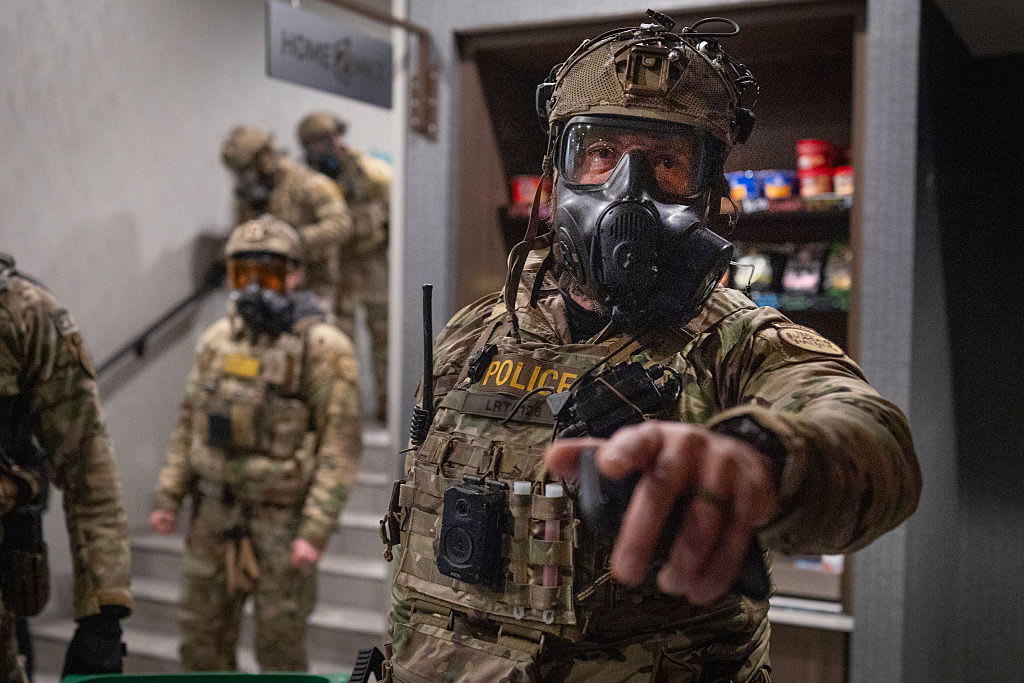
It's happened again. Minneapolis is the scene of the violent death of a protester at the hands of federal immigration agents. In this case, 37- year-old Alex Pretti was shot and killed Saturday morning outside a donut shop amid what federal officials say was an unrelated immigration operation led by Customs and Border Protection agents.
Interpretations of the extensive videos of the shooting are mixed. And much like the shooting death of Renee Good in Minneapolis just over two weeks ago, federal and state officials are at odds over what happened and why and who should investigate.
(Begin VT)
GOVERNOR TIM WALZ (D-Minnesota): They killed a man, created chaos, pushed down protesters, threw gas indiscriminately, and then left the scene, and then we're left to clean up.
GREGORY BOVINO (Border Patrol Commander): This looks like a situation where an individual wanted to do maximum damage and massacre law enforcement.
(End VT)
MARGARET BRENNAN: We will have a report from the scene and talk exclusively to Minneapolis Police Chief Brian O'Hara, then turn to the bigger picture, as Senate Democrats threaten to block funding for ICE and DHS agencies, while the public increasingly is wary of ICE actions and the subsequent pushback.
House Majority Leader Steve Scalise, Maine independent Senator Angus King, whose home state is the site of ICE's new deportation operation called Catch of the Day. We will also talk with the outgoing Canadian Ambassador to the U.S. Kirsten Hillman about the growing divide between the U.S. and our neighbors to the north.
It's all just ahead on Face the Nation.
Good morning, and welcome to Face the Nation.
As we come on the air, over 200 million Americans in 35 states from New Mexico to Maine are dealing with or preparing for the massive winter storm that is now moving across the country. There are already at least 700,000 people without power. Thousands of flights have either been canceled or are delayed.
And there is a cold front moving in behind that storm, which will likely make the situation facing most Americans as this workweek begins even more treacherous.
We turn now to the volatile situation in Minneapolis and the killing of Alex Pretti, a 37-year-old ICU nurse who was a U.S. citizen.
CBS News correspondent Lana Zak reports.
(Begin VT)
LANA ZAK (voice-over): Multiple cell phone videos captured the moments before 37-year-old Alex Pretti was killed. In the footage, Pretti is seen wearing a baseball cap and holding a cell phone. Moments later, after a federal agent shoved and sprayed another person, several officers tackle Pretti.
One appears to retrieve a gun and turn away. Then at least one other agent fires multiple shots, killing him.
Border Patrol Commander Greg Bovino defended the shooting, saying that CBP agents were conducting an operation involving a different man in the country illegally.
GREGORY BOVINO (Border Patrol Commander): An individual approached U.S. Border Patrol agents with a 9-millimeter semiautomatic handgun. The agents attempted to disarm the individual, but he violently resisted. Fearing for his life and the lives and safety of fellow officers, a Border Patrol agent fired defensive shots.
LANA ZAK: Minneapolis Police Chief Brian O'Hara says he sent local officers to the scene.
BRIAN O'HARA (Minneapolis, Minnesota, Police Chief): We believe he is a lawful gun owner with a permit to carry.
LANA ZAK: DHS officials released a photo of what they say is Pretti's gun.
Did the 37-year-old who had a license to carry, did he brandish a gun? And at what point did law enforcement retrieve the gun and also the magazines from him? Can you offer clarity on where those were found?
KRISTI NOEM (U.S. Homeland Security Secretary): This individual showed up to impede a law enforcement operation and assaulted our officers. They responded according to their training and took action to defend the officer's life and those of the public around him.
And I don't know of any peaceful protester that shows up with a gun and ammunition, rather than a sign. This is a violent riot when you have someone showing up with weapons and are using them to assault law enforcement officers.
LANA ZAK: Several eyewitnesses dispute those claims. In a court affidavit, one resident testified – quote – "I have read the statement from DHS about what happened and it is wrong. The man did not approach the agents with a gun. He approached them with a camera. He was just trying to help a woman get up. And they took him to the ground."
Another witness who self-identified as a pediatrician and after asking several times was permitted to perform CPR testified that – quote – "I saw that the victim was lying on his side and was surrounded by several ICE agents. Checking for a pulse and administering CPR is standard practice. Instead of doing either of those things, the ICE agents appeared to be counting his bullet wounds."
Alex Pretti was an ICU nurse with the Veterans Affairs' health system.
In a statement, Pretti's parents say: "The sickening lies told about our son by the administration are reprehensible and disgusting. Please get the truth out about our son. He was a good man."
Minnesota Governor Tim Walz called the video sickening.
GOVERNOR TIM WALZ (D-Minnesota): This federal occupation of Minnesota long ago stopped being a matter of immigration enforcement. It's a campaign of organized brutality.
LANA ZAK: Pretti is the second U.S. citizen killed in Minneapolis this month in Operation Metro Surge. And the city of Minneapolis erupted in protests.
We hear bottles being thrown. Some people have been taken away. We see somebody right over there now being apprehended.
Throughout the day, protesters gathered even after it was declared an unlawful assembly…
(SHOUTING)
LANA ZAK: … demonstrating their anger and grief.
(End VT)
LANA ZAK: The Minnesota Bureau of Criminal Apprehension say they have been locked out of this investigation.
And, overnight, a Trump-appointed judge issued a temporary restraining order, requiring the Department of Homeland Security to preserve all evidence. That hearing is scheduled for Monday – Margaret.
MARGARET BRENNAN: That's Lana Zak reporting from Minneapolis.
We are joined now by the city's police chief, Brian O'Hara.
Chief, welcome to Face the Nation.
BRIAN O'HARA (Minneapolis, Minnesota, Police Chief): Good morning, Margaret.
MARGARET BRENNAN: What have you been able to learn about the shooting? Because we did just hear the claims by Secretary Noem and Mr. Bovino and their version of what happened.
Do the videos and evidence back up their descriptions?
CHIEF BRIAN O'HARA: So, unfortunately, we don't have any official information from federal law enforcement about what has happened.
Even when our officers initially responded to the scene, our watch commander was not given even the most basic information that is typical in a – in a law enforcement-involved shooting just to ensure that there is potentially no other victims.
Since then, the Minnesota Bureau of Criminal Apprehension responded to the scene at my request. They were blocked from the scene yesterday, but they have since returned to the scene and are – are now canvassing for additional witnesses and evidence that may be there.
MARGARET BRENNAN: So do I understand you saying that Minnesota has just begun its investigation today?
CHIEF BRIAN O'HARA: There were attempts yesterday to begin the investigation. I do not know what, if anything, was conducted yesterday. I do know that, while they were at the scene, more than once, they were not permitted to enter before the scene then was contaminated.
MARGARET BRENNAN: And, for our viewers, Minnesota is a little bit different. There is this Bureau of Criminal Apprehension. That is the state agency that investigates use-of-force incidents.
CHIEF BRIAN O'HARA: Yes.
MARGARET BRENNAN: They are separate from your police force.
CHIEF BRIAN O'HARA: Yes.
MARGARET BRENNAN: But from what you have seen in the public space and heard from federal officials, is there any evidence that you know of that Pretti was assaulting the federal officers, as the Border Patrol chief claims?
CHIEF BRIAN O'HARA: Well, I have seen the videos, just as thousands of people around the country have, and the videos speak for themselves.
I think it's deeply concerning the things that are being said. This is an individual that was a city resident. It appears that he was present, exercising his First Amendment rights to record law enforcement activity, and also exercising his Second Amendment rights to lawfully be armed in a public space in the city.
So I think, very obviously, there are serious questions that are being raised. And I think the greater issue is, even if there is an investigation that ultimately proves that, at the time of the shooting, it was legally justified, I don't think that even matters at this point, because there just – there is so much outrage and concern around what is happening in the city.
MARGARET BRENNAN: What do you mean it does not matter at this point? You mean the situation on the ground is already – the impression is left?
CHIEF BRIAN O'HARA: People have had enough.
This is the third shooting now in less than three weeks. The Minneapolis Police Department went the entire year last year recovering about 900 guns from the street, arresting hundreds and hundreds of violent offenders, and we didn't shoot anyone.
And now this is the second American citizen that has been killed. It's the third shooting within three weeks. People have been speaking out, saying that this was going to happen again. And I think everyone is kind of waiting for folks on both sides to come together and just figure this thing out.
MARGARET BRENNAN: Yes.
CHIEF BRIAN O'HARA: This is not sustainable. This police department has only 600 police officers. We are stretched incredibly thin. This is taking an enormous toll trying to manage all of this chaos, on top of having to be the police department for a major city. It's too much.
MARGARET BRENNAN: Are you calling on ICE to leave?
CHIEF BRIAN O'HARA: We understand that, for as long as there has been ICE, there has been immigration enforcement in Minnesota. The problem is not that enforcement is happening.
MARGARET BRENNAN: Yes.
CHIEF BRIAN O'HARA: It's clearly the manner in which these things are happening.
MARGARET BRENNAN: Well…
CHIEF BRIAN O'HARA: These tactics are very obviously not safe, and it is generating a lot of outrage and fear in the community.
MARGARET BRENNAN: Let me ask you about what we know, because DHS claims that Pretti had a weapon on him.
You said that Pretti – you implied Pretti was carrying at the time of the incident, when you said he was a legal firearm owner with a license to carry. Do you know if the weapon remained concealed or was it ever brandished?
CHIEF BRIAN O'HARA: I have seen different experts and people analyzing the video that have made statements about that. I cannot speculate, but I do not have any – any evidence that I have seen that suggests that the weapon was brandished.
MARGARET BRENNAN: OK, because we checked. The Minnesota gun permit rules allow for concealed carry, and there are no restrictions on carrying in a protest.
CHIEF BRIAN O'HARA: Yes. Yes, that's right.
MARGARET BRENNAN: But the homeland security secretary said that he had two cartridges on him in addition to the gun.
"I don't know of any peaceful protester that shows up with a gun and ammunition rather than a sign."
The FBI director said: "You cannot bring a firearm loaded with multiple magazines to any sort of protest."
Are they on firm legal ground in Minnesota?
CHIEF BRIAN O'HARA: You have a Second Amendment right in the United States to possess a firearm. And there are some restrictions around that in Minnesota. And everything that we see, that we are aware of shows that he did not violate any of those restrictions.
He is not a convicted felon, and he is someone that did have a permit for the handgun to carry it.
MARGARET BRENNAN: So did he have magazines full of ammunition at the scene? Because both the president of the United States and the border security chief said that he did, and Bovino directly accused you of not saying that publicly.
CHIEF BRIAN O'HARA: Yes.
MARGARET BRENNAN: He said the police chief omitted the fact that the suspect had a gun and magazines full of ammunition.
CHIEF BRIAN O'HARA: Well, that – what they are omitting is that they are not sharing any information with us, and that they blocked state law enforcement, which is the agency that conducts the overwhelming majority of police-involved shootings, from the scene.
So I don't know how I'm supposed to share information with the public that they are not sharing with us.
MARGARET BRENNAN: So you have not seen evidence that there were multiple magazines. But – but would it even be illegal if that were the case?
CHIEF BRIAN O'HARA: I don't think there is any relevance. If someone is lawfully exercising their Second Amendment right to carry, the only question would be if they were using the weapon in a – for an unlawful purpose.
MARGARET BRENNAN: I want to ask you about some of the things that the vice president also has said about local authorities.
The vice president said that local police have been told to stand down when immigration authorities call 911 asking for help dealing with crowds surrounding them. Were you ever ordered to stand down? Have police been told not to protect ICE?
CHIEF BRIAN O'HARA: It is deeply disappointing to have anyone question and disparage the hard work of the men and women of the Minneapolis Police Department. There are 600 police officers that are left here after the destruction of the city in 2020, and they are doing an incredible job.
About a dozen of our cops have been injured responding to a lot of the chaos that has resulted on the streets. Our officers respond every time there's a threat to someone's life, to public safety or destruction in the city. And it doesn't matter whether it's because ICE is there or someone from the community is there.
We are doing everything that we can to manage this chaos. But there's only 600 cops here, and there's thousands of immigration agents here.
MARGARET BRENNAN: Right, nearly 3,000, as we understand it.
The vice president and Secretary Noem said Minneapolis is uniquely chaotic. But they also pointed to sanctuary city policies and said that, if those policies weren't in place – these are policies that prohibit you from assisting federal immigration operations – that none of this would really be happening.
How do you respond to that claim that, because of these sanctuary city policies, you are being forced into this position?
CHIEF BRIAN O'HARA: Well, there's policies and laws that have been the case here for decades.
And it's not on the Minneapolis Police Department or local law enforcement, you know, to hand folks over that are in jails. The city police do not operate a jail. That's at the county level. And the prisons are at the state level.
So we are complying with the law, as we have been for many years. And I don't know what else could possibly be asked of this very, very, you know, understaffed and overstretched police department.
MARGARET BRENNAN: And now you have the National Guard, I understand, assisting you. Is this sustainable now that you have the Guard supporting you? Do you have any idea of how long these protests will last?
CHIEF BRIAN O'HARA: Yes, I mean, yesterday, we had to do an emergency recall. We asked for mutual aid from the state, county and all of local law enforcement around the metro. It was very clearly an emergency, and we requested the National Guard.
As of this morning, we have released all of mutual aid, as well as the National Guard partners, and it's back to just the Minneapolis police responding to calls and trying to protect the city. But this is absolutely not sustainable. Our cops are tired. They are thin-stretched as it is, and we have a job to do trying to keep the people of this city safe.
MARGARET BRENNAN: So, before this shooting, CBS reported that there were at least 10 people from the Minneapolis U.S. attorney's office who had resigned.
We know the FBI agent resigned after being told to stop investigating the officer who shot Renee Good.
CHIEF BRIAN O'HARA: Yes.
MARGARET BRENNAN: What is local law enforcement experiencing, beyond your officers, but in the U.S. attorney's office, in your local FBI?
CHIEF BRIAN O'HARA: I mean, the sad part of this is the incredible work that we have done with all of federal law enforcement over the last few years to get real criminals put away, gang members, people that are shooting folks out here, bringing, smuggling fentanyl into this city.
We've worked with all of these federal law enforcement agents that live in Minnesota, and it's so – it's so upsetting to see so many of them disparaged and so many of them walking away, because it is destroying the foundation of addressing violent crime in Minnesota that's produced incredible results over the last few years.
MARGARET BRENNAN: Yes.
Police Chief O'Hara, we wish you well and peace for your city. Thank you for your time this morning.
Face the Nation will be back in one minute. Stay with us.
(ANNOUNCEMENTS)
MARGARET BRENNAN: And we turn now to House Majority Leader Steve Scalise, who joins us from New Orleans.
Good morning to you.
REPRESENTATIVE STEVE SCALISE (R-Louisiana): Good morning, Margaret.
MARGARET BRENNAN: I know, in addition to being a leader in Congress, you have this unique experience of having been the victim of political violence yourself.
You know how dangerous rhetoric can be. We've heard a lot of anger in the past 24 hours. And your fellow Louisianian Senator Bill Cassidy said: "The events in Minneapolis are not only incredibly disturbing, but the credibility of ICE and DHS are at stake."
He called for a joint federal and state investigation. Would you join his call?
REPRESENTATIVE STEVE SCALISE: Well, I don't question the credibility of ICE. They're doing an incredibly hard job.
They're – look, we are all – just feel sorry about what happened in Minneapolis. And this has happened over and over again. I mean, I'm not just talking about regarding ICE. I mean, they've got some failed local leadership. They let their city burn down years ago.
They have chaos, it seems like, all the time in places where other cities don't. ICE is operating in a lot of cities, Margaret, and you don't have these kind of incidents in any other city but Minneapolis.
MARGARET BRENNAN: You don't see these numbers either, though.
REPRESENTATIVE STEVE SCALISE: And so I wish yesterday didn't happen.
What's that?
MARGARET BRENNAN: You don't see these numbers either, though.
When we looked at, for example, at the federal response in New Orleans, I mean, it's just a fraction of the number of federal agents. Nearly 3,000 is quite a lot for a city the size of Minneapolis.
REPRESENTATIVE STEVE SCALISE: Well, that's because they didn't get resistance in cities like New Orleans, where, you know, when you look in Minneapolis – and I just listened to the chief, and you could hear him lamenting – four times, I think he said that they're strapped so thin.
And let's keep in mind, Minneapolis is a city that defunded their police. That's not the chief's fault. That's the failed Democrat leaders' fault. But, at the same time, when they defund the police, that leaves the chief stretched thin. And so they have made a decision not to assist ICE.
MARGARET BRENNAN: He was talking about the federal response. He was talking to dealing with the federal issues, because, when you look at the Minnesota database, shooting victims down 76 percent, homicides down 67 percent, burglary down 39 percent year to date, sex offenses down, robberies down.
Motor vehicle theft is up. So he was talking about the response – the deal that they have now, that the stretch they have now dealing with the federal agents who are there.
REPRESENTATIVE STEVE SCALISE: Well, but, remember, these agents have also arrested thousands of violent criminals in Minneapolis. That's one of the reasons that crime is down.
And we're seeing that across the country. ICE – look, again, any time something bad happens, we all lament that. I wish it didn't happen. But the rhetoric does need to be toned down, but we also need to remember, why is ICE doing this in cities? They're enforcing federal law, Margaret.
The law says you can't be here illegally. And, if you're committing violent crimes – the president made it clear – in fact, he was elected, President Trump was elected…
MARGARET BRENNAN: Yes.
REPRESENTATIVE STEVE SCALISE: … to get rid of criminals in our communities; 416,000…
MARGARET BRENNAN: Well…
REPRESENTATIVE STEVE SCALISE: … criminals have been arrested by ICE just in the last year. That has helped make our communities safer.
MARGARET BRENNAN: Well, it's interesting you bring up the politics of this, because, undoubtedly, the president was elected on the platform of immigration enforcement. There was a lot of support for it.
But our latest poll shows more than half of Americans say ICE is making communities less safe. Almost two-thirds of Americans say they dislike the president's approach to his deportation program.
There is not public support for the way this policy is being implemented. Do you think there needs to be a reassessment?
REPRESENTATIVE STEVE SCALISE: Well, if you asked people in a poll, do you want violent criminals that are here illegally in your community, yes or no, what do you think the answer is going to be? I will tell you, overwhelmingly, they will say, please get the violent criminals out.
And, in fact, you're seeing that on the ground in many, many cities where they are cooperating with ICE, where they don't have sanctuary city policies, and where you don't see, by the way, people going in the streets, breaking the law to interfere with law enforcement, which is a felony.
MARGARET BRENNAN: You have been a supporter of the Second Amendment.
When Secretary Noem says, "I don't know of any peaceful protester that shows up with a gun and ammo rather than a sign," do you believe Americans have the right to bear arms while they're protesting?
REPRESENTATIVE STEVE SCALISE: Well, first of all, I'm a co-sponsor of Louisiana's law that allows you to have a conceal-carry permit. It's worked very well there.
I don't know the state law in Minnesota. I know, in a state like Louisiana, and frankly, most states, you are not allowed to carry a gun while you're committing another crime. And interfering with law enforcement is a felony. It's something that, unfortunately, we're seeing in a lot of cities.
You even had the police chief yesterday, Chief O'Hara, that you just had on, yesterday said of the protests going on after the shooting that they were unlawful.
MARGARET BRENNAN: Yes.
REPRESENTATIVE STEVE SCALISE: He actually said it was an unlawful assembly, what a lot of people are doing. And they were throwing things at ICE agents, throwing projectiles that could harm ICE agents.
MARGARET BRENNAN: Yes. Yes. He wasn't talking about the victim, though.
REPRESENTATIVE STEVE SCALISE: So, let's tone this down.
And leaders in Minnesota, by the way, have been ratcheting up the rhetoric.
MARGARET BRENNAN: Right.
REPRESENTATIVE STEVE SCALISE: I mean, you saw the governor, Governor Walz, said they're Gestapo.
MARGARET BRENNAN: I'm going to – yes.
REPRESENTATIVE STEVE SCALISE: He said they're violently hurting people.
MARGARET BRENNAN: I'm going to have to take this commercial break and let you finish the thought on the other side of it. If you could stay with us, Leader, we have more questions.
We'll be right back.
(ANNOUNCEMENTS)
MARGARET BRENNAN: We'll be right back with more from House Majority Leader Steve Scalise. And Maine Independent Senator Angus King is standing by.
(ANNOUNCEMENTS)
MARGARET BRENNAN: Welcome back to "FACE THE NATION," and House Majority Leader Steve Scalise.
Leader, we have seen a letter that Attorney General Pam Bondi sent to Governor Walz out in Minnesota offering to end the federal surge if the state does a number of things. Among them, giving access to the food assistance programs and voter registration logs.
What's the purpose of that? What's the intent?
REPRESENTATIVE STEVE SCALISE (R-LA): Well, I haven't read that letter between Pam Bondi and the governor but I know that we are investigating tens of billions of dollars of potential fraud coming out of Minnesota. There have been hearings that have already been held. We have a lot of whistleblowers talking to us about major theft of taxpayer money coming out of Minnesota. And these are stealing programs from learning center, from disabled students programs that are being stolen.
MARGARET BRENNAN: Yes.
REPRESENTATIVE STEVE SCALISE: And the governor did nothing about it. And obviously we're investigating that aggressively.
MARGARET BRENNAN: But voter registration logs? As a conservative, doesn't that make you a little uncomfortable that they're demanding the state hand over voter registration logs? Like, what's the purpose of that? To end ICE enforcement?
REPRESENTATIVE STEVE SCALISE: Well, I haven't seen the letter. I know – I know we're trying, in Congress, to deal with putting laws on the books that will make sure that we protect the integrity of the vote nationwide. States like Minnesota have had problems with voter integrity. We want a national standards, the SAVE Act, which makes sure illegals can't vote, but also making sure you show picture I.D. Those are things we're pushing for. That's across the board federally.
MARGARET BRENNAN: Well, non-citizens cannot vote.
But I want to ask you, ICE – about all the things that have happened this week, even before that shooting in Minnesota. ICE has said its officers can go into homes without judicial warrants. ICE shot unarmed Renee Good, as you know, claimed that she was a domestic terrorist. An FBI agent resigned after she was ordered not to investigate the officer who shot her. ICE detained at least five kids, including five-year-old Liam Ramos, who was taken into custody by men in masks. Does this picture sound right to you? Are you comfortable with how this is being implemented?
REPRESENTATIVE STEVE SCALISE: Well, let's – let's keep in mind that the five-year-old's father was here illegally and was evading law enforcement and abandoned his child. ICE actually protected the child.
MARGARET BRENNAN: Which the family and – the family disputes that. The administration has a problem with the previous administration's legal system for asylum. That's – they don't like the app he used to file for asylum. And they dispute that he fled.
REPRESENTATIVE STEVE SCALISE: Well, Joe Biden – Joe Biden allowed millions of people to come into our country illegally, including very violent people, Margaret. People from prisons in other countries.
MARGARET BRENNAN: But they're retroactively trying to change the legality of his status.
REPRESENTATIVE STEVE SCALISE: President Trump was elected – the number one issue last year was President Trump saying I'm going to secure the border.
MARGARET BRENNAN: Absolutely.
REPRESENTATIVE STEVE SCALISE: And he's doing it. But also he's removing violent people. And 416,000 criminals have – illegals have been arrested by ICE.
MARGARET BRENNAN: The father did not have a criminal record of any kind of violence.
REPRESENTATIVE STEVE SCALISE: By – 416,000 have been arrested by ICE. These are very bad people.
MARGARET BRENNAN: Forty-seven percent of ICE detainees have criminal charges or convictions, 47 percent.
REPRESENTATIVE STEVE SCALISE: By the way, ICE just put up a website – not ICE, Homeland Security, Worst of the Worst DHS. Go Google Worst of the Worst DHS. State by state they show you all the people that have been picked up in each state. Your state. You can find out horrible people, murderers, rapists, that they picked up that would be on the street today if President Trump wasn't securing this country.
MARGARET BRENNAN: Yes. That doesn't apply to the father or five-year-old Liam, or the two-year-old who was separated from her mother.
REPRESENTATIVE STEVE SCALISE: That father was here illegally and abandoned his child.
MARGARET BRENNAN: They are not the worst of the worst, are they?
REPRESENTATIVE STEVE SCALISE: Go look at the website. It shows you who they picked up, 416,000 people with violent, criminal records.
MARGARET BRENNAN: Are they the worst of the worst, sir?
REPRESENTATIVE STEVE SCALISE: These are people – and, by the way, America today has the lowest murder rate that we've had since 1900 –
MARGARET BRENNAN: Yes.
REPRESENTATIVE STEVE SCALISE: In part because of President Trump's actions to get these violent people off our streets. And 416,000 of them removed.
MARGARET BRENNAN: Yes.
REPRESENTATIVE STEVE SCALISE: Do you want them still out on our streets?
MARGARET BRENNAN: No.
REPRESENTATIVE STEVE SCALISE: I don't think most people do.
MARGARET BRENNAN: No. And I don't think –
REPRESENTATIVE STEVE SCALISE: This is a hard job ICE has.
MARGARET BRENNAN: They do indeed.
REPRESENTATIVE STEVE SCALISE: And local law enforcement – local officials, the mayor, the governor, should not be encouraging people to go out on the streets and break the law by interfering with law enforcement. It's a felony to interfere with law enforcement.
MARGARET BRENNAN: And American citizens are concerned about American citizens being shot. And that's why we are asking the questions about taxpayer funded federal –
REPRESENTATIVE STEVE SCALISE: Yes. And we don't have that chaos in other cities. Minneapolis has its own problems.
MARGARET BRENNAN: OK.
REPRESENTATIVE STEVE SCALISE: Failed leadership that has led to a lot of this. And it's unfortunate it happened.
MARGARET BRENNAN: Yes.
REPRESENTATIVE STEVE SCALISE: I wish it didn't happen.
MARGARET BRENNAN: We're – we're talk – we're talking –
REPRESENTATIVE STEVE SCALISE: Their failed leaders need to look in the mirror and tone it down.
MARGARET BRENNAN: I have to go next – to our next guest. Leader Scalise, thank you for your time today.
We go to Independent Senator Angus King, who joins us from Maine.
Good morning to you, Senator.
SENATOR ANGUS KING (I-ME): Good morning, Margaret. Good to be with you.
MARGARET BRENNAN: Good to have you here. And I understand that in your state ICE just launched this operation, Catch of the Day, which an official told CBS would target Somali immigrants among others, targeting 1,400 criminal aliens who have, quote/unquote, terrorized communities in Maine.
What's been the impact? Do you know how many arrests there have been?
SENATOR ANGUS KING: There have been something like 100 that DHS has told us.
And by the way, to follow up on Leader Scalise's previous comment, that worst of the worst website that DHS has established, they list 13 people in Maine. They concede that – or they state that they've arrested 100. I want to know who the other 83 are. I'm sorry, 87. My math is off.
But the point is, this worst of the worst thing is a pretext. What they're really doing is going after people who are here. They're asylum seekers. They're in the process. They have green cards. We've had numerous cases in Maine of people being stopped and detained with zero criminal record.
MARGARET BRENNAN: Yes.
SENATOR ANGUS KING: Including a recruit for the sheriff's office to be a guard at the – and the – at the county jail. So, this idea that it's the worst of the worst is just nonsense.
MARGARET BRENNAN: Well, yesterday, your governor released a statement saying she's requested a meeting with President Trump to withdraw agents from Maine. Powers of the state government seem extremely limited here when you look at Minnesota. Does Maine have any ability to stop this?
SENATOR ANGUS KING: Well, I think we can be talking with DHS and talking with the president. I'm trying to interact with DHS just to get some questions answered. They tell me I have to submit my questions in writing and then they'll get back to me in writing maybe in a week or two. I mean, you know, I represent the people of my state. They shouldn't be – I shouldn't have to go through a lot of bureaucratic red tape to get some answers.
But this – here's the real problem, Margaret. The people that are being terrorized in Maine are being terrorized by ICE. They're not being terrorized by criminals. And ICE says we're taking – we're not going to be terrorizing people with criminals on our streets.
MARGARET BRENNAN: Yes.
SENATOR ANGUS KING: Here's what's happening in Portland. People are afraid to send their kids to school. People are afraid to go to work. Businesses are suffering because their workers can't come in. Families are sending food to their – to their friends who are afraid to come out. That's the real impact of this. And it far outweighs any benefit that's being accrued by these – by these heavy-handed tactics.
MARGARET BRENNAN: Well, in terms of get to a place where, you know, this can be settled peacefully. One of the things the administration argues again and again is, oh, we were forced to do all this because the last administration, you know, didn't do adequate jobs when it – a job at the border.
But they also point to sanctuary laws. Maine is about to have a law in place by this summer that will prohibit local law enforcement from working with federal authorities on immigration enforcement. Is there a way forward here between states like your – like Maine and the federal government when it comes to peacefully extracting, peacefully, you know, carrying out interior enforcement?
SENATOR ANGUS KING: Well, you put your finger on it, Margaret, in the last interview. The question is not, should we enforce the law, should we be trying to expel dangerous criminals. The question is, how is it done.
I did a little research this morning. Obama, during his administration, there were something like 2.7 million removals. But you didn't have people roaming the streets with masks on. By the way, I have never seen law enforcement with masks on in my life. Where I come from the people wearing masks are the bad guys. But you didn't have this heavy-handed, heavily armed, you know, bulletproof vest kind of thing. And there were no incidents that I could find of the kind that we've seen just in the last few weeks in Minnesota during that 2.7 million removals during Obama's administration. We've got about 600,000 and we're having these incidents all over the country. So, it's not necessarily – you can enforce the laws against illegal immigration and people that are criminals without ransacking our cities and terrorizing our residents.
MARGARET BRENNAN: Well, this is having reverberations in Washington, as you well know. Leader Schumer said Democrats will not vote for the appropriations bill if DHS funding is included. That means we could see a partial shutdown here. Do you know how you're going to vote?
SENATOR ANGUS KING: Margaret, I hate shutdowns. I'm one of the people that helped negotiate the solution to the last – the end of the last shutdown. But I can't vote for a bill that clues ICE funding under these circumstances. What they're doing in my state, what we saw yesterday in Minneapolis. I – there's an easy way out, by the way. Leader Thune could separate – which is what they did in the House, separate the five other appropriation bills, put them on the floor. They would pass, I think, overwhelmingly. Then let's take up DHS.
And, by the way, if those bills pass, 96 percent of the federal government is funded. Take up DHS by itself. Let's have an honest negotiation, put some guardrails on what's going on, some accountability. And that would solve this problem. We don't have to have a shutdown.
MARGARET BRENNAN: So, that's your path to avoid a shutdown.
But quickly, I want to ask you about rhetoric. In Arizona, the state AG said ICE is not real law enforcement. Minnesota's governor also said, quit referring to these people as law enforcement. They're not law enforcement. Do you consider ICE law enforcement?
SENATOR ANGUS KING: I guess I technically would, but I – I don't – again – well, let me – let me put it in the words of the sheriff in Cumberland County, Maine, when they took one of his recruits. He called it "bush league policing." And I think that sort of summarizes it. And there's no need for this overwhelming show of force.
I believe what we're seeing is an attempt to intimidate the American people.
MARGARET BRENNAN: Yes.
SENATOR ANGUS KING: Again, armed people with masks and telling people they can't photograph what they're doing.
MARGARET BRENNAN: Yes.
SENATOR ANGUS KING: And intimidating protesters. That's not America.
And then you mentioned in your previous interview about the – going into houses without any warrant. That's a blatant violation of the Fourth Amendment.
MARGARET BRENNAN: Yes.
SENATOR ANGUS KING: These people are acting outside the Constitution.
MARGARET BRENNAN: OK
SENATOR ANGUS KING: They're ignoring our laws. And we just can't keep supporting that.
MARGARET BRENNAN: All right. All right, Senator King, thank you for joining us today.
We'll be right back.
(ANNOUNCEMENTS)
MARGARET BRENNAN: In a speech at Davos last week, Canada's prime minister, Mark Carney, never mentioned President Trump by name, but he rebuked his trade wars as coercion, and he suggested the U.S. has created a rupture in the world order.
We spoke with the outgoing Canadian ambassador to the United States, Kirsten Hillman, on Friday.
Take a listen.
(BEGIN VT)
KIRSTEN HILLMAN (Canadian Ambassador to the United States): I – we're not in the middle of a divorce, but we are in the middle of a change. There's no question about it. I think that we are finding ourselves, quite frankly, in a situation where some of the foundations that have governed our relationship for a long time that, you know, integrated supply chains are good, that working together on strategic issues is – are important, that looking out in – for each other in important ways is a number one priority. I think in some quarters Canadians feel that those foundations are being tested. We will adapt. We will make it through. I have no doubt about that. But it – yes, it's a complicated time.
MARGARET BRENNAN: You have had a long career here in the United States deeply involved with trade in particular. You helped to negotiate that free trade deal known as USMCA during the first Trump administration.
KIRSTEN HILLMAN: Yes.
MARGARET BRENNAN: President Trump was asked about it January 13th. He said, "I really don't care," in terms of renewing it. "There's no real advantage. We don't need Canada products here."
Is that free trade deal doomed?
KIRSTEN HILLMAN: No, it is not doomed. That is my view. All three countries, Canada, the U.S. and Mexico, did broad consultations, national consultations with their business communities in particular on what – how that agreement works for them and really without exception the American comments back were, sure, we'd like to maybe update this or change this a little bit. But job number one is to do no harm to this agreement, which is the economic foundation of our continental partnership and leads to very important U.S. competitiveness, and Canadian and Mexican competitiveness vis-a-vis other parts of this world.
So, I think there – I think that we have to believe that our political leaders are going to be listening to the people and the constituencies for whom that instrument was drawn up. And they are saying, this is vital to us, do no harm.
MARGARET BRENNAN: Because you heard the commerce secretary say at Davos, you know, globalism isn't working. I mean these free trade deals are part of that globalism. And it was just a week ago your prime minister was in Beijing and he described Canada's relationship with China as more predictable than its relationship with the United States. He really meant more predictable than the Trump administration's United States.
KIRSTEN HILLMAN: Look, there's no question that the last number of months have been unpredictable for us in our relationship with the United States. You know, we have a trade agreement that had us virtually tariff free between our two countries, and now we have very serious tariffs on steel, aluminum, autos, lumber, and that's causing a lot of challenges within our country. There are people that are losing their jobs. There are industries that are being reoriented. And it's very difficult. So, that is seen as, yes, unpredictable.
MARGARET BRENNAN: But fortress North America had been an idea. I mean the treasury secretary talked about it, that the United States, Mexico, Canada, we could stand up together, you know, have shared values and stand up to China. That seems dead if Canada is really describing a new alliance here with Beijing.
KIRSTEN HILLMAN: Well, I think – I think we have to put this in perspective. The agreement that we did with China a few ago was a very focused and surgical agreement that was largely or almost exclusively designed to de-escalate some tariff escalation that had happened over the past year and a bit. So, over the past year and a bit, China had put very punitive tariffs on Canadian agricultural products, and fish and seafood, shutting Canadians out from their – one of their primary markets, if not for some of them their primary market.
And so we went to Beijing to reestablish market access for our farmers and our fisheries. It's exactly what the U.S. administration did in October when they reestablished market access for U.S. soy farmers and in exchange roll back some tariffs and fees. So, this is a very pragmatic, very focused approach. I think it's important to put it in context.
MARGARET BRENNAN: I want to ask you what your prime minister said at Davos.
KIRSTEN HILLMAN: Yes.
MARGARET BRENNAN: He got a standing ovation for this speech.
KIRSTEN HILLMAN: Yes, he did.
MARGARET BRENNAN: He described a ruptured global order, the end of a nice story, and the beginning of a new, brutal reality, which he described as a predatory one.
Take a listen.
(BEGIN VC)
MARK CARNEY, CANADIAN PRIME MINISTER: Stop invoking rules based international order as through it still functions as advertised. Call it what it is, a system of intensifying great power rivalry where the most powerful pursue their interests using economic integration as coercion.
(END VC)
MARGARET BRENNAN: He said, if you're not at the table, then you're on the menu. What does this new world order look like?
KIRSTEN HILLMAN: Well, that's a good question. I mean I think he laid out in his discussion, his speech his view of what is happening in our world. And it's a world in which rules that governed every player in the globe, every country were maybe not perfectly abided by, as he said, maybe not always exactly exercised as one would hope, but still were sufficient to form the basis of the prosperity, the stability, the predictability that we all used to maximize peace and stably and maximize economic reality. So, we're moving away – or economic benefits. And we're moving away from that and we have to – countries like ours have to figure out what that means for us. I think that what it does mean for us is that we can't walk away from our principles, we can't walk away from our belief in rules that are to be abided by, by everyone, if they commit to them.
But at the same time, we have to be pragmatic. And we have to look inward to control what we can within our own economies to be as resilient as we possibly can within our own economies. And part of that means engaging pragmatically with a broad array of countries around the world in trade agreements, in investment relationships, and in partnerships.
MARGARET BRENNAN: President Trump posted on social media that "Canada is against the Golden Dome over Greenland and has voted against it to choose to be closer to China."
Yet, President Trump had previously talked about Canada participating in this Golden Dome project, which isn't yet built but it's supposed to be missile, layered missile defense as I understand it.
Do you know what he's talking about that Canada has rejected being involved?
KIRSTEN HILLMAN: No, I'm afraid I don't. But what I can say about the Golden Dome is this. Canada is investing over $80 billion over the next five years in our defense systems. And a big part of that is arctic defense. And a big part of our Arctic defense investments are something called over the horizon radar, which is a system that allows us to see the threats that are coming into the Arctic before they arrive.
So, that is part – and when we have talked to the president about protecting our hemisphere, we have talked about ways in which our different capabilities can work together so that we have eyes on the region and we cooperate in a way that protects both of our countries.
MARGARET BRENNAN: So, the president has described that as Canada wanting to plug into the system. As you understand it, that's the better description, your own system that would coordinate?
KIRSTEN HILLMAN: Right.
MARGARET BRENNAN: OK.
KIRSTEN HILLMAN: Much as we do across all sorts of defense systems where we're interoperable, we work together. We make our investments that make sense or Canada in defending our territory and defending our sovereignty. But we work with the Americans and other allies to maximize the benefits of those.
MARGARET BRENNAN: So, in short, you do think there needs to be more focus on Arctic defense but you're on board to help do that?
KIRSTEN HILLMAN: We're deeply committed to Arctic defense, absolutely.
MARGARET BRENNAN: I need to ask you about NATO because you're also a partner at NATO.
KIRSTEN HILLMAN: Yes.
MARGARET BRENNAN: The only time that NATO's Article V was ever invoked, and you know this, was after the 9/11 attacks on this country. That collective defense clause, an attack on one is an attack on all, meant that Europe and Canada, they sent troops right alongside American troops on the battlefield in Afghanistan.
Here's what President Trump said.
(BEGIN VC)
DONALD TRUMP, PRESIDENT OF THE UNITED STATES: We've never needed them. We have never really asked anything of them. You know, they'll say they sent some troops to Afghanistan, or this or that, and they did. They stayed a little back. A little off the front lines.
(END VC)
MARGARET BRENNAN: He was speaking about all NATO troops. But we did check, and about 40,000 Canadians deployed to Afghanistan between 2001 and 2014, 158 were killed, 635 wounded in action.
What does a remark like that do to people at home?
KIRSTEN HILLMAN: You know, I think what's most important is that we know what our Canadians have done. And I know that your American armed forces are deeply respectful and deeply appreciative of having stood side by side with Canadians in those very, very treacherous and difficult fights. We know that to be true. They know that to be true. And that's what matters.
(END VT)
MARGARET BRENNAN: You can see the full interview with the ambassador on our website or on our YouTube channel.
We'll be right back.
(ANNOUNCEMENTS)
MARGARET BRENNAN: Before we go, we wanted to note the death of 30-year-old Abed Shaat, a freelance cameraman who has worked with CBS News throughout the Israel/Hamas war. Abed was killed in an Israeli airstrike on Wednesday, along with two other journalists. Shaat was filming aide distribution with a group called the Egyptian Humanitarian Committee and the EHC says the vehicle he was in was marked with its logo. The Israel Defense Forces say the strike target a Hamas affiliated zone. The Committee to Protect Journalists reports that more than 250 media workers have been killed in Gaza since the October 7th attacks. [Editor's note: The CPJ figures list 210 journalists and media workers killed in Gaza and a total of 252 killed in the regional conflict including Yemen, Lebanon, Israel and Iran.]
That's it for us today. Thank you all for watching. Until next week. For "FACE THE NATION" I'm Margaret Brennan.
(ANNOUNCEMENTS)