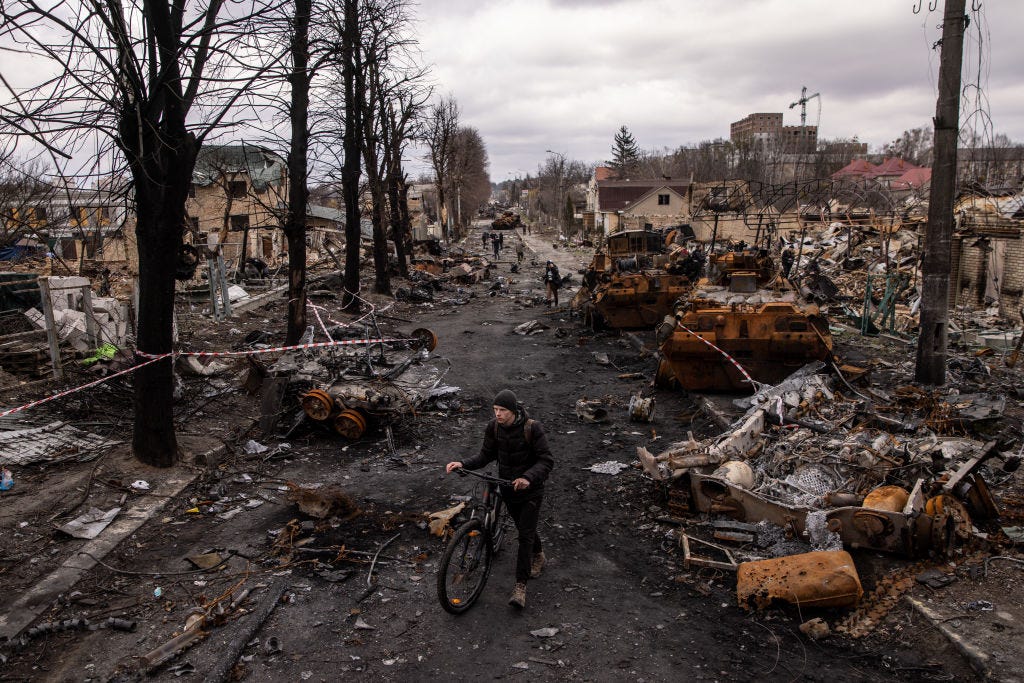
Former Army Secretary Driscoll praises Ukraine's warfare innovation in Kyiv during 1st public appearance since resigning
Kyiv - In his first public appearance since leaving the Trump administration, former Secretary of the Army Dan Driscoll warned of "an inflection point in warfare," arguing that the world's largest militaries "have not adopted the speed and the innovation that they need."
Wearing a tie embroidered with a traditional Ukrainian pattern, Driscoll spoke alongside Eric Schmidt, the former Google CEO who now heads Perennial Autonomy, an American defense firm active in Ukraine. CNN's Fareed Zakaria moderated the discussion on the second day of the Yalta European Strategy forum, an annual conference organized by the Victor Pinchuk Foundation to discuss Ukraine's future in the West's security architecture.
Driscoll and Schmidt praised Kyiv's wartime innovations, in particular "DELTA," a Ukrainian software platform that allows military leaders to see a more complete picture of the battlefield by tying together data from radars, sensors and soldiers. The platform, Driscoll said, surpasses any technology the U.S. military currently possesses.
Driscoll said that as Ukraine obtains more processing power and expands its AI capabilities, it will have "an amazing opportunity for your nation to outrun the Russians, and out-innovate them, and out-partner so that you can crush them."
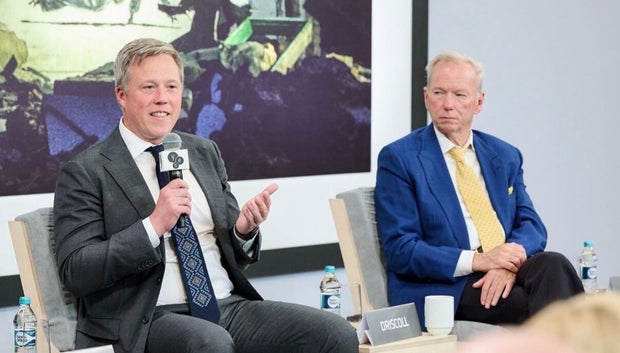
Driscoll, an Iraq War veteran and former venture capitalist, is a longtime friend of Vice President JD Vance, whom he met at Yale Law School. As Army secretary, he also took part in the administration's efforts to negotiate an end to Russia's war in Ukraine.
His resignation was announced on Aug. 31 amid reported clashes with Defense Secretary Pete Hegseth over the removal of senior officers and the Army's modernization efforts. The White House did not give a reason for his departure.
During his 18 months as Army secretary, Driscoll pushed the U.S. military to apply lessons from the war in Ukraine. In January, the Army began rolling out procurement reforms aimed at getting new weapons into soldiers' hands more quickly.
The war with Iran has underscored this urgency. When Driscoll realized the U.S. lacked the defenses it needed against Iranian Shahed drones, help came not from America's largest defense contractors but from Schmidt's Perennial Autonomy. The company quickly supplied 13,000 "Merops" interceptor drones and 10,000 "Bumblebee" reconnaissance and strike drones — both widely used in Ukraine.
"He literally called me and I said, of course, yes," Schmidt said. "The question is, could the government have had a multi-year plan to anticipate this?"
Driscoll said that part of the key to answering those questions will be "to internalize these lessons that what you're doing here [in Ukraine] in a very scrappy, fast, iterative nature."
This found a receptive audience among the Ukrainian, European and American ministers, generals and legislators. When Zakaria, the moderator, noted the gap between the 300,000 drones the U.S. is likely to buy this year and the 7 million drones Ukraine will produce, former CIA Director David Petraeus shouted from the audience that Ukraine's projection is closer to 10 million drones.
But in recent months, the U.S. has seemed to turn away from the people and processes dedicated to learning lessons from the war in Ukraine. In August, the U.S. Army phased out a drone battalion tasked with studying lessons on Ukraine's drone warfare. Two of the unit's prominent backers, former Army Chief of Staff Gen. Randy George and the former commander of U.S. Army Europe and Africa, Gen. Christopher Donahue, were both fired or forced to retire early this year.
Driscoll did not address those departures. He defended the administration's commitment to Ukraine, while acknowledging that its support had fallen short of Kyiv's expectations.
"I believe the relationship that the U.S. has had with your country throughout this, has remained, not perhaps, as strong as you wanted, but from my position, it's been unflinching in the desire for you to be successful," he said.
But Driscoll had decided his own contribution would be greater outside government.
"My highest and best use to make the world a little bit safer at this very scary time was to do it on the outside," he said.