Can you negotiate a lower minimum credit card payment?
Credit card debt is taking up a lot more room in borrowers' budgets right now, and it's having a big impact on their finances. Credit card balances climbed by $21 billion during the second quarter of 2026, reaching $1.26 trillion, and while balances are growing, carrying that debt remains expensive. After all, the average interest rate on credit card accounts assessed interest is currently 22.15%, meaning the compound interest can add up quickly — even on a moderate balance.
That combination of growing credit card debt and high interest rates can make even the minimum credit card payment difficult to fit into your monthly budget, especially when you factor in the other economic hurdles that are looming, like high inflation. After all, the more you owe — and the more interest that accrues — the more money you may have to devote to your credit card bills each month. And, if you're juggling balances on several cards, those required payments can add up quickly.
When that happens, it may seem like the simplest solution is to call your card issuer and ask for a smaller minimum payment. But credit card minimums aren't typically handled the same way as a bill you can simply negotiate down. So, can you actually negotiate a lower minimum payment on your card account? That's what we'll examine below.
Find out if you qualify to settle your high-rate debt for less today.
Can you negotiate a lower minimum credit card payment?
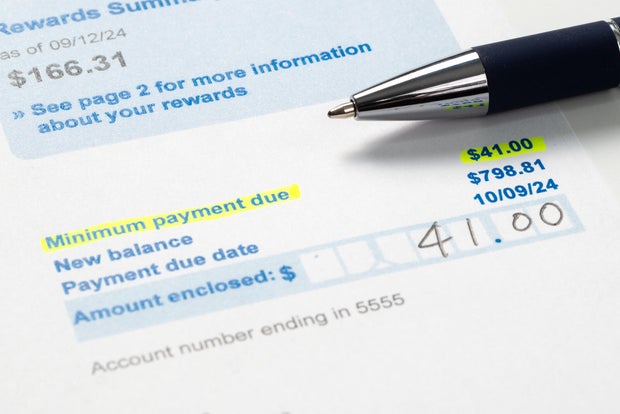
You generally can't negotiate the minimum payment shown on your credit card statement simply because you'd prefer to pay less. Card issuers calculate minimum payments according to the terms of the account, often using a percentage of the balance, a flat dollar amount or a combination of the balance, interest and fees.
But if you can't afford that required amount, contacting your card issuer could still pay off. Many card issuers offer hardship or payment assistance programs for cardholders who are dealing with financial difficulties. So, if you're facing a genuine financial hardship and can no longer afford your minimum payments, contacting your card company immediately could result in getting the help you need.
Depending on the issuer and your circumstances, enrolling in a hardship program could result in temporarily reduced monthly payments, or it could result in a lower interest rate, waived fees or restructured repayment terms. Those changes can also indirectly make the monthly obligation more affordable, even if the issuer isn't technically rewriting its standard minimum payment formula.
That's an important distinction. With a hardship program, you're asking the issuer to modify the terms under which you're repaying the debt rather than simply choosing to pay less than the minimum due. Sending less than the required amount without an approved arrangement can still result in a late payment, fees and potential damage to your credit.
So, call your card issuer before you miss a payment, if possible, and be specific about what has changed financially and what you can realistically afford. You may also want to ask how long any reduced payment arrangement lasts, whether interest will continue accruing, whether your card will be closed or restricted and what happens when the hardship period ends.
Don't agree to a lower payment simply because it provides immediate breathing room, though. If the arrangement stretches repayment over a much longer period, for example, you could remain in debt longer. Understanding the full terms of the arrangement can help you determine whether the short-term relief makes sense for your finances.
Explore your debt relief options and find the right solution now.
What if lowering your minimum payments isn't enough?
A lower credit card payment can help if you're dealing with a temporary financial setback. If you're struggling to cover minimums across several cards, though, or if your balances continue growing despite making payments, a temporary adjustment may not solve the larger problem.
In that situation, it may be worth looking at broader forms of debt relief.
One option to consider is a debt management plan through a credit counseling agency. Rather than reducing the amount of principal you owe, a credit counselor may work with participating creditors to lower your interest rates and fees or adjust repayment terms. You then make one monthly payment to the counseling organization, which distributes the money to your creditors.
Debt consolidation could be another possibility worth considering, particularly if you qualify for a loan with terms that make your payments more manageable. This approach generally requires you to take out a loan and use it to pay off multiple eligible debts, rolling those into one new payment obligation. However, whether consolidation saves you money depends heavily on the interest rate, fees and repayment term you're offered.
For borrowers facing more serious financial hardship, debt settlement — also referred to as debt forgiveness — may also be worth exploring. This strategy involves negotiating with creditors to accept less than the full balance owed. It carries substantial tradeoffs, though, including potential credit damage, tax implications and no guarantee that creditors will agree to settle. In turn, it generally makes more sense to evaluate settlement as part of a larger debt problem rather than as a way to shave a few dollars off an otherwise manageable minimum payment.
The bottom line
Your credit card issuer probably won't let you arbitrarily choose a lower minimum payment, but that doesn't mean the amount you're currently required to pay is your only option. If you're having trouble keeping up, ask the card issuer about hardship programs or other payment arrangements before you fall behind. And if your minimum payments are unaffordable because your overall debt load has become too large, it may be time to look beyond a temporary payment reduction and consider whether a more comprehensive debt relief strategy offers a workable path forward.