Can Navigation Satellites Stand Up to a Stormy Sun?
At first blush, it seemed an unusual reason to issue a press release but the European Space Agency wanted to counter recent press reports suggesting that an expected surge in solar activity might wreak havoc with its plans for a global navigation satellite system.
Galileo will be Europe's own global navigation satellite system. Two experimental satellites have already been sent into space while four operational satellites are due to get launched in 2011. When all is said and done, some 30 satellites (27 operational + 3 active spares) will circle the Earth.
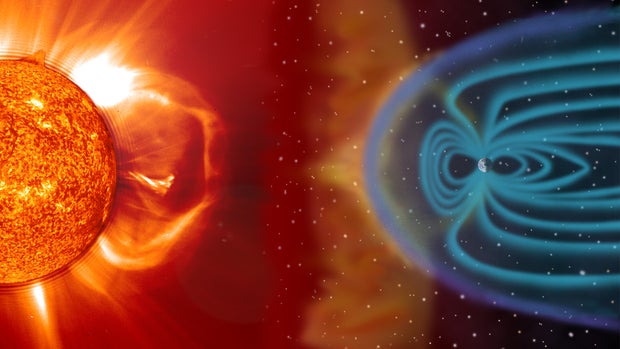
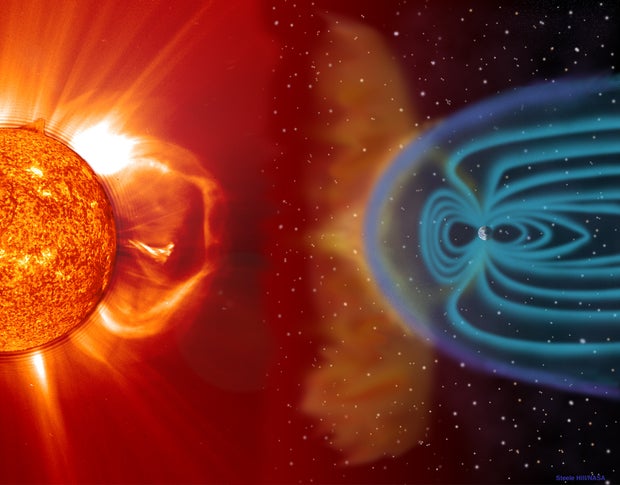
But the next big burst in solar sunspot activity, the so-called solar maximum, is due sometime 2013, not long after ESA launches its first four operational Galileo satellites. Bertram Arbesser-Rastburg, who directs ESA's Electromagnetics and Space Environment division, downplayed the impact of the `solar max' as anything but a surprise event. "Astronomers counting sunspots have tracked the solar cycle for more than 250 years," he said. "All the indications are this solar max will not be especially energetic as the last solar minimum has been unusually long and deep."
Still, these expensive satellite navigation machines will be put to the test when they find themselves hurtling through regions of charged particles some 22 000 kilometers above the Earth. ESA says they have been "built to endure the worst of the worst." It won't be long before they get a chance to put that claim to the test.