Recent commencement speeches show students are souring on AI. How deep is the angst?
Public attitudes toward AI seem to be evolving as quickly as the technology permeates society.
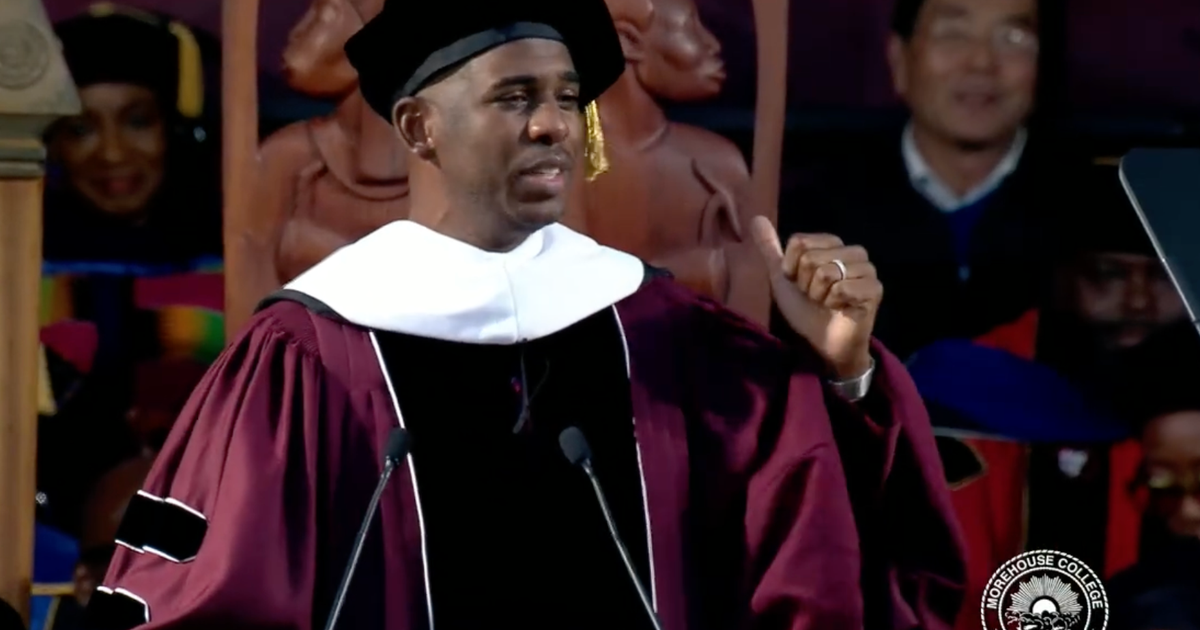
That dynamic was on full display on Sunday, when University of Arizona students jeered former Google CEO Eric Schmidt during his commencement speech as he discussed the future of AI, according to an online video of his remarks posted by the school.
Schmidt may have felt his comments, which highlighted the growing impact of AI on daily life, were safetly uncontroversial. But they struck the wrong chord with some of the school's new grads.
"His speech was incredibly disrespectful to students," said Olivia Malone, a 22-year-old University of Arizona graduate bound for law school, told the Associated Press. "We as students are discouraged from using it and penalized for using it. And then to have our speaker be the champion of AI is just like, OK? Why?"
Commencement speakers at the University of Central Florida and Middle Tennessee State University also elicited negative reactions when they mentioned AI in their speeches, according to NBC News.
The backlash reflects a broader tension over AI: Companies and executives are promoting it as a productivity breakthrough, while many workers, especially younger Americans trying to start careers, fear it could narrow their path into stable employment.
Job fears take hold
Recent data from Gallup captures the growing pessimism: 43% of people ages 15 to 34 think it's a good time to find a job, down from 75% in 2022, and 21 percentage points lower than those 55 and older. This may "partly reflect anxiety about automation and artificial intelligence displacing entry-level roles," Gallup said.
To make matters more complicated, recent graduates are entering the workforce at a historically challenging time in the labor market, marked by muted hiring. Data from the Labor Department shows the unemployment rate for 20- to 24-year-olds stood at 7.6% in April, above the overall rate of 4.3%. Some recent grads describe sending hundreds of applications before landing a role.
"They're worried about AI and creativity, they're worried about AI and impact on relationships, like adults in general, they're worried about AI and jobs," said Colleen McClain, a senior researcher at the Pew Research Center who specializes in internet and technology.
Sami Wargo, a fresh graduate from Marquette University in Milwaukee, told the Associated Press she has applied for roughly 30 jobs, so far to no avail. Many of the listings say job candidates must "collaborate with AI," Wargo said, while adding, "I don't know what that means" and noting that most of her classes banned her from using AI.
Perhaps no surprise, then, that she expressed frustration when her school lined up an AI expert as its undergraduate commencement speaker despite a student petition pressing Marquette to find someone else.
"Given how AI has become an increasing threat towards our jobs, especially for our graduating class, we thought it was a little bit tone deaf," Wargo told the AP, who majored in digital media and minored in advertising.
Growing skepticism
It's not just college students, with the broader American population also voicing mixed feelings about the potential benefits of AI. A recent CBS News Poll found that many people report being content to hand over more tedious tasks, such as proofreading, to AI to save time.
Many corporate executives also tout AI as a way for businesses to boost productivity and profits. JPMorgan CEO Jamie Dimon recently told CBS News that the technology could shorten the workweek and deliver major scientific breakthroughs.
However, data from the Pew Research Center suggests that as Americans become more familiar with the technology, they are also becoming more skeptical of it.
"One trend we've seen is that Americans have become more wary of AI over time," McClain said. "We see that since we started tracking these views in 2021, concern has increased."
Part of that wariness is showing up in concerns about the job market: 42% of Americans think AI will eliminate jobs in their field, while 45% think AI companies will hurt the economy, according to separate CBS News polling in 2025.
AI's labor market impact
There's a disconnect between the general public and AI experts when it comes to how AI will impact jobs, McClain said.
According to a 2025 Pew Research survey, 73% of AI experts think AI will have a very or somewhat positive impact on work, compared to just 23% of U.S. adults.
While economists say AI's impact on the labor market remains relatively muted so far, there are some signs of strain: New research from Goldman Sachs shows that job openings in occupations highly exposed to AI — where the technology is likely to substitute for human labor — are now below pre-pandemic levels. Vulnerable professions include legal assistants, proofreaders, telephone operators and insurance claims clerks.
While AI isn't killing vast numbers of jobs, the shift suggests the technology is already rewiring parts of the labor market as companies seek ways to cut costs and boost productivity.
For instance, the fastest-growing job title for young U.S. workers on LinkedIn is "AI engineer," the networking company recently found. Between 2023 and 2025, LinkedIn added 639,000 AI-related job postings in the U.S., 75,000 of which were AI engineer roles.
Echoes of the dot-com era
It remains to be seen whether AI will deliver robust job growth and how the labor market would fare if, as some speculate, an AI bubble were to burst. History provides a cautionary tale.
At the peak of the dotcom era boom, the Congressional Budget Office projected the economy would create a million jobs or more each year from 2001 to 2003, Dean Baker, an economist and the founder of the Center for Economic and Policy Research (CEPR), said in a post on the think tank's website.
However, those jobs never materialized. In fact, the economy lost jobs in 2001 and 2002 and gained only a small share in 2003, according to Baker.
He said it's difficult to predict the timing of a possible AI bubble and the damage it will cause. But one thing is clear: "The part of the story that we can be certain about is that, as was the case with the last two bubbles, the economic forecasters will miss it," he said.