How the Great Miami Hurricane of 1926 devastated South Florida and changed the region for decades

One hundred years ago, one of the most destructive hurricanes in South Florida history roared ashore, devastating communities, killing hundreds and dealing an economic blow that some historians say took the region decades to fully overcome.
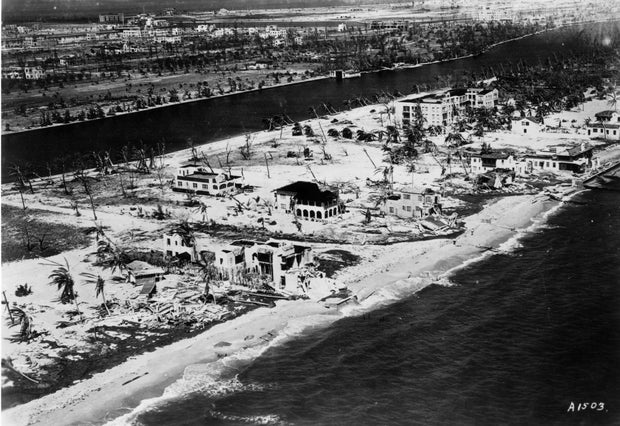
The Great Miami Hurricane made landfall on Miami Beach on Sept. 18, 1926, before its eye passed directly over Downtown Miami. The massive storm brought destructive winds and storm surge across a wide swath of South Florida, with damage stretching from Palm Beach and Fort Lauderdale to Hallandale Beach, Everglades City and the Lake Okeechobee region.
An estimated 372 people were killed across the region, including 114 in what is now Miami-Dade County and 45 in Broward. Damage was estimated at about $100 million at the time. Some modern estimates put the potential cost of a similar storm today as high as $235 billion.
Unlike Hurricane Andrew, a relatively compact but exceptionally intense storm that struck South Florida in 1992, the 1926 hurricane affected a much broader area.
South Florida had little warning before the hurricane
The hurricane largely caught South Florida by surprise. Weather officials did not take serious notice of the threat until the storm reached the Bahamas on Sept. 17, just a day before landfall.
There were no weather satellites or radar to track the hurricane, and residents did not have access to the modern warning systems that provide days of notice ahead of approaching storms.
The danger was compounded by Miami's booming population. Many residents had recently moved from northern states and had little or no experience with hurricanes.
That unfamiliarity proved deadly when the hurricane's eye passed over Miami. Some residents mistook the sudden calm for the end of the storm and ventured outside.
Richard Gray, the chief meteorologist in charge of the Miami Weather Bureau, reportedly shouted warnings from his downtown office window before taking to the streets to tell residents that the storm was not over.
Then the hurricane's backside arrived.
"There were a lot of people that were swept into the river," Miami historian and documentarian Casey Piket told CBS News Miami.
Piket, a fifth-generation Miami resident, grew up hearing stories about the hurricane from relatives who survived the storm but lost their home.
"They left there to a friend's house but had to crawl across the street just to get there," Piket said.
Hurricane's winds battered some of Miami's best-known buildings
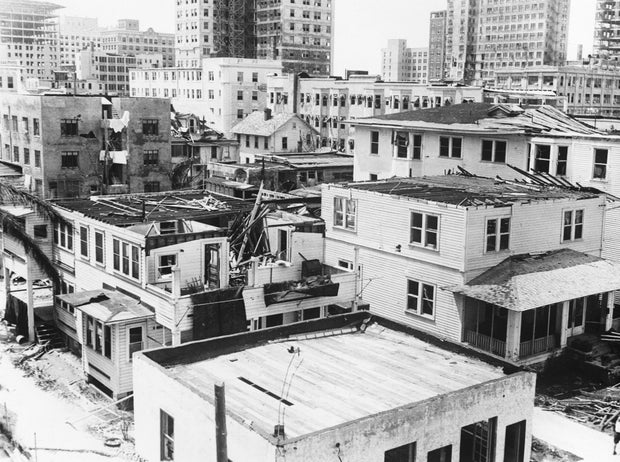
The hurricane's storm surge claimed lives while its winds ripped apart wooden homes and tore roofs from masonry structures.
Some of Miami's major buildings survived, although several sustained extensive damage.
Among the most dramatic examples was the 17-story Meyer-Kiser Building in Downtown Miami. The structure was battered by winds estimated at 145 to 150 mph.
"It was damaged so badly they said steel was twisted because of the wind," Piket said. "What they ended up doing was lopping off the top 10 stories, and now it is a seven-story building."
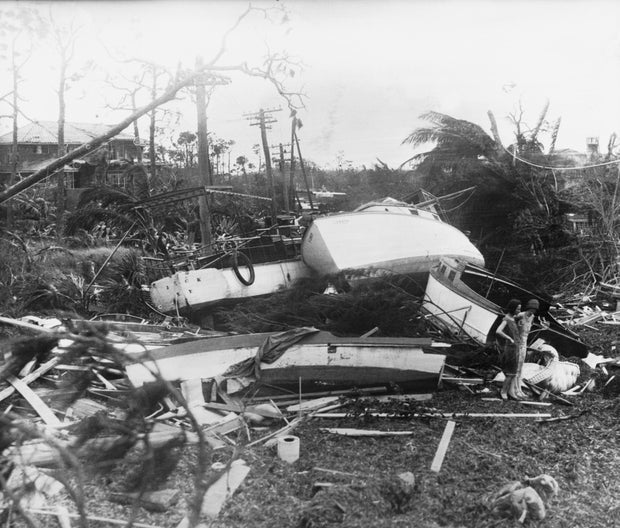
On Miami Beach, the Browns Hotel also took the brunt of the hurricane. Built with sturdy Dade County pine, the building survived and remains standing a century later. It now houses the restaurant Prime 112.
The hurricane's consequences extended well beyond the physical destruction. It struck as South Florida's land and construction boom was already beginning to falter, worsening the region's economic troubles years before the 1929 stock market crash ushered in the Great Depression nationally.
"It really kind of catapulted Miami into the Great Depression three years before the rest of the country," Piket said.
Some accounts suggest South Florida did not fully recover from the hurricane and the economic downturn that followed until well into the 1930s or even the World War II era.
A century later, Piket said the Great Miami Hurricane carries an enduring warning for the millions of people who now call South Florida home, including newcomers who have never experienced a major hurricane.
"It should serve as a reminder that natural disasters are part of our ecology, our ecosystem in Miami," Piket said.
The hurricane of 1926 showed the potential price of living in paradise, a lesson that remains relevant 100 years later.