Why Florida officials say you should never put a stranded sea turtle hatchling back in the ocean
The Florida Fish and Wildlife Conservation Commission is warning beachgoers not to put stranded sea turtle hatchlings back into the ocean as storms and rough surf can wash the young turtles ashore during nesting season.
In guidance issued Friday, the FWC said high winds and waves from storms on and offshore can affect sea turtles, hatchlings and their nests. Hatchlings may be found tangled in seaweed along the shoreline or in unusual places such as swimming pools and yards.
Anyone who finds one of these stranded "washback" hatchlings should not pick it up or return it to the water, according to the FWC. Instead, people should immediately call the agency's 24-hour Wildlife Alert Hotline at 888-404-FWCC (3922) for instructions.
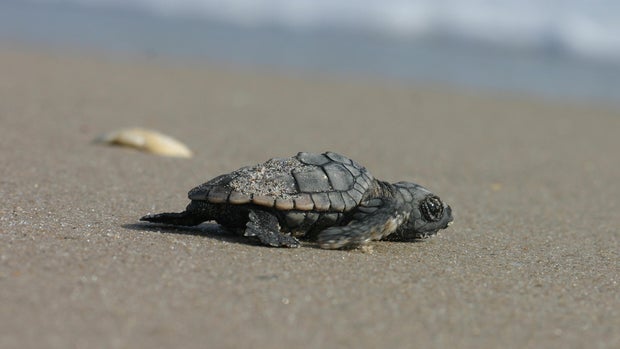
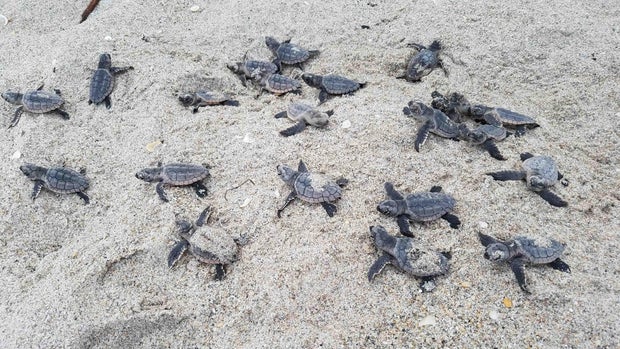
Hatchlings that are actively crawling toward the ocean should be left alone and do not need assistance, the agency said.
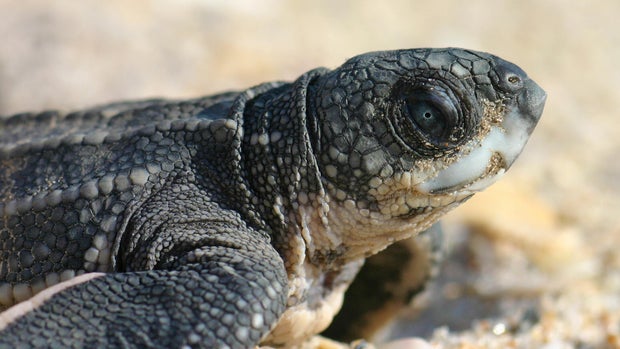
All sea turtles are protected as threatened or endangered species and stranded hatchlings can require specialized care, FWC said.
Florida law also protects sea turtles and their hatchlings from being disturbed or possessed without authorization. Under the state's Marine Turtle Protection Act, illegally taking, disturbing, molesting or harassing a marine turtle, as well as possessing a marine turtle or hatchling, is a third-degree felony.
A third-degree felony in Florida is punishable by up to five years in prison and a fine of up to $5,000.
Why do sea turtle hatchlings wash ashore?
After emerging from their nests, hatchlings travel across the sand and into the ocean, beginning a journey of several miles to reach floating vegetation that provides food and shelter.
The young turtles can end up in floating patches of sargassum, which can be pushed back toward shore by storm-driven currents and winds. When that happens, the sargassum can carry posthatchling sea turtles with it, leaving the turtles stranded onshore, FWC said.
What should you do if you find sea turtle eggs?
Storms and high waves can also uncover sea turtle eggs or sweep them from their nests.
The FWC is asking people who encounter exposed eggs to leave them where they are. According to the agency, eggs rarely survive after being swept from a nest by rough surf.
Storms, however, do not necessarily spell disaster for an entire sea turtle nesting season.
Female sea turtles deposit eggs in several nests throughout the season, increasing the likelihood that some will successfully incubate even when hurricanes or tropical storms affect Florida's coastline.
The FWC said that even during years when Florida experienced direct impacts from multiple storms, hatching and emergence success rates remained within the normal range.
Florida sea turtle nesting season continues through October
Sea turtle nesting season continues through October in Florida, and wildlife officials are reminding residents and visitors to keep beaches "clear, clean and dark."
Beachgoers can help by taking chairs, umbrellas and other equipment with them when they leave, filling in holes dug in the sand and properly disposing of trash. Fishing line should also be recycled or discarded appropriately.
Lights on or near the beach should be turned off at night because artificial lighting can interfere with nesting sea turtles and hatchlings.
Anyone who encounters a stranded, injured, trapped or dead sea turtle or hatchling should also report it to the FWC Wildlife Alert Hotline at 888-404-FWCC (3922).