It's eating alligator and crocodile eggs. Meet the giant invasive lizard spreading across Miami.
Argentine soccer star Lionel Messi has captivated South Florida with his brilliance on the pitch at Inter Miami. But there's another Argentine drawing attention across the region: a giant invasive lizard that Florida wildlife officials are working to stop.
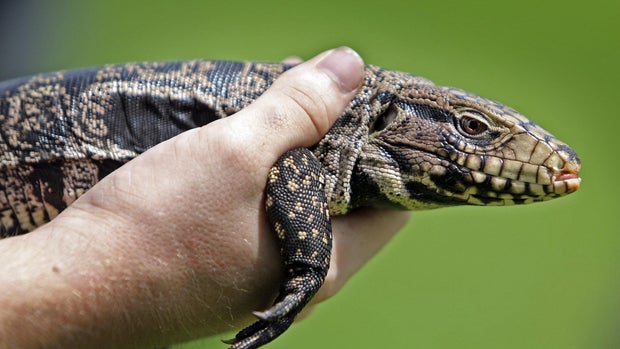
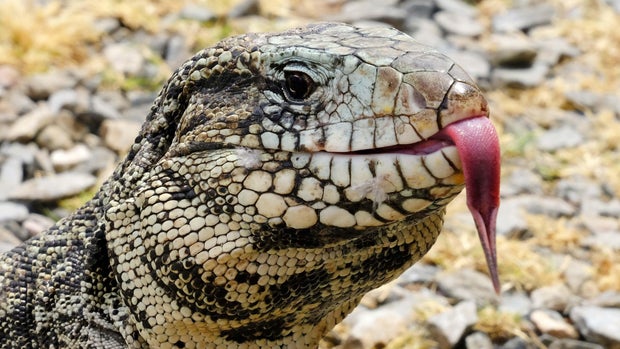
The Argentine black and white tegu, a lizard that can grow up to 4.5 feet long and weigh 15 pounds, has become one of Florida's most widespread invasive reptiles, and nowhere has the problem been reported more often than in Miami-Dade County.
According to the Early Detection & Distribution Mapping System (EDDMapS), as of July 2026, Miami-Dade has recorded 8,342 reported tegu sightings, by far the most of any county in the United States. That's more than four times the number reported in second-place St. Lucie County, which has 1,981 reports. Broward has recorded 98 reports, Palm Beach County has 49 and the Florida Keys have 25.
Wildlife officials say the large lizards are more than just an unusual backyard sighting. They threaten native wildlife by eating eggs, young animals and even endangered species, prompting ongoing efforts to remove them from Florida.
Why are tegus a problem in Florida?
Native to South America, Argentine black and white tegus were introduced to the United States through the exotic pet trade as early as 2002. Wildlife experts say escaped or intentionally released pets established breeding populations in Florida, where the warm climate allowed them to thrive.
These omnivorous reptiles eat almost anything they can find, including bird, American alligator, American crocodile and sea turtle eggs, as well as gopher tortoises, small mammals, insects, fruit and pet food left outdoors.
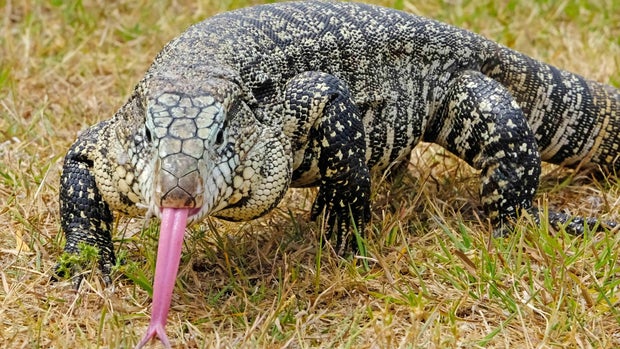
Researchers with the South Florida Water Management District have documented tegus raiding alligator and crocodile nests in South Florida, and Florida Fish and Wildlife Conservation Commission officials say the reptiles also consume threatened juvenile gopher tortoises and agricultural crops.
Adult tegus have few natural predators in Florida, allowing populations to grow once they become established, experts say.
Miami-Dade's growing tegus population
Florida has four known breeding populations of Argentine black and white tegus, including one in southern Miami-Dade.
Other established populations are found in Hillsborough, Charlotte and St. Lucie counties, while sightings elsewhere are generally believed to involve escaped or released pets rather than self-sustaining populations, according to officials.
According to researchers, Miami-Dade's breeding population has existed for well over a decade, helping explain why the county has accumulated thousands more reported sightings than anywhere else in the country.
Miami-Dade's 8,342 reports dwarf every other U.S. county.
How big do Argentine black and white tegus get?
These aren't your typical backyard lizards.
According to FWC, Argentine black and white tegus can:
- Grow to nearly 5 feet long
- Weigh up to 15 pounds
- Live up to 20 years
- Lay about 35 eggs each year
Young tegus are easy to identify because they have a bright green head that fades after about a month. Adults develop their distinctive black-and-white banded pattern.
What should you do if you see a tegu in Florida?
Florida classifies Argentine black and white tegus as an invasive species that is not protected, except under animal cruelty laws.
The FWC encourages people to report sightings by taking a photo, noting the location and submitting it through the IveGot1 app, the IveGot1 website or by calling the Exotic Species Hotline at 888-Ive-Got1.
On private property, tegus may be humanely removed with the landowner's permission. They also may be captured and humanely killed year-round on dozens of commission-managed lands in South Florida without a permit or hunting license.
Officials urge pet owners never to release unwanted exotic animals into the wild. Instead, owners who can no longer care for a tegu can surrender it through Florida's Exotic Pet Amnesty Program, which helps rehome exotic pets without penalties.