What Fauci has said about COVID origins and gain-of-function research in his spat with Rand Paul
Thursday's vote by a Senate panel to recommend holding Dr. Anthony Fauci in contempt of Congress builds on more than five years of tension between the federal government's former top infectious disease expert and Republican Sen. Rand Paul of Kentucky — much of it hinging on the origins of the coronavirus and a controversial branch of biological research.
In Senate hearings, Paul has repeatedly accused Fauci of downplaying the theory that the virus emerged from a lab in the Chinese city of Wuhan rather than jumping from animals to humans naturally. The senator has also argued risky "gain-of-function" experiments that aim to modify viruses took place at that lab with support from Fauci's National Institute of Allergy and Infectious Diseases, and has accused Fauci of lying about it.
Fauci has strongly denied the senator's allegations, saying he has always kept an open mind about the virus' origins. He has also accused Paul of misrepresenting the types of federally supported research that took place in Wuhan, and has emphasized that the viruses studied there were far removed from the one that caused the COVID-19 pandemic.
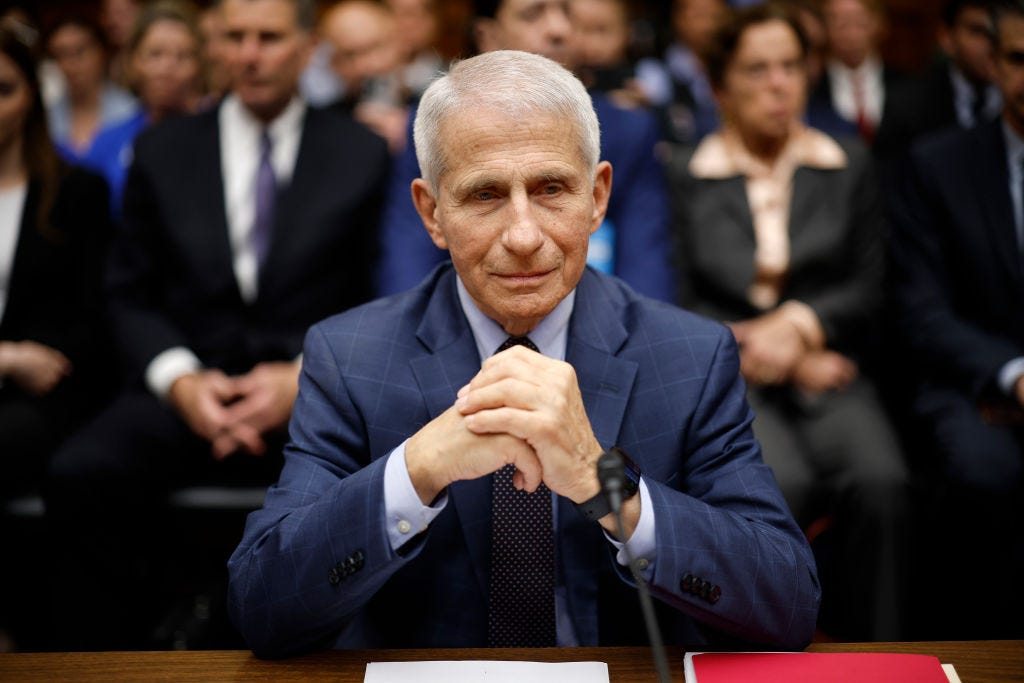
Then, in an appearance before the Senate Homeland Security Committee last week, Fauci invoked the Fifth Amendment in response to every question, citing Paul's "unhinged obsession with me" and desire to put him "behind bars." Paul has sought to hold Fauci in contempt, arguing he can't take the Fifth because he is already insulated from prosecution by a Biden-era pardon. Whether to charge Fauci would be up to the Justice Department.
Here's what to know about the controversy:
What is the "lab leak" theory?
The precise origins of the virus that caused the COVID-19 pandemic have not been definitively nailed down — drawing years of debate among medical experts and intelligence officials.
Many scientists believe the evidence suggests that the virus emerged naturally in bats, circulated to other species and spilled over to humans, spreading at a live animal market in Wuhan where the first human cases appeared in late 2019. Others believe the virus accidentally leaked from the nearby Wuhan Institute of Virology, which was researching bat viruses. That lab conducted some research that was funded by nearly $600,000 in U.S. government money due to a federal grant issued to a nonprofit research group.
Last year, a panel of experts assembled by the World Health Organization was unable to reach a firm conclusion on how the coronavirus emerged, writing that the "weight of available evidence" suggested a natural origin but they couldn't rule out a lab leak.
The U.S. intelligence community offered a similarly mixed view in 2023. The National Intelligence Council and four other agencies found the virus likely infected humans through natural exposure to an animal, while the FBI and Department of Energy believed it was likely a lab incident. The CIA didn't reach a conclusion at the time, though it favored a lab leak last year.
Some of the debate revolves around "gain-of-function" research, a practice broadly defined as modifying or enhancing viruses to study how they might evolve — and allegations that some of the research in Wuhan fell into that category. The method can be controversial, with opponents warning it could be risky and proponents arguing it could help stop future pandemics.
What has Fauci said about the lab leak theory?
Fauci has said publicly in recent years he is open to the idea that the virus that caused COVID-19 could have leaked from a lab, but he believes most of the evidence supports a natural origin.
"We keep a completely open mind as to what the origin is," Fauci told CBS News' "Face the Nation with Margaret Brennan" in late 2022. "Having said that, if you look at the examination by highly qualified international scientists with no political agendas, they've published in peer reviewed journals, the best of the peer reviewed journals, that all the accumulated evidence … is quite strong that this is a natural occurrence."
Fauci pointed to evidence "related to the Chinese bringing into the Wuhan market animals from the wild that should not have been there, that clearly could have brought [the virus] from a bat to them to a human." But he added that "we've got to investigate every possibility because this is too important not to do that," and said the Chinese regime hadn't shared enough information.
Early on in the pandemic, in interviews and news conferences, Fauci argued that the evidence pointed "very, very strongly" toward a natural origin. In one April 2020 White House news conference, Fauci told reporters a newly released study showed "the mutations that it took to get to the point where [the virus] is now [are] totally consistent with a jump of a species from an animal to a human."
Paul and other congressional Republicans have accused Fauci of downplaying the possibility of a lab leak — and have suggested he helped steer the public debate toward a natural origin in the pandemic's early days even as experts privately thought a lab leak was possible. Fauci has denied that, saying he always kept an open mind.
House Republicans in 2023 accused Fauci of exerting "undue influence" behind the scenes over the 2020 study that pointed toward a natural origin. In a dueling report, House Democrats argued Fauci didn't play a role in drafting the paper and wasn't trying to silence other theories.
Fauci mentioned the uncertainty about the virus' origins in diary entries that Paul released last month. In January 2020, he wrote that "we know the market was not the source, it was the amplifier," though he added that "somewhere the virus jumped from animals to humans."
What has Fauci said about gain-of-function research — and whether it's linked to COVID-19?
Fauci has long argued the federally backed studies that took place at the Wuhan Institute of Virology did not constitute dangerous gain-of-function research under the government's definition. Moreover, he has stressed, the viruses that were studied could not have caused the pandemic.
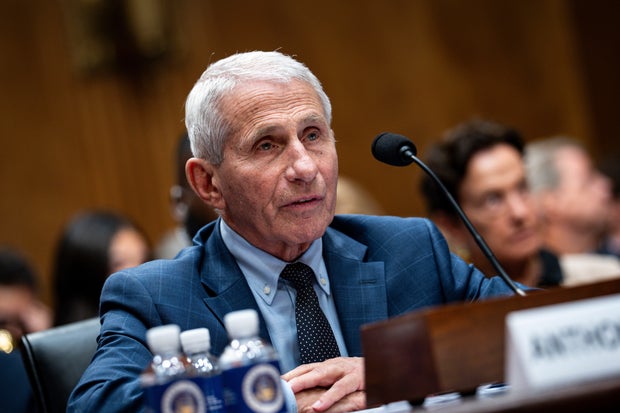
"The NIH has not ever and does not now fund gain-of-function research in the Wuhan Institute of Virology," Fauci said in one May 2021 Senate hearing, during questioning from Paul.
In another hearing two months later, Fauci told Paul the research in Wuhan was "judged up and down the chain as not being gain-of-function."
Paul accused Fauci of lying in those hearings, arguing the experiments did constitute gain-of-function research — producing fiery back-and-forths in which Fauci accused the senator of lying and said "you do not know what you are talking about."
The disagreement hinges in part on the definition of risky gain-of-function research, as CBS News medical correspondent Dr. Céline Gounder has explained. Fauci told Paul in one 2021 hearing the term is "very nebulous."
In 2017, federal officials lifted a three-year pause on funding certain gain-of-function research and replaced it with extra scrutiny for studies involving "enhanced potential pandemic pathogens," or EPPP — defined as pathogens that are highly transmissible and virulent in humans and that have been enhanced to make them more transmissible or virulent. That's the definition of risky research that Fauci pointed to in Senate testimony.
The research that was conducted in Wuhan with federal support involved modifications to bat viruses to study their potential impact on humans. The National Institutes of Health said in 2021 that these studies did not fit the definition of EPPP research that needed an extra layer of federal review since they focused on bat coronaviruses that hadn't infected humans.
Paul has accused Fauci of "parsing words," arguing the research does meet the definition since the viruses that were studied were enhanced. (The NIH has said the mice that the viruses were tested on became sicker, but called it an "unexpected result.")
Another area of dispute: Whether the research conducted in Wuhan — however it's classified — could be linked to SARS-CoV-2, the virus that caused the COVID-19 pandemic.
Fauci has long called that idea "molecularly impossible," noting that the viruses that were studied in Wuhan under federal grants were very different than the one that caused COVID.
"When you have a virus, if you're going to manipulate it in a way to make it a dangerous virus, you have to start off with a precursor virus that's close enough to the virus that you ultimately make that it is molecularly possible to do that," he told CBS News chief medical correspondent Dr. Jon LaPook in a 2024 interview. "What is absolutely 100% certain is that the viruses that were studied under the NIH grant for the kinds of experiments that were done, molecularly, were so far removed from SARS-CoV-2 that they could not have turned it into SARS-CoV-2 even if they tried, which they obviously didn't do."
Fauci continued: "Evolutionarily, it's so far, it would take 20 years of evolution to get it there."
Paul has suggested other experiments in Wuhan may have used the same research methods, which he argues are "risky" and need intense scrutiny.
"No one is alleging that those viruses caused the pandemic," he told Fauci in 2021. "What we're alleging is that gain-of-function research was going on in that lab and NIH funded it."
In recent weeks, Paul has pointed to diary entries in which Fauci discusses the debate early on during the COVID-19 pandemic over whether the virus emerged from a lab.
On Feb. 1, 2020, Fauci describes a call with a dozen top infectious disease experts about features of the virus, including discussion of what's known as the furin cleavage site. He said two people on the call were "sure that this could occur naturally," but "the rest felt that deliberate insertion was possible" and "we could not let this go."
A day earlier, Fauci referred to "conspiracy theories that the virus was given [gain of function] by inserted mutations and deliberately or accidentally released in Wuhan." Fauci wrote that he suggested convening a group of evolutionary biologists to "carefully look at this."