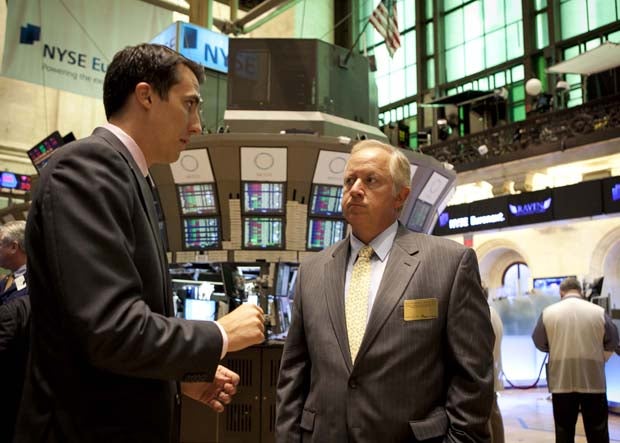
Fernando Aguirre, Chairman and CEO of Chiquita Brands International, appeared on CBS's Undercover Boss on Sunday. October 31. He cored lettuce, drove a forklift -- and found that he didn't make the grade on either job. In this interview, Aguirre shares with BNET's Melanie Warner how immigration issues affect his company, his plans to improve training, and how often he really eats bananas.
Undercover Boss: Chiquita's Fernando Aguirre
Undercover Boss: Chiquita's Fernando Aguirre
Going Undercover
BNET: Tell me about the cover story you used to go into all the different jobs at Chiquita.
Aguirre: The story we used was that I was an immigrant without a job and I was looking for opportunities to test different types of jobs and Chiquita had agreed to allow a company to film what I was doing to evaluate me. We used a Mexican name, Manuel. It was easy because I could go back to my own experience as an immigrant.
BNET: What intrigued you about doing the show?
Aguirre: One of the big things was that it was an opportunity for me to see people working at the company in an unfiltered way. When I go visit our operations as a CEO everyone prepares tremendously. You make everything look good. Going undercover, you don't give them advance notice and they don't know it's the CEO, so I thought it was a great way to see what really happens in the trenches. I particularly wanted to see whether the values of the company are registering with employees.
Undercover Boss: Chiquita's Fernando Aguirre
Training the Trainers
BNET: Is there anything that you're going to do differently at Chiquita as a result of your experience in the trenches?
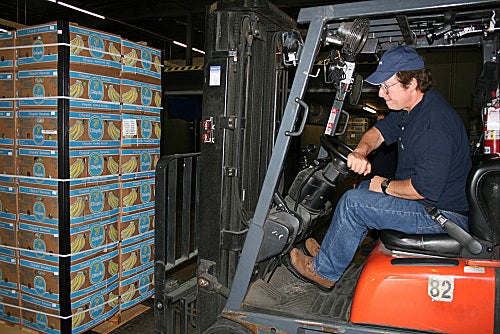
Aguirre: Since the jobs that I was doing were things I'd never done before in my life, I had to have people train me. Some jobs I didn't do very well. Coming from a company like P&G where it's a great training organization, it was very interesting learning for me to see that we have some people who are good trainers and some of who are not so good. Like when I drove a forklift, I didn't feel like I got the training I needed to get. I had actually done a required four-hour training in order to get my forklift license, but there are several different types of forklifts and I got in one that, of course, was not the one I had trained in. So I got in thinking this will be easy, but it wasn't easy at all.
So one of the things we're doing as a company is to establish a more formal way of training people in every function to make sure they're going through the right process. We're starting a program called Live Chiquita and within that we're starting to talk more about the importance of training.
Undercover Boss: Chiquita's Fernando Aguirre
A New Challenge
BNET: Were you surprised at how physically demanding some of the jobs were?
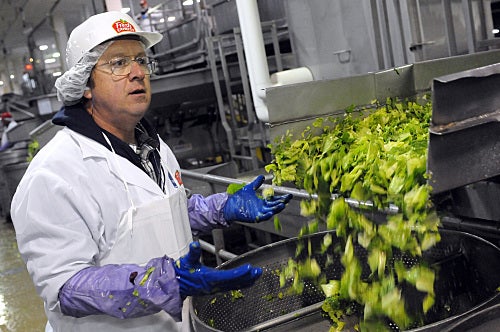
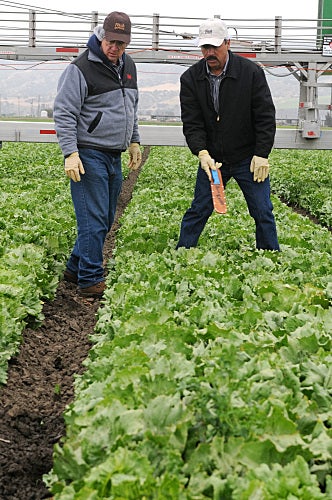
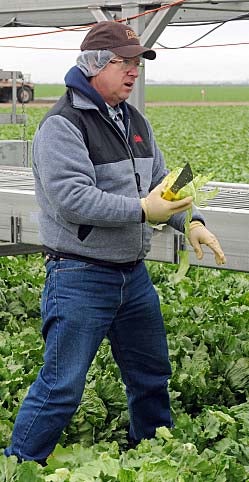
Aguirre: Very much so. If I knew how grueling coring lettuce was I probably would have tried to lose some weight and get in better shape. It was cold and windy and 6 in the morning. I had been freezing my you-know-what off when I got out of the car. But then I started bending over and grabbing the lettuce and I was sweating within the first 15 minutes and needed to start taking some of my layers off.
At one point Leo, the guy who trained me, measured me with a stopwatch when I was coring lettuce and it was 9 seconds for every lettuce I was picking, coring and putting on the belt. I said, "That's pretty good," but he said, "No, no you've got to walk it down to 2 or 3 seconds per head." I said, "You've got to be kidding me." I think I eventually got it down to 4 or 5 seconds, and of course I wasn't doing it the right way.
Undercover Boss: Chiquita's Fernando Aguirre
Immigration Issues
BNET: Government statistics show that more than half of US farm workers are undocumented, so clearly agriculture is dependent on an immigrant workforce. Do you think the system is working or do we need change?
Aguirre: Both the agriculture and service industries like hotels and restaurants desperately and heavily depend on Hispanics and immigrants to succeed. We just could not survive without the Hispanic workforce, period. There aren't enough people out there who would want to take those jobs for the pay they make. They're very difficult jobs and clearly not everyone wants to be out at 4 or 5 in the morning in the fields, bending over, picking lettuce and doing all that physical labor. At Chiquita, we pay competitive wages and are very pro-union and we believe in treating everyone fairly, but there still aren't enough people out there who want to take those jobs.
Immigrants are very important to this country. There has to be a way for workers to come into the country legally, earn money, pay their taxes, go back home and then come back and remain legal. Because a lot of immigrants want to go back and see their families. I know it's not an easy debate and there's no easy solution, but there's a big need for comprehensive reform. About half of our workforce is Hispanic and it's very important to us.
BNET: How do you ensure that you're not hiring illegal workers when so much of the system is dependent on them?
Aguirre: We have a lot of systems and processes in place to make sure everyone is checking and we do audits constantly to make sure everyone is legal and has their paperwork. Does that mean it's 100% foolproof and no one is cheating? Of course not, we can only go so far as checking their paperwork. I'm sure there's room for improvement.
Undercover Boss: Chiquita's Fernando Aguirre
Marketing Sweet Spot
BNET: What are some of marketing opportunities for Chiquita given the increased focus on the problem of childhood obesity? Unlike a lot of food companies, all of the products you sell are quite healthy.
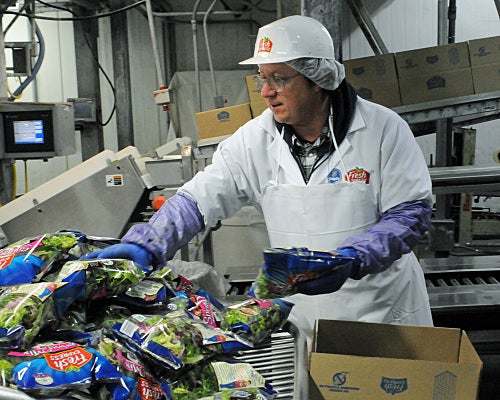
We want to be proactive in helping solve childhood obesity and we've started to help put salad bars in schools. We set schools up the equipment and a distributor so they have access to good, quality salads. We started with 4 or 5 schools in Cincinnati and 10 for Chicago. The best part about our business is that we are in the sweet spot of health and nutrition and we have products that we don't need to reformulate or change the package to say less trans fat or less sodium. People know bananas and salads and vegetables are good. Our big challenge is to make sure we're distributed in many more places than we are today. Then we want to get consumers to understand that it's better to eat healthy than not. I think we can help a lot of young people to eat a bit healthier than they do today.
BNET: In one segment, you were surprised and amused when a port dispatcher revealed that she doesn't like your core product -- bananas. What's your banana consumption like?
Aguirre: I eat at least one banana a day. Often breakfast is oatmeal and a banana.