West Hollywood water main break calls attention to "extremely old" infrastructure, says LA Mayor Bass

After a massive underground water main burst in West Hollywood, flooding streets and causing sinkholes, damaging vehicles, buildings, and roadways, Los Angeles city and utility leaders say they don't know exactly why it ruptured but acknowledge "the infrastructure is extremely old."
Anselmo Collins, chief operating officer with the Los Angeles Department of Water and Power, said it was an LADWP pipe that burst.
"We had a leak of a 1916, 36-inch riveted steel pipe, a large transmission main," which was shut down, Collins said. He acknowledged the aging infrastructure but said maintenance and pipe replacements are ongoing.
"We actually install and replace around 45 miles of pipe every single year in this city. We are a city that has 7,400 miles of pipe," Collins said.
"We have a very aggressive program. Unfortunately, sometimes there may be parts of the pipeline where you end up with a weak spot, and it reveals itself when you have these types of leaks."
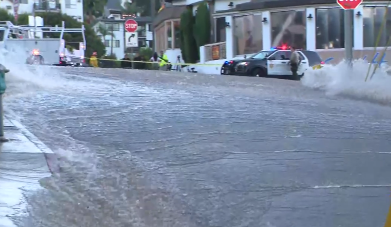
Mayor Karen Bass said part of the problem is that there is no citywide comprehensive infrastructure plan.
"It is very difficult to repair the infrastructure that impacts the entire city, and clearly two cities, West Hollywood and Los Angeles, without a citywide plan," Bass said.
The mayor said she has spent the last couple of years developing a comprehensive plan that was just introduced two months ago.
"One of the first steps for our city to have a plan, we had to change different aspects of the city charter," Bass said at a Thursday news conference.
"Those parts of the city charter that needed to be changed, passed city council in their last session, and will be on the ballot in November."
Thursday morning's street flooding is reminiscent of the 2014 Westwood water main break, which sent an estimated 20 million gallons of water toward UCLA, causing $13 million in damage.
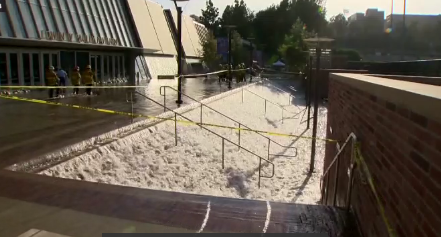
A 93-year-old steel pipe under Sunset Boulevard ruptured, flooding Pauley Pavilion and trapping vehicles in underground parking garages. The incident caused DWP to accelerate its pipeline replacement program.
"We have some water mains and channels that are as old as 200 years old, so we clearly need to catch up, and it will take us a number of years to do that," LA City Councilman Paul Koretz said in 2014. "We have some very old infrastructure that we are gradually replacing."
In 2020, more water flooded UCLA after a 99-year-old pipe burst, and one year later, an 82-year-old pipe ruptured further west on Sunset Boulevard, flooding the area.
Steve Viani is a civil engineer who does not work for LADWP, and said the steel lines have an approximate 50 to 70-year timeline, and anytime after that, they should be replaced.
"Over time, they rust from the outside and corrode from the inside," Viani said. "That reduces the thickness, or the strength of the pipe… "
DWP says it doesn't know why the 110-year-old, riveted steel line ruptured early Thursday morning, and there is no definitive timeline for when it will be fixed.
Viani noted that now, welded steel pipes are installed, not riveted, and plastic pipes.
According to LADWP's water infrastructure plan for this year, 30% of the area's main lines are more than 80 years old. They are working through a 150-year replacement plan. Viani said the plan should have started a long time ago.
"Once again, it's a 1916 trunk line. Usually what happens in the middle of the night, the pressures in the system are the highest and that's because there's no demand. Everyone is asleep. So consequently, that's normally when you see a water main break take place," Collins said.


