LAFD releases Palisades Fire after-action report
The Los Angeles Fire Department released its after-action report, detailing the challenges its personnel faced in the first 36 hours of the Palisades Fire, which included staffing shortages, communication breakdowns and water supply limitations.
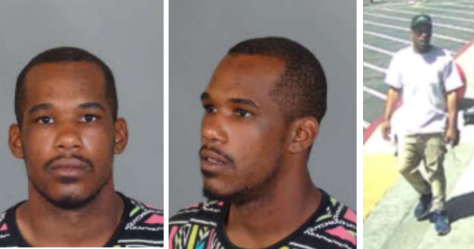
In August, Mayor Karen Bass said the city agreed to delay the release of the review to avoid "interference with" the federal government's investigation into the origins of the Palisades Fire. That day came two months later on Oct. 8, when acting U.S. Attorney Bill Essayli announced that investigators arrested Florida resident Jonathan Rinderknecht, 29, for allegedly starting the Lachman Fire, which transformed into the Palisades Fire, several days after.
"Although firefighters suppressed the [Lachman Fire], the fire continued to smolder and burn underground within the root structure of the dense vegetation," Essayli said. "It smoldered underground for about a week until, on Jan. 7, heavy winds caused this underground fire to surface and spread above ground, causing what became known as the Palisades Fire."
LAFD Interim Fire Chief Ronnie Villanueva stated that the report aimed to "provide greater clarity and accountability" and to strengthen "public confidence" in the department.
"Our commitment is to continuously improve as we deliver upon our mission to preserve life, protect property, and safeguard the Los Angeles community," he wrote in a statement.
In the wake of the Palisades Fire, the LAFD said it has implemented more than a dozen changes to its protocols, including an overhaul of its command staff, with a total of 19 leadership changes since January 2025. Most notably, this includes the demotion of former LA Fire Chief Kristin Crowley, who filed a legal claim against the city.
"LAFD has already implemented many changes since January, including changed leadership, strengthened interagency coordination, upgraded communications technology, enhanced wildfire training and evacuation drills and improved pre-deployment protocols," Mayor Karen Bass said.
The report comes nearly two weeks after LA County released its independent after-action report into the Eaton and Palisades fires.
Staffing shortages
LAFD stated its aim to balance "fiscal responsibility with proper preparation" in its pre-deployment plans hampered its initial response to the Palisades Fire, according to the after-action review.
In 2017, the department revised its pre-deployment protocols for weather events that created an elevated fire risk, similar to the conditions on Jan. 7, because of financial constraints and staffing shortages.
The amended policy changed its game plan for these situations from a mandatory direction to a consideration that shifted the responsibility to deploy resources onto "a singular human being."
"Although a considerations document exists, the decision to deploy was overwhelmingly based on perceived financial constraints rather than the factors outlined in the document," LAFD wrote in the report.
Under the revised approach, the command staff allowed personnel to return home in the initial response to the Palisades Fire. In her statement after removing Crowley as fire chief, Bass stated that 1,000 firefighters could have been on duty on the morning the fires broke out. In addition, an inaccuracy in the worksheet filed for state reimbursement prior to the wildfire "resulted in only one-third of the deployable and reimbursable resources being utilized."
In its report, LAFD wrote that the Palisades Fire "overwhelmed the immediately available" personnel deployed in the area, which already "lacked the appropriate resources" for the weather conditions.
Most LAFD personnel worked for more than 48 hours without rest or relief during the initial response, according to the report.
"The combination of fatigue, exhaustion, and sleep deprivation severely hindered their ability to make safe decisions," LAFD wrote.
Water supply limitations
Amid the Palisades Fire and in the aftermath of the disaster, city officials received backlash for the diminished water supply during the emergency response.
Without help from the water-dropping helicopters and firefighting aircraft due to 100 mph gusts produced by the Santa Ana windstorm, ground crews stretched the community's water supply to the limit as the Palisades Fire continued into the night.
As city officials have stated in the past, the LAFD's report noted that the community's water infrastructure was not designed to support a firefighting effort during the wildfire.
Firefighters also wrote that many homeowners left their automatic sprinklers, hoping that they would protect their houses. Additionally, homes completely destroyed during the fire had "open domestic water supplies with free-flowing water."
"The system is primarily engineered for residential and commercial use, not to sustain the extraordinary water demands of a large, fast-moving vegetation fire combined with the leaking open residential pipes," LAFD wrote in its report.
When the hydrants "ran dry," firefighters used siphons to pull water from nearby pools.
The LAFD requested water tenders from the city and private sources. However, their deployments were delayed, in part because the water tenders requested escorts, which were not available, according to the report.
"Engineers were needed to shuttle water from further locations, further delaying suppression efforts," officials wrote.
Communication breakdowns
The report outlined several instances where communication issues between emergency personnel delayed deployment and hurt the overall firefighting response.
The communication problems began in the early stages of the Palisades Fire, with crews failing to relay what they needed to protect properties.
"Several resources initially contributed significantly to saving numerous homes during the early stages of the incident. However, these resources were either reassigned or withdrawn from their areas of responsibility, ultimately returning to the homes that were subsequently burned due to a deficiency in tactical patrol," LAFD wrote.
The delay in circulating evacuation orders, warnings, and shelter-in-place orders also prompted residents to leave their homes, creating traffic jams that blocked routes for first responders attempting to help the firefighters already battling the flames.
As the flames quickly spread through the area, motorists abandoned their vehicles in the street, resulting in "gridlock and chaos." Firefighters had to use a bulldozer to clear the roads, allowing resources to flow in and out of the area.
The fast-moving fire also forced on-the-ground leaders to move their command post several times.
"Frequent relocations of the ICP resulted in an unorganized transition, hindering operational continuity, effective resource deployment, and compromising firefighter accountability and safety," LAFD wrote.
LAFD also determined that it "lacked an effective recall process," which hurt the department's ability to notify off-duty personnel and also hampered its ability to staff necessary resources.
On the night of the fire, the LAFD also asked news organizations, including CBS News Los Angeles, to broadcast a message requesting that all its members call their communications department to report their availability. This request flooded the Department of Operations Center with phone calls, "rendering it inoperable."
"Consequently, this led to thousands of calls—sometimes up to 100 calls in the queue—overwhelming staff," LAFD wrote. "The outcome was prolonged wait times for LAFD members and continuous calls over 24 to 48 hours, with an average of one call every 30 to 60 seconds throughout the night."
Degraded cellular service also created problems relaying directions to personnel and complicated coordination with other agencies. Even with repeaters, the LAFD also experienced issues with its radios because of the terrain. This led to the limited channels becoming overused and ineffective in some instances.
"There was excessive radio traffic on the initially assigned tactical frequency, leading to delayed communication, reduced situational awareness, and resources struggling to coordinate tactics and tasks," LAFD wrote.
In the aftermath of the Palisades Fire, the LAFD implemented more redundancies, such as Starlink, to ensure a communication channel if its other methods fail.