Live Updates: Iran fires missile at Kuwait after U.S. strikes, as Trump says regime "negotiating on fumes"
What to know about the Iran war today:
- Iran accused the U.S. on Thursday of another ceasefire violation and said it retaliated by targeting an American base after a second round of what the Pentagon calls "purely defensive" strikes against drone operations. CENTCOM said Kuwait intercepted an incoming Iranian missile, and there were no reports of a U.S. base being hit.
- President Trump said Iran was "negotiating on fumes" and he left open the possibility of ordering U.S. forces to "go back and finish it," as diplomatic efforts toward an agreement to extend the current ceasefire and reopen the Strait of Hormuz were challenged by the latest exchange of fire.
- Iran insists it's ready to keep fighting, but the Trump administration says it's "desperate for cash." Treasury chief Scott Bessent pointed to Tehran's efforts to charge ships to transit the Strait of Hormuz as evidence, and he warned other nations that paying Iran would violate U.S. sanctions.
Pakistan says its top diplomat will meet Rubio in D.C. Friday to "exchange views" on the latest developments
Pakistan's Foreign Minister Ishaq Dar will visit Washington on Friday and meet with Secretary of State Marco Rubio, the Pakistani foreign ministry said Thursday.
Pakistan has led efforts to broker a peace agreement between Iran and the U.S., and Dar has been among the senior figures leading that diplomacy.
Dar was to meet Rubio, "to review bilateral relations and exchange views on regional and global developments of mutual interest," the ministry said in its statement.
Pakistani officials have served as conduits for multiple iterations of a proposed framework for renewed negotiations between the U.S. and Iranian governments for many weeks. According to both U.S. and Iranian officials, that framework would, if agreed, see the Strait of Hormuz reopened and direct talks resumed on contentious issues, including Iran's nuclear program.
But major hurdles remain, and President Trump said during a meeting of his Cabinet on Wednesday that he was not satisfied with the most recent Iranian offers.
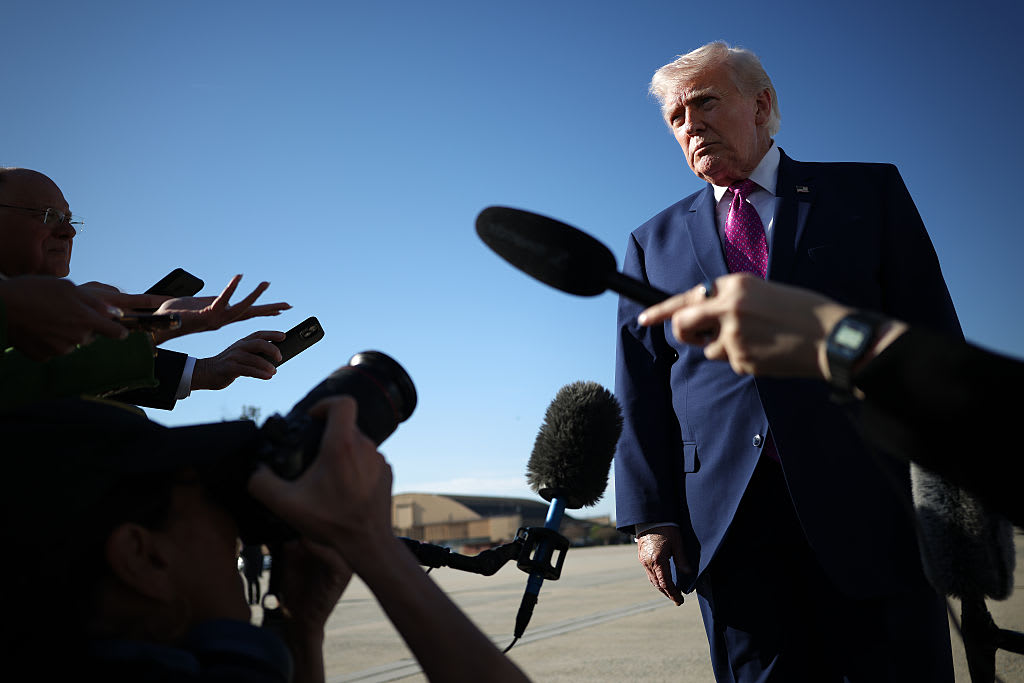
"They want very much to make a deal," he said. "So far, they haven't gotten there, we're not satisfied with it, but we will be. We will be. Either that or we'll have to just finish the job. Their navy is gone, as I've said a thousand times, their navy is gone, their air force is gone, everything's gone. And they're negotiating on fumes. But we'll see what happens. Maybe we have to go back and finish it, maybe we don't."
Gulf Cooperation Council condemns "criminal Iranian attacks" on Kuwait as Tehran claims retaliation for U.S. strikes
The Secretary-General of the Gulf Cooperation Council for Arab States, Jasem Mohamed Albudaiwi, strongly condemned continued "criminal Iranian attacks" on Kuwait in a statement shared by the bloc Thursday.
He called the continuation of Iranian "treacherous attacks" a blatant violation of the principles of international law, the United Nations charter, and "the principles of good neighborliness," and reaffirmed the GCC states' full support for Kuwait "in all measures it takes to maintain its security and stability, as well as the safety of its citizens and residents."
U.S. Central Command said Kuwaiti forces intercepted an Iranian ballistic missile Thursday.
Iran's Islamic Revolutionary Guard said it had launched retaliatory fire at a U.S. base used in overnight attacks that the American military described as "purely defensive."
There are a couple U.S. air bases in Kuwait, along with other military installations, but there were no reports of any weapons impacting American facilities Thursday.
Iranian state TV claims U.S. strikes hit nothing, and 2 commercial ships "detained" for trying to enter Strait of Hormuz
Iran's IRIB state television network claimed Thursday that U.S. strikes overnight, which the U.S. Central Command called "purely defensive" operations to take out Iranian drones and drone launchers, had hit "an empty area" and caused no damage.
CENTCOM said the U.S. struck after Iranian forces "launched five one-way attack drones that posed a clear threat in and near the Strait of Hormuz." It said all the drones were intercepted by U.S. forces, "which also prevented a sixth drone launch from an Iranian ground control site in Bandar Abbas."
The Iranian state media's portrayal of the clash said it began when four vessels "attempted to enter the Persian Gulf by turning off their navigation systems," and were then "confronted with a firm warning from the IRGC Navy."
As the vessels ignored the IRGC's warning, IRIB claimed the Iranian forces "detained two of the vessels, while the remaining two were forced to turn back."
The report said U.S. forces "fired several projectiles toward the coast of Bandar Abbas" in response, but it claimed they "landed in an empty area, and residents only heard the sound of explosions, with no resulting smoke or fire."
Iran has demanded for weeks — since the U.S. imposed a blockade of its ports on April 13 — that all commercial vessels wishing to transit the Strait of Hormuz seek permission to do so from Iranian authorities.
Iran's ambassador in Germany: Trump's threat to Oman shows risk of "silence in the face of aggression"
Iranian Ambassador to Germany Majid Nili Ahmadabadi said Thursday that a threat issued the previous day by President Trump to Oman showed that "silence in the face of aggression by the United States and the Israeli regime against Iran would only make warmongers more brazen."
Speaking to reporters at the White House on Wednesday, Mr. Trump said "nobody's going to control" the Strait of Hormuz.
Asked if he would allow a short-term deal for Iran and Oman to control it jointly — a system Tehran says it has been working to implement in coordination with Oman as the two nations with coastlines in the strait, Mr. Trump reiterated that it is "international waters," and "nobody's going to control it."
"We'll watch over it. But nobody's going to control it. That's part of the negotiation that we have," Mr. Trump said. "And Oman will behave just like everybody else, or we'll have to blow them up. They understand that. They'll be fine."
In his Thursday post on social media, Ahmadabadi said "the same logic of threats" wielded by the Trump administration against Iran "is also being directed at Oman."
"Experience has shown that any form of passive silence in the face of aggression does not help contain the crisis; rather, it leads to the normalization of violations of international law and the endangerment of international security through hostage-taking of global stability," he said. "The world must stand up to this dangerous course before it is too late."
U.S. military confirms interception of Iranian missiles targeting Kuwait
The U.S. military's Central Command confirmed Thursday that Iran fired a missile at Kuwait, but that it was "successfully intercepted by Kuwaiti forces."
Iran's Islamic Revolutionary Guard said earlier that it had launched retaliatory fire at a U.S. base used in overnight attacks that the American military described as "self-defense strikes" on Iranian drone launching facilities. There are a couple U.S. air bases in Kuwait, along with other military installations, but there were never reports of American facilities being hit Thursday.
Kuwait's military said earlier that the country's air defenses were working to intercept incoming projectiles, but it did not say where they were launched from.
"At 10:17 p.m. ET on May 27, Iran launched a ballistic missile toward Kuwait that was successfully intercepted by Kuwaiti forces," CENTCOM said in a social media post. "This egregious ceasefire violation by the Iranian regime occurred hours after Iranian forces launched five one-way attack drones that posed a clear threat in and near the Strait of Hormuz. All drones were successfully intercepted by U.S. forces which also prevented a sixth drone launch from an Iranian ground control site in Bandar Abbas. U.S. Central Command and regional partners remain vigilant and measured as we continue to defend our forces and interests from unjustified Iranian aggression."
Iran-linked vessels now account for half of Strait of Hormuz traffic, Lloyd's analysis finds
Ships with connections to Iran have made up 50% of known traffic in and out of the Persian Gulf recently, despite the ongoing U.S. blockade of Iranian ports and associated vessels, according to a new assessment from Lloyd's List Intelligence.
Transits through the Strait of Hormuz in both directions fell 46% last week after a spike the week before, the company said Thursday in a weekly briefing. The numbers remained significantly lower than the pre-war average of 138 vessels per week, but traffic was evenly split between ships with links to Iran — vessels coming to or from Iranian ports or carrying Iranian cargo — and all other traffic.
Iran-linked ships have regularly made up half of shipping traffic since the U.S. naval blockade was announced on April 13, but so-called "dark transits," during which ships turn off their location broadcast systems, spiked toward the end of last week as the security situation deteriorated, the firm said.
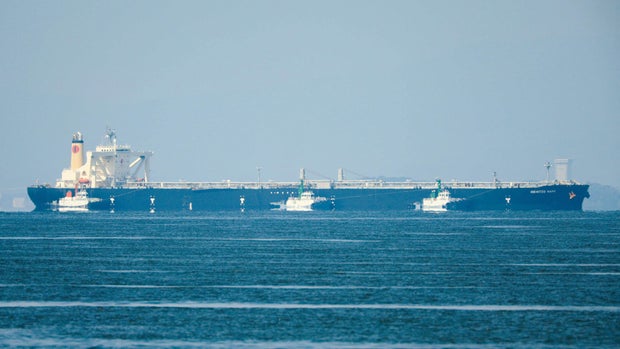
The traffic volatility is a reflection of the ongoing crisis and mixed signals about whether a deal between the U.S. and Iran to reopen the strait is actually near.
Some governments have chosen to coordinate with Iran, including China. Tehran has allowed some Chinese ships carrying Iraqi oil to transit the strait, along with at least one South Korean vessel. It remains unclear whether those vessels' operators or the associated governments paid for passage.
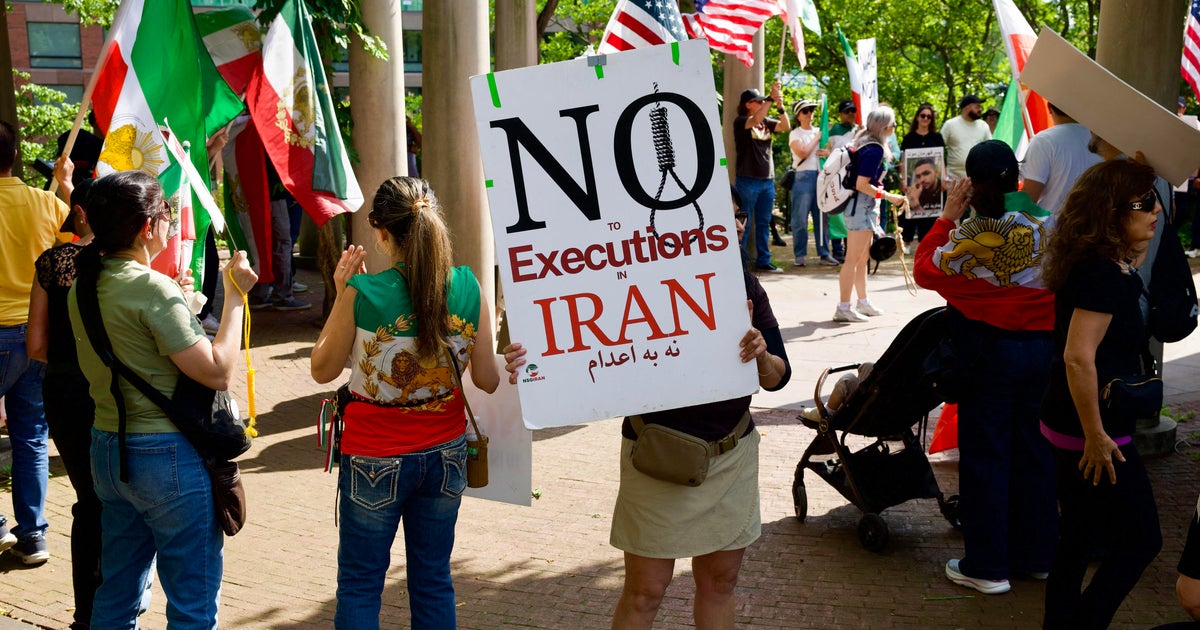
Execution of political prisoners in Iran up 139% this year, rights group says
State executions have become a near-daily feature in Iran amid the U.S.-Israeli war with the Islamic Republic, and most of the people killed have been political prisoners or people accused of spying for Iran's foes, according to human rights groups.
The Hengaw Organization for Human Rights said Tuesday that at least 43 political prisoners and prisoners of conscience had been executed in Iran since the beginning of 2026, while another 42 individuals had received death sentences. The organization said that represents a 139% increase compared to last year.
"Concurrent with the onset of military conflict and the intensification of the security measures, the process of issuing and carrying out execution sentences in political and security-related cases in Iran has undergone notable changes," the U.S.-based Human Rights Activists News Agency (HRANA) said in a report at the beginning of this month. "In some cases, the handling of these cases has proceeded at a pace beyond usual procedures, and the interval between arrest, sentencing, and execution has decreased."
HRANA said that during a roughly 65-day period from the beginning of the war, 31 executions were carried out, including 22 political or security-related cases, meaning approximately 71% of executions in that period involved political or security charges.
U.S. Treasury sanctions Iran authorities overseeing Strait of Hormuz
The United States Treasury Department announced sanctions Wednesday on Iran's Persian Gulf Strait Authority, the new Tehran agency that collects fees for traveling through the strategic Strait of Hormuz.
"The Iranian military's latest attempt to extort global maritime trade is proof that Economic Fury has left the regime desperate for cash," Treasury Secretary Scott Bessent said in a statement.
The statement extended the threat of sanctions to anyone paying the fees, because they "may be providing support to and receiving services from" Iran's Revolutionary Guards, and therefore may "be exposed to sanctions risk."
"Treasury has deprived the Iranian regime of revenue for their weapons programs, terrorist proxies, and nuclear ambitions," Bessent said.
The statement said the U.S. has succeeded in disrupting "tens of billions of dollars' worth of revenue from being accessible" to Tehran.
In a social media post on May 20, the Persian Gulf Strait Authority issued a map to define its "regulatory jurisdiction," demarcating red lines on both sides of the Strait of Hormuz that require Iran's authorization for passage.
U.S. and Iranian forces have observed a ceasefire since April 8 while diplomats push for a negotiated settlement, but Iran's controls have tightened on Gulf shipping through the Strait of Hormuz and the U.S. has launched strikes on Iranian targets in recent days.
Iran's foreign ministry spokesman Esmaeil Baqaei said Monday that Tehran will continue to manage traffic through the strategic strait and insisted Iran is collecting fees for "navigational services," rather than imposing tolls.
Israeli soldier killed by Hezbollah drone near Lebanon border, military says
The Israeli military said on Thursday that a soldier was killed the day before by a Hezbollah drone near the Lebanon border, taking to 23 the number of its troops killed in the war with the Iran-backed group.
A military statement named her as 20-year-old Sgt. Rotem Yanai who, it said, "fell during operational activity in northern Israel."
It added that one reservist soldier was severely injured and another moderately hurt in the same incident.
The military told AFP that Yanai was killed by a Hezbollah explosive drone.
A total of 24 Israelis have been killed since hostilities began on March 2, including the 23 soldiers and one civilian contractor.
The Israeli military on Wednesday declared all areas south of Lebanon's Zahrani River — an area roughly 25 miles from the border — as "combat zones" and told residents to evacuate ahead of attacks against Hezbollah.
The sweeping warning was the first of its kind since an April 17 ceasefire.
Israel strikes Tyre after declaring "combat zones" in south Lebanon
The Israeli military said on Thursday it had begun new strikes on Hezbollah infrastructure around the southern Lebanese city of Tyre after issuing an evacuation warning to its residents.
Israel the previous day had declared all areas south of Lebanon's Zahrani River — an area roughly 25 miles from the border and including Tyre — as "combat zones" and told residents to evacuate ahead of attacks against Iran-backed Hezbollah.
The sweeping warning — the first of its kind since an April 17 ceasefire — came as many Lebanese tried to celebrate the Muslim holiday of Eid al-Adha.
In a fresh evacuation order to residents of parts of Tyre early on Thursday, the Israeli military said it was "compelled to take forceful action" against Hezbollah and announced in a later statement on Telegram that it had begun strikes it said on the group's infrastructure.
Lebanon's state-run National News Agency (NNA) reported two sets of Israeli strikes had taken place on the city and an area to its east on Thursday morning, hitting a building and sparking a fire in Tyre.
Israel this week vowed to ramp up operations in Lebanon and said it was expanding ground operations there, while Hezbollah said its fighters had clashed with Israel's forces beyond an Israeli-declared "yellow line" in the south.
Iran has been insisting any deal with the U.S. to extend the current ceasefire must include Lebanon.
CBS/AFP
Iran says it targeted U.S. base in retaliation for latest strikes
Iran's Revolutionary Guard targeted an American base on Thursday morning local time in retaliation for U.S. strikes on the country's south, Iran's state broadcaster IRIB reported.
"Following this morning's aggression by the invading U.S. military against a location on the outskirts of Bandar Abbas Airport using aerial projectiles, the American air base that served as the source of the attack was targeted," the Guard said, according to IRIB.
It did not provide details of the location of the base, though Kuwait, a U.S. ally, said it was responding to missile and drone attacks on Thursday morning.
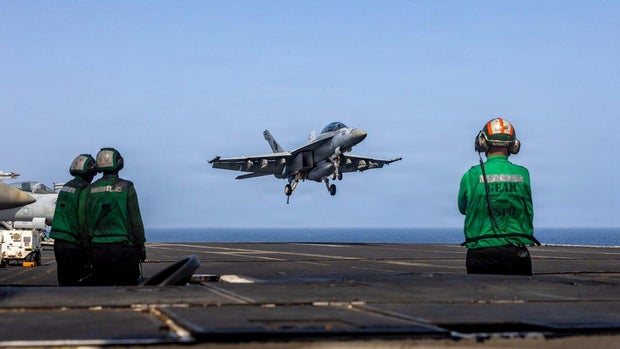
A U.S. official described Wednesday's U.S. strikes as defensive. The official said the U.S. shot down four Iranian drones and hit a ground control station in the port city of Bandar Abbas that was about to launch a fifth.
CBS/AFP
U.S. carries out new strikes against Iranian military site, official says
The U.S. military carried out another round of strikes on Iran, a U.S. official confirmed to CBS News on Wednesday, another challenge to a shaky ceasefire between the two countries.
The official described the strikes as defensive, targeting a military site that posed a threat to American forces and commercial traffic. The official said the U.S.-Iran ceasefire is still considered to be holding.
Reuters was first to report on the new strikes.
This comes after the Pentagon said that it carried out defensive strikes in southern Iran Monday on missile launch sites and Iranian boats attempting to place mines.
Trump says "nobody's going to control" the Strait of Hormuz, threatens Oman
President Trump said "nobody's going to control" the Strait of Hormuz, when asked if he would allow a short-term deal for Iran and Oman to control it.
"The strait's going to be open to everybody," he told reporters during Wednesday's Cabinet meeting. "It's international waters."
"Nobody's going to control it," he continued. "We're going to watch over it. We'll watch over it. But nobody's going to control it. That's part of the negotiation that we have. They would like to control it. Nobody's going to control it. It's international waters. And Oman will behave just like everybody else or we'll have to blow them up. They understand that. They'll be fine."