House passes GOP health care bill without ACA extension
What to know about the House debate on health care:
- The House has passed a GOP-backed health care bill that does not include an extension of expiring tax credits that help millions of Americans pay for health insurance under the Affordable Care Act.
- The bill faces an unclear future in the Senate, where it would need support from several Democrats to pass.
- GOP leaders unveiled the bill, known as the Lower Health Care Premiums for All Americans Act, last week. It would expand association health plans, lower premiums for some Affordable Care Act enrollees and enact reforms aimed at decreasing drug costs.
- But the exclusion of an extension of the Affordable Care Act tax credits sparked a revolt by a handful of moderate Republicans earlier in the day — none of whom ultimately voted against the bill. Four GOP members signed a Democratic discharge petition to force a vote on extending the subsidies for three years, teeing up a final vote early in the new year.
- The moderates have argued that letting the subsidies expire on Jan. 1 would lead to price hikes for millions of Americans and give Democrats a potent political issue heading into next year's midterm elections.
- The successful discharge petition was a direct rebuke of House Speaker Mike Johnson, who has refused to bring an extension up for a vote. He insisted earlier in the day that he has not lost control of the House.
Johnson says Democrats' discharge petition will get a vote in January
House Speaker Mike Johnson said it's "inevitable" that the Democrats' discharge petition on the three-year extension will be considered on the floor when lawmakers return in January.
"It will be on the floor that first week of January when we return," Johnson told reporters Wednesday night.
He also said Republicans plan to hold additional votes on their health care policies when they return.
"We'll be back in January to do much more of this," Johnson said.
House cancels Friday votes
House Republican leadership announced that Friday's votes have been canceled. Thursday is the House's last day in session for the year.
House passes GOP health care plan without ACA extension in 216 to 211 vote
In a 216 to 211 vote, the House approved a bill that Republicans say will lower health insurance premiums for 100% of Americans — but will not include an extension of expiring Affordable Care Act tax credits.
Rep. Thomas Massie of Kentucky was the sole Republican to vote against it.
GOP leadership unveiled the plan less than a week ago as they faced increasing pressure from moderates in their party to hold a vote on extending the enhanced premium tax credits, which lapse on Dec. 31. The tax credits help eligible people cover premiums for their health insurance purchased through an Affordable Care Act marketplace.
But House Speaker Mike Johnson refused to put their bipartisan legislation on the floor to extend the subsidies with reforms like income limits, and Republicans on the House Rules Committee blocked their last-ditch effort to amend the bill.
In response, four moderate Republicans signed onto a Democratic discharge petition to extend the tax credits for three years without any changes to the program. The discharge petition forces a vote on the issue, but it won't happen until after lawmakers return from the holidays in January.
By then, the tax credits will have expired and Americans who purchase health insurance through the marketplaces will see significant increases in their premiums.
House voting on GOP health care plan
The House is now voting on a health care plan that includes several policies favored by Republicans — but would not extend Affordable Care Act subsidies.
Democrats' push to limit boat strikes and attacks on Venezuela fails in House
The latest Democratic-led attempt to limit President Trump's authority to strike Venezuela and suspected drug-smuggling boats in the region failed Wednesday, as tensions with the South American country continue to escalate.
House Democrats forced votes on two war powers resolutions as Mr. Trump has warned that land strikes against the country could commence "soon." Mr. Trump's threats come amid a months-long military campaign against alleged drug smuggling boats in the Caribbean Sea and eastern Pacific Ocean that have killed at least 95 people.
Both measures fell short.
The first measure, introduced by Democratic Rep. Gregory Meeks of New York, would remove U.S. armed forces "from hostilities with any presidentially designated terrorist organization in the Western Hemisphere," unless Congress has declared war or authorized the use of military force for such purposes. It failed in a 210 to 216 vote.
A second measure from Democratic Rep. Jim McGovern of Massachusetts would remove the armed forces "from hostilities within or against Venezuela that have not been authorized by Congress." Some 211 voted in favor and 213 voted against it.
First war powers vote aimed at limiting boat strikes fails in House
The House voted down a measure that would remove U.S. armed forces "from hostilities with any presidentially designated terrorist organization in the Western Hemisphere," unless Congress has declared war or authorized the use of military force for such purposes.
The resolution, backed by House Democrats, failed in a 210 to 216 vote.
Lawler says ousting Johnson would be "idiotic" and "foolish"
Despite his frustration with House Speaker Mike Johnson, Rep. Mike Lawler told CBS News on Wednesday that he opposed trying to oust him from the leadership role.
"People get frustrated, understandably," the New York Republican said. "My view is, be blunt, be direct, solve the problem. If the solution to every problem is, I'm going to vacate the chair, that's just idiotic."
"If people want to vacate him over trying to figure out a path forward … it's just foolish," he added.
Lawler: "We are fighting tooth and nail to get a vote on an extension"
GOP Rep. Mike Lawler of New York said moderates continue to pressure leadership to hold a vote on an extension before the end of the year.
"We are fighting tooth and nail to get a vote on an extension," he said in an interview with CBS News. "We are working to negotiate with leadership. If we can get a vote this week, that's what we're fighting for. It's what we want before we go home."
Lawler acknowledged that it would still have to get through the Senate to avert the end-of-year deadline.
"So we'll see how this unfolds, but I do think in the end, we will be able to get something across the finish line," he said.
Schumer calls on Thune to bring up health care extension if it passes the House
Senate Minority Leader Chuck Schumer, asked at a news conference about the discharge petition to force a vote on extending the ACA tax credits, said its fate in the Senate is "up to Sen. Thune."
"I hope it passes the House," Schumer said. "I hope that Johnson won't play little games, that he sometimes can do with the discharge petition."
Schumer noted that every Democrat voted for a three-year extension last week. He added that if the measure passes the House, "we hope Thune would put it on the floor and let it pass."
Senate unanimously passes measure to tighten D.C. airspace rules
The Senate unanimously approved a measure to tighten rules in D.C. airspace in response to concerns that a provision in the NDAA doesn't do enough to restrict military aircraft near Ronald Reagan Washington National Airport.
After the House passed the NDAA last week, National Transportation Safety Board chair Jennifer Homendy warned that a portion of the law "essentially gives the military unfettered access to the crowded and complex D.C. airspace." She said it would reverse safety changes made after a midair collision in January between a military helicopter and a passenger jet that killed 67 people.
Sen. Ted Cruz, a Texas Republican who chairs the Senate Commerce Committee, sought to approve the measure, known as the ROTOR Act, under unanimous consent to remedy the issue. No senator objected.
Cruz outlined that the bipartisan bill tightens the rules for military aircraft, requires all aircraft to equip and receive surveillance signals, directs the FAA to evaluate the safety of airspaces around airports across the country to avoid future collisions and improves aviation safety information sharing between the FAA and the military.
"These improvements will save lives," Cruz said.
The Texas Republican said he and Sens. Maria Cantwell of Washington and Jerry Moran of Kansas had made "significant progress" with their colleagues in the Senate and had reached an agreement to pass the bill unanimously. He also noted that the White House backs the bill and "is committed to helping us work with our House colleagues to see that the ROTOR Act passes in that chamber."
"We still have a few small, outstanding issues, but I'm optimistic that we're going to get this done and signed into law as soon as next month," Cruz said.
Schiff effort to force release of Sept. 2 boat strikes video fails after GOP objection
GOP Sen. Markwayne Mullin of Oklahoma objected to a move by Democratic Sen. Adam Schiff of California to force the Defense Department to release video of the Sept. 2 strikes on an alleged drug boat, which have drawn scrutiny since the Washington Post reported last month that a second strike killed two survivors.
Schiff tried to approve the legislation under unanimous consent, giving any single senator the power to block its passage.
"The American people deserve to see this video, and to witness what is being done in their name," Schiff said.
The bill would require Defense Secretary Pete Hegseth to make video of the strikes available to members of Congress within 10 days of it being enacted, before making them available to the public within 15 days. The bill notes that Hegseth "may remove or obscure" material from the video to protect classified information.
Mullin objected to the request, arguing that the video should be viewed by those with appropriate security clearance. He said there's "sensitive material and it was clearly explained why it can't be released."
House Democrats to force war powers votes as Trump teases strikes on Venezuela
House Democrats plan to force votes Wednesday on two war powers resolutions amid escalating tensions with Venezuela as President Trump has warned that land strikes against the country could commence "soon."
Mr. Trump's threats come amid a monthslong military campaign against alleged drug smuggling boats in the Caribbean Sea and eastern Pacific Ocean that have killed at least 95 people.
The first measure, introduced by Democratic Rep. Gregory Meeks of New York, would remove U.S. armed forces "from hostilities with any presidentially designated terrorist organization in the Western Hemisphere," unless Congress has declared war or authorized the use of military force for such purposes.
A second measure from Democratic Rep. Jim McGovern of Massachusetts would remove the armed forces "from hostilities within or against Venezuela that have not been authorized by Congress."
McGovern's resolution could face the best chance of potential adoption, since it has three GOP co-sponsors — Reps. Marjorie Taylor Greene of Georgia, Thomas Massie of Kentucky and Don Bacon of Nebraska. Bacon said he also would vote in favor of Meeks' measure.
Read more here.
Lawmakers optimistic after "problem solvers" meeting on health care
Lawmakers on both sides of the aisle expressed optimism about a solution on health care costs after leaving a meeting between so-called "problem solvers" in both the House and Senate.
Sen. Lisa Murkowski, an Alaska Republican, told CBS News that the discharge petition in the House "gives momentum to the bipartisan work that we've been trying to advance on the Senate side." She said she expects health care discussions will continue between both chambers over the holiday break.
"There's been a lot of outreach between the parties and between the houses on this issue," Murkowski said. "That's exactly what we need."
The Alaska Republican told reporters that the move by House GOP members to sign the discharge petition demonstrates that they recognize "the problem in front of them, which is these hugely escalatory spikes in premiums that their constituents are facing." She said "they're feeling the heat from constituents back home."
"So at some point in time, you just can't sit there and listen to your leadership say, 'we're not going to do anything,'" Murkowski added. "I'm actually very proud of that bold step that has been taken to be, again, responsive to their constituents, wherever in the country they may be."
Sen. Jeanne Shaheen, a New Hampshire Democrat, told reporters she's "hopeful" Congress can address the health care issue in January, though she noted that there's "a lot that needs to happen in order to get something done."
"But people need relief, and so I think people in both houses and on both sides of the aisle are hearing from constituents that they want to see something done," Shaheen said.
Johnson: "I have not lost control" of the House
CBS News asked Johnson about a discussion he had with Lawler, one of the four Republicans who signed the discharge petition, during a large, animated huddle of GOP members on the House floor during votes this morning.
Johnson brushed off any suggestion of discord, saying the conversation with Lawler was "some intense fellowship" and that Republicans are "working through very complex issues, as we do here all the time." He emphasized the discussions are ongoing and constructive, and that "everybody's working toward ideas" and "we're keeping the productive conversation going."
When asked if he has lost control of the House, Johnson flatly rejected that characterization: "I have not lost control."
He pointed to Republicans' razor-thin margin in the lower chamber, noting the GOP has "the smallest majority in U.S. history," which he said makes this Congress fundamentally different from others. With such a narrow majority, Johnson said procedural tools that are rarely used with larger majorities are now in play, adding that "these are not normal times" and "all the procedures in the book people think are on the table."
Asked when a vote on the discharge petition could happen, Johnson offered no timeline, telling reporters to "stay tuned" and saying leadership is "having conversations."
Why 4 Republicans joined Democrats to sign the discharge petition
Fearing the potential political blowback of allowing the tax credits to expire, four Republicans joined all Democrats to support the discharge petition to force a vote on a three-year extension. Democrats' bill does not include any reforms that Republicans have pushed for, but some moderates said maintaining the status quo was better than allowing the credits to expire and premiums to soar for their constituents.
These are the four Republicans who signed the discharge petition:
- Brian Fitzpatrick of Pennsylvania
- Mike Lawler of New York
- Rob Bresnahan of Pennsylvania
- Ryan Mackenzie of Pennsylvania
"I think the only thing worse than a clean extension, without any income limits and any reforms — because it's not a perfect system — the only thing worse than that would be expiration, and I would make that decision," Fitzpatrick said Tuesday night as he unsuccessfully sought a vote on his amendment to extend the subsidies with reforms.
Lawler called last week's Senate failed vote on the Democrats' three-year extension a "messaging exercise" on Tuesday, but ultimately signed the petition anyway.
"If we agree that there needs to be an extension, if we agree that the expiration of the enhanced premium tax credit would cause a spike in premiums, then we have to come together in a bipartisan way," Lawler told the House Rules Committee on Tuesday night.
On Wednesday, Lawler said his signature was not an endorsement of Democrats' bill, "but when leadership blocks action entirely, Congress has a responsibility to act."
Bresnahan said Democrats' discharge petition was the "only way to protect the 28,000 people in my district from higher costs."
"Doing nothing was not an option, and although this is not a bill I ever intended to support, it is the only option remaining," he wrote.
Schumer says discharge petition reflects "demand by the American people" to extend tax credits
Speaking on the Senate floor, Schumer praised the movement on the discharge petition, saying "it shows that the demand by the American people for Congress — the House and the Senate — to extend the ACA premium tax credits is undeniable."
"Yet Republican leaders inside the House and the Senate are making it clear that they are opposed, and will be responsible for health care costs rising through the roof," Schumer said.
The New York Democrat said "the damage has been done no matter what happens."
"Republicans have made it impossible to prevent many Americans from paying more on their monthly premiums on Jan. 1," he added. "And Republicans can't even say they tried to stop it."
Schumer called the House GOP bill "a right-wing health care sham bill" that doesn't extend the ACA tax credits.
What is a discharge petition, and how does the process work?
A discharge petition is a legislative maneuver that allows a majority of members in the House to bring a bill to the floor without the consent of leadership.
In the House, the speaker enjoys broad authority to determine which bills get brought up for a vote, and which don't. A discharge petition is the only way the minority party can force a vote on an issue, if enough members of the majority join with them.
A report by the Congressional Research Service in 2023 lays out the procedure. Any member can start a petition to "discharge" a bill from a committee and bring it to the floor. Doing so requires 218 signatures. The petition is available for members to sign on the House floor, and the clerk maintains a list of signatories for each active petition online.
Once a petition reaches 218 signatures, its supporters must wait seven legislative days before notifying the House of their intention to bring up a motion to discharge the bill for a vote. The motion must then be brought up within two legislative days. If the motion is adopted, any member who signed the petition can move to have the underlying bill brought up for a final vote.
The speaker can move the process along by bringing up the bill himself. Johnson recently did this for the successful discharge petition to force a vote on releasing the Epstein files. Once that discharge petition reached 218 signatories, Johnson fast-tracked a vote on the underlying bill, which passed nearly unanimously.
House advances rule for GOP health care plan, with final vote expected tonight
The House advanced the rule for the Lower Health Care Premiums for All Americans Act in a 213 to 209 vote. The rule vote sets the parameters for debating the bill.
Next, the House will begin an hour of debate on the bill. A final vote is expected around 5:30 p.m.
Thune noncommittal on Senate action if House approves extension
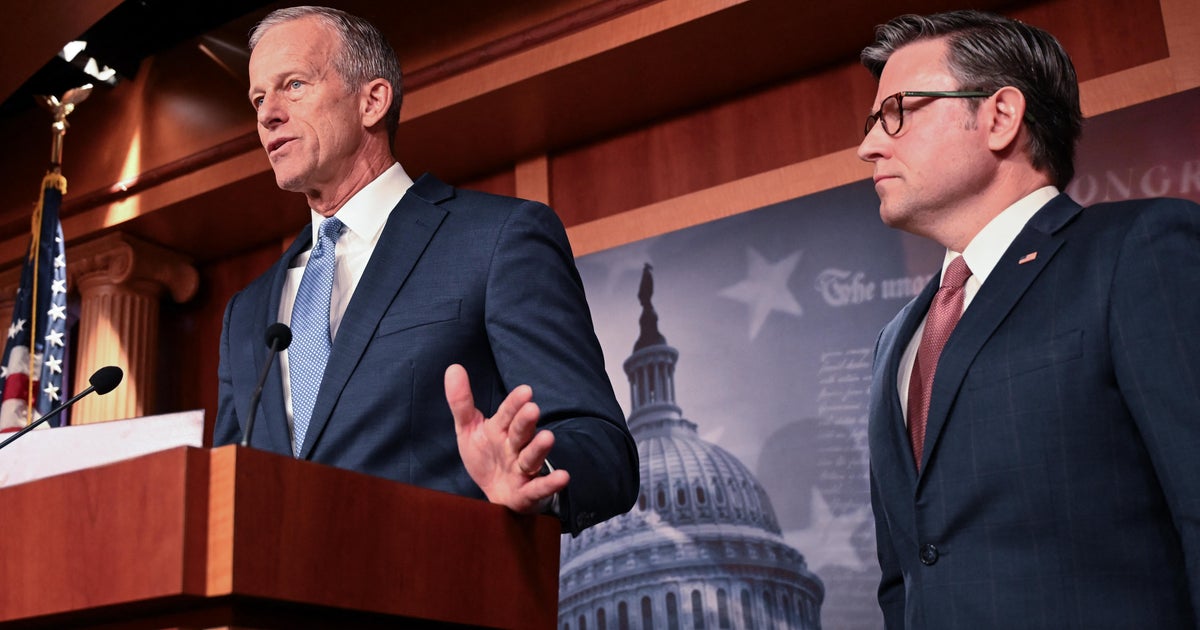
Senate Majority Leader John Thune was noncommittal on whether the Senate would take up a bill to extend the ACA subsidies for three years if it passes the House.
"We'll see," Thune told reporters at the Capitol. "We obviously will cross that bridge when we come to it."
The majority leader said he doesn't expect the House to vote on the measure this week.
The Senate quickly approved a bill to force the release of the Epstein files earlier this year after a discharge petition prompted a vote in the House. But Thune drew a distinction between the Epstein effort and the health care issue Wednesday, telling reporters that "those are very different issues." Thune noted that the measure came to the Senate after a near unanimous vote in the House, while he predicted that the health care issue would "probably [be a] partisan vote."
Last week, the Senate rejected a three-year clean extension of the ACA tax credits put forward by Democrats. Four Senate Republicans crossed the aisle in favor of advancing the measure.
Jeffries calls on Johnson to put 3-year extension on the floor "immediately"
House Minority Leader Hakeem Jeffries called on House Speaker Mike Johnson to hold a vote on Democrats' three-year extension of the enhanced premium tax credits "immediately." Johnson could bypass the seven-day legislative waiting period for a member to bring the discharge petition to the floor, but the GOP leader has been adamantly opposed to an extension.
"Our bipartisan petition to force a vote on a straightforward extension of the Affordable Care Act tax credits now has 218 signatures," the New York Democrat wrote on X. "Mike Johnson should bring the bill to the floor immediately."
Democrats' discharge petition reaches 218 signatures, enough to force a vote on 3-year extension
GOP Reps. Robert Bresnahan and Ryan Mackenzie of Pennsylvania became the third and fourth Republicans to sign onto Democrats' discharge petition to force a vote on extending the ACA tax credits, bringing the petition to the 218-signature threshold needed to circumvent leadership and bring the bill to floor.
The next actions on the petition remain unclear. Discharge petitions have a waiting period of seven legislative days, and the House is set to leave town later this week for the holidays, meaning a vote wouldn't occur until the new year. But the move puts pressure on House Speaker Mike Johnson to bring up a vote on extending the ACA tax credits.
GOP Rep. Dan Newhouse, who voted to impeach Trump, announces retirement
Rep. Dan Newhouse, a Republican of Washington, announced that he will not seek reelection in 2026. Newhouse was one of 10 House Republicans who voted to impeach President Trump in the aftermath of the Jan. 6, 2021, attack on the Capitol.
"After over 25 years of public service, including more than a decade in the House, I am grateful to the Washingtonians who put their faith in me, as well as the colleagues I have served with on both sides of the aisle," Newhouse said in a statement.
Newhouse, who was first elected in 2014, joins more than two dozen other House GOP members who have announced their retirement or resignations this year, according to a tally from Axios.
Newhouse is one of two GOP members who voted to impeach Mr. Trump and are still in Congress, the other being Rep. David Valadao of California.
Lawler signs Democrats' discharge petition after Fitzpatrick
Rep. Mike Lawler, a New York Republican, became the second member of his party to sign onto Jeffries' discharge petition to force a vote on a three-year extension of the ACA tax credit. Lawler has been one of the GOP members pushing leadership for a vote on extending the subsidies.
Fitzpatrick becomes first Republican to sign Democrats' discharge petition
GOP Rep. Brian Fitzpatrick of Pennsylvania became the first Republican to sign onto House Minority Leader Hakeem Jeffries' discharge petition Wednesday morning. With support from all Democrats, the petition needs three more signatures to force a vote on a measure to extend the enhanced Affordable Care Act subsidies for three years without reforms.
Fitzpatrick, who was among the moderate Republicans who have advocated for an amendment vote on the ACA tax credits, warned during a Rules Committee meeting Tuesday that the only thing worse than a clean extension would be allowing the tax credits to expire without a bridge for the millions of Americans who rely on the subsidies.
Should the discharge petition receive enough support, it would still arrive too late to force action on the tax credits this year. The maneuver, which would circumvent GOP leadership, requires a waiting period of seven legislative days before a final vote, and the House is set to leave town at the end of the week for the holidays.
100,000 people per year would lose health insurance under GOP plan, CBO says
The Congressional Budget Office estimates that an average of 100,000 fewer people per year from 2027 to 2035 would have health insurance under the Lower Health Care Premiums for All Americans Act.
The legislation would lower gross benchmark premiums by 11% on average through 2035 and reduce the deficit by $35.6 billion through 2035, according to the CBO.
"That decrease is driven by a reduction in the premium tax credit of $131.1 billion and an increase in outlays for cost-sharing reductions of $91.8 billion, partially offset by $2.6 billion in other effects," according to the estimate.
House Rules Committee blocks moderates' amendments from floor consideration
An 11th-hour effort by moderate Republicans to put an extension on the floor for a vote failed Tuesday night when the House Rules Committee blocked several of the amendments they were seeking to attach to the health care bill.
GOP Reps. Brian Fitzpatrick of Pennsylvania, Mike Lawler of New York and Nick LaLota of New York appeared before the committee to push for an amendment vote.
"There will be consequences if these amendments are not made in order. I think the only thing worse than a clean extension without any income limits and any reforms — because it's not a perfect system — the only thing worse than that would be expiration," Fitzpatrick said.
In a 6 to 4 party-line vote, Republicans on the committee voted to block their consideration.
Moderate Republicans clash with Johnson over lack of plan to address expiring tax credits
GOP moderates clashed with House Speaker Mike Johnson on Tuesday over the lack of a plan to address the expiring tax credits.
Moderates are perplexed at the decision to not hold a vote on an extension ahead of the Dec. 31 deadline, and have warned of the political ramifications of allowing insurance premiums to soar for more than 20 million Americans.
"I am pissed for the American people. This is absolute bulls--t," Republican Rep. Mike Lawler of New York told reporters after leaving a GOP conference meeting Tuesday morning.
Lawler called it a "tremendous mistake" to not address the expiring tax credits.
"The Democrats want to use this as an issue in the election, and seemingly the Republican leadership is going to allow them to do it. And it's idiotic," he said.
Johnson, a Louisiana Republican, said at his weekly news conference that there would not be a vote this week on an extension. The decision was a reversal from Friday, when a leadership aide said an amendment vote would be allowed.
"We looked for a way to try to allow for that pressure-release valve, and it just was not to be. We worked on it all the way through the weekend," Johnson said, adding that ultimately "an agreement wasn't made."
Later Tuesday, a meeting with moderates and Johnson appeared to get heated, though the speaker downplayed it as "collegial."
"We're all trying to solve very complicated questions and challenges, and sometimes there's frustration with the process," he said.
What the House GOP health care bill would do
The Lower Health Care Premiums for All Americans Act would expand association health plans, in which multiple employers band together to purchase coverage and lower the costs of benefits. It would also fund cost-sharing reduction payments meant to lower premiums for some enrollees of Affordable Care Act exchanges, and require more transparency from pharmacy benefit managers in an effort to lower drug costs.
House Republican leadership unveiled their plan last Friday.
"Every policy you're going to see in this bill has received a vote in the House under a Republican majority, and every provision has had bipartisan support in the past," a House Republican leadership aide said last week.
The aide added that there wasn't "any specific coordination" with the Senate on the legislation. There were two failed votes on competing plans in the upper chamber last week.