When Michigan election results significantly changed the state's history

If you've ever wondered whether a vote can make history, some elections in Michigan did just that.
Here are a few examples:
The 1916 and 1932 votes on Prohibition
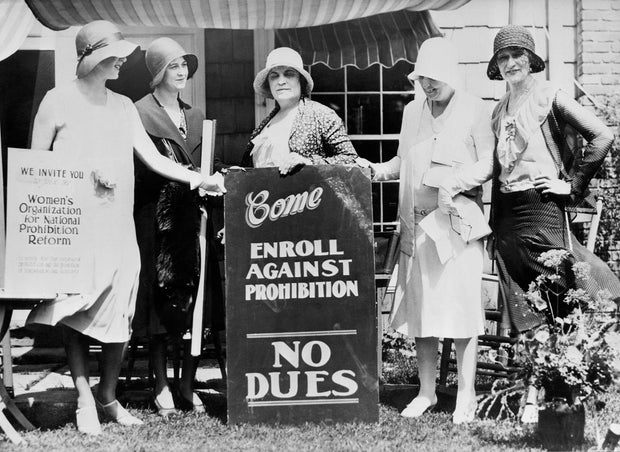
Michigan was "the first state in and the first state out" of the national prohibition era, the Detroit Historical Society says, mirroring the reality that most local communities "had already voted to be dry on their own" by 1911, the Michigan Liquor Control Commission said.
By this time, a well-established temperance movement across the state discouraged intoxication and alcoholic drinks. The town of Bedford Center in Monroe County was even named Temperance in 1884, amid that atmosphere, according to a 2017 article in The Monroe News.
A Michigan State Constitution ballot issue was proposed, and voters agreed on Nov. 8, 1916, to prohibit the manufacture, sale and transportation of alcoholic beverages. This made the state the first to take such a widespread effort. The state prohibition became law on May 1, 1918, ahead of the ratification and effective date of the 18th Amendment to the U.S. Constitution that began the national prohibition era.
But with Michigan's easy access to Lake Erie and Canada, an era of illegal liquor sales emerged. Speakeasies popped up across Metro Detroit. The Purple Gang, an organized crime gang of that era, was involved with the underground liquor trade, among other criminal activities. Within days, Hour Detroit magazine explained, the newly paved Dixie Highway in Monroe County was jammed with bootleggers running from Detroit to Toledo.
Michigan voters approved the repeal of the state prohibition on Nov. 8, 1932. Michigan was the first state to ratify the pending 21st Amendment repealing national prohibition. The prohibition era officially ended on Dec. 5, 1933.
1918 vote on Women's Suffrage
After decades of petitions and advocacy that the National Park Service says dates to 1855, Michigan women won the right to vote through a state constitutional amendment that passed on Nov. 5, 1918.
Organizations such as the Michigan State Suffrage Association in Battle Creek and the Michigan Equal Suffrage Association in Flint kept the matter in the spotlight despite a failed attempt in the 1874 election. The Library of Michigan said the 1874 effort "failed dramatically" with only 40,077 yes votes compared to 135,957 no votes. That being said, Michigan women were allowed to vote in school meetings starting in 1881.
The 1918 passage preceded the 19th Amendment to the Constitution. That effort formally began in 1919 when Congress approved the pending amendment and at least 36 states needed to vote in favor of the proposal.
Michigan became the third state to ratify the 19th Amendment, which became official in August 1920.
The research organization KFF says that women are slightly more likely to vote in Michigan than men. Its data shows that 72.8% of Michigan women registered to vote did so in November 2024, compared to 71.7% of Michigan men.
1968 and 1972 votes on Daylight Saving Time
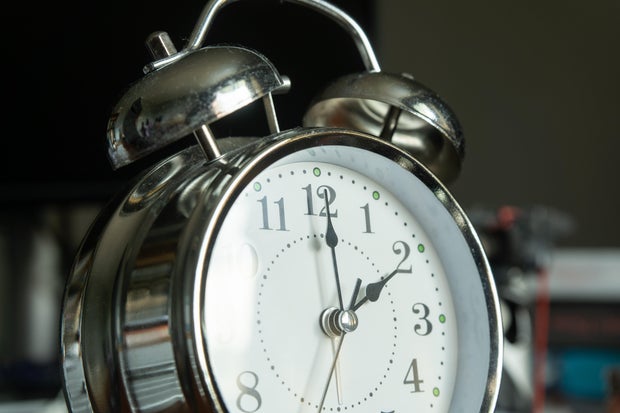
There has been a decades-long debate over whether and when Michigan should observe Daylight Saving Time by changing the clocks twice a year to align seasonal daylight changes with the routines of modern life.
This hotly contested topic showed up in two elections — once to revoke Daylight Saving Time and once to reinstate it.
During a referendum on Nov. 5, 1968, Michigan voters narrowly decided, 1,403,052 to 1,402,562, to keep the state on Standard Time year-round and ignore the Daylight Saving Time shifts that had long been observed in most of the country.
But that stance didn't last for long.
It came back to voters as Michigan Proposal A, the Daylight Saving Time Initiative, on Nov. 7, 1972, according to Ballotpedia. The vote of 1,754,887 votes in favor and 1,460,724 votes against required DST to be observed in the state from the last Sunday in April until the last Sunday in October.
This back-and-forth is often overlooked among the chaos and uproar over a national "year-round DST" effort that Congress invoked from Jan. 6, 1974, to Oct. 27, 1974, and the frustrations that state border residents certainly noticed during 1975 when Michigan refused to change its clocks until about nine weeks after Ohio and much of the rest of the country shifted to DST.
Even as recently as 2025, a Michigan lawmaker introduced a bill to eliminate DST in Michigan. But Senate Bill 126 stalled out.
A parallel question involved whether Michigan should be placed in the Eastern or Central time zones.
The state has been split between the two time zones for decades, with the boundary occasionally shifting. Most of the state is now in the Eastern Time Zone, with part of the Upper Peninsula in the Central Time Zone to coincide with Wisconsin's Central Time.
2008 and 2018 votes on Marijuana Legalization
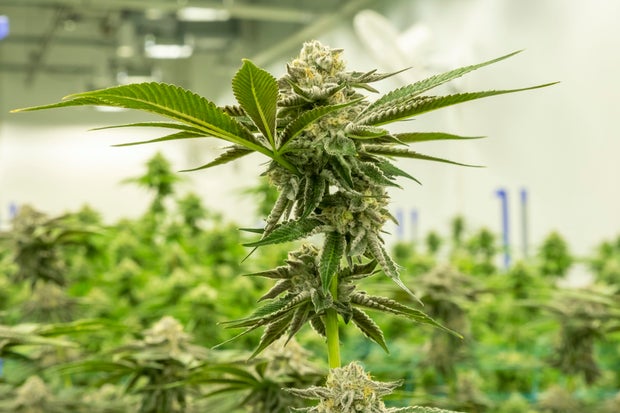
Michigan legalized the medical use of marijuana with the passage of Proposal 1 on Nov. 4, 2008.
Michigan voters then took to the polls on Nov. 7, 2018, with the decision that adults age 21 and older could legally use and grow marijuana recreationally. The result is that Michigan became the first Midwestern state and the 10th overall to legalize recreational marijuana use.
By 2022, the Michigan Cannabis Information Portal says, Michigan ranked third in the nation by the number of people working in the marijuana industry. During fiscal year 2023, taxes collected by the state from its 737 licensees were distributed to 99 cities, 71 counties, 69 townships and 30 villages.
Michigan Cannabis also says adult-use marijuana in the state generated about $3.17 billion in sales during 2025.


