A war over funding to fix Colorado's roads ends in a truce

The group behind a ballot initiative that would have provided millions of dollars for road and bridge construction in Colorado says it is pulling the measure. It says it's reached an even better agreement with Democratic leadership.
Colorado's transportation infrastructure is routinely ranked among the worst of the worst. Our roads get a D+ by the American Society of Civil Engineers, which found Colorado spends 35% more on car repairs than the national average. Meanwhile, the nonprofit TRIP says we spend less on road maintenance than all but five other states. It says nearly 70% of bridges are rated poor or fair. We're also the 36th-worst for traffic congestion, according to the Reason Foundation.
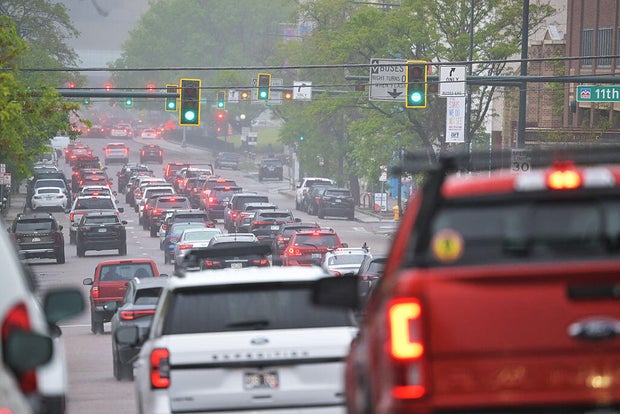
"One of the most important investments, one of the most important things we have here in our state is our infrastructure, our roads and bridges. And we were letting them fall apart," said Tony Milo, president and CEO of the Colorado Contractors Association.
He decided to do what state lawmakers wouldn't. He put together the Restore Our Roads coalition to put a constitutional measure on the ballot requiring taxes generated by the sale of gas, cars and car parts be used for road construction. If passed, the measure would have meant an increase in funding of about $700 million a year for CDOT, which currently receives about $1.9 billion a year in state and federal dollars.
"This was a way to say, to scream, 'Hey, we need to address this crisis,'" said Milo.
It got the attention of state lawmakers but not in the way Milo had hoped. Democrats introduced a bill to negate the ballot measure should it pass, saying it would result in cuts to other spending priorities, such as education.
"There's never been disagreement that we can do more to fund our roads," said Speaker Pro Tempore Andrew Boesenecker. "It's the how of how we do that that has always been the point of conversation."
After months of negotiation, Boesenecker says, they've finally figured out the "how." He says Democratic leadership has committed to dedicating $120 million more each year to road and bridge construction and to referring a measure to the ballot next year to generate additional money.
Milo and the Restore Our Roads coalition agreed to pull their ballot measure.
"Our people looked at it and said, 'Well, what's the best chance for us to get money into roads as quickly as possible?' And we came to the conclusion that whoever the new governor is and the new legislative leaders deserve a chance here to do the right thing," said Milo.
It's still not clear where all the new money will come from. Boesenecker says they're looking at a variety of funding mechanisms.
"It's a win-win. This is how we solve problems at the state. And I think this is how the public expects us to solve problems," said Boesenecker.
CDOT has said it needs an additional $350 million a year to maintain the system it has. Milo says the initial money will go toward maintenance, and the ballot measure will spell out new projects that will be funded.
While previous road funding ballot measures have failed, both Milo and Boesenecker believe the 2027 measure will pass because it will have broad support, including, they say, the backing of Democratic gubernatorial candidate Phil Weiser, who they say played a key role in the negotiations.


