Colorado Supreme Court chief justice orders 90-day pause on livestream court proceedings
The chief justice of the Colorado Supreme Court has ordered a 90-day pause on livestreaming court proceedings. The order contradicts state law, which requires that judges livestream proceedings such as trials, hearings and sentencings.
The law was adopted in April 2023, shortly after the chief justice provided guidance on livestreaming Colorado state trial courts "with a focus on balancing the rights of the many participants and observers involved in criminal proceedings."
The law states a requirement for livestreaming all criminal proceedings and that certain criteria must be met before a livestream is limited or discontinued.
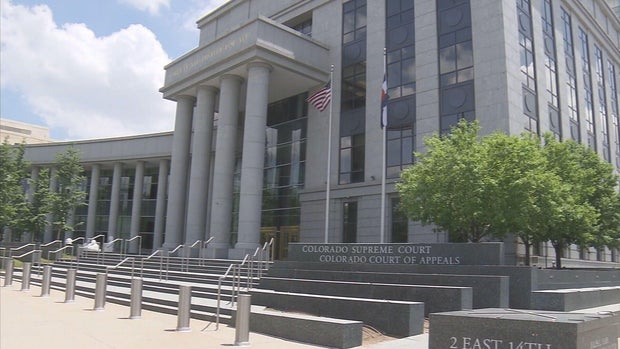
Colorado Supreme Court Chief Justice Monica Marquez said the pause is necessary due to an increase in streams that have been illegally recorded and posted on social media sites. She said that the incidents have occurred in nearly every district and county court across Colorado, as well as many municipal courts.
The court said it has repeatedly requested that social media platforms remove the videos, and they are unwilling to do so. The platforms include YouTube, TikTok, Instagram and Facebook, among others. Marquez also said that "bad actors" are posing as legitimate court participants to "disrupt proceedings by displaying violent, pornographic, racist, and misogynistic video."
In the order, Marquez said, in part, "Rather than the serious business of justice, viewers are treating this content as entertainment. Posters are editing and manipulating the recordings to distort their content. Viewers are leaving comments that denigrate the appearance and intelligence of court participants, challenge the innocence or truthfulness of defendants, victims, and witnesses, threaten court personnel, and expose vulnerable litigants to public ridicule – behavior that would never be tolerated in a physical courtroom. Judicial Department leadership has received numerous examples of posts disparaging defendants, mocking litigants experiencing mental health crises, and even publicizing the testimony of a sexual assault victim, blurring the victim's face but including the victim's full name."
She also stated that some are posting the video on monetized social media channels, "Put bluntly, our judicial proceedings are being exploited for personal financial gain..."
Marquez continued that currently, there is no less restrictive alternative while they explore a "proper balance between preserving public access to our courts and upholding the dignity and integrity of our justice system."
She said the pause has no impact on virtual proceedings in Colorado, meaning that litigants, witnesses and victims may continue to participate virtually by using online video conferencing platforms like Webex and others. It also does not impact certain media coverage as allowed by law.
Marquez stated that the directive does not impact public access to physical courtrooms across Colorado.


