Colorado State University helping to address veterinary shortage with opening of new vet teaching hospital

As the country is facing a veterinary care shortage, Colorado State University is helping to grow the local workforce and expand world-class care to local pets and animals.
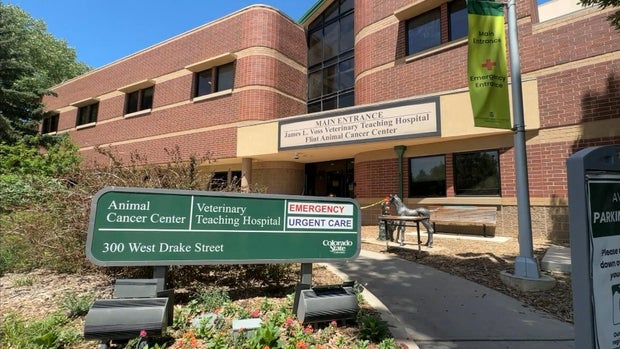
With the help of state funding, CSU is adding more veterinary education opportunities and opening a new, state-of-the-art Veterinary Hospital and Education Complex.
CSU's vet teaching hospital, in Fort Collins, is widely known and respected as one of the most prestigious programs and providers throughout Colorado and the nation. For decades, it's been a space for animal care, veterinary education and clinical training.
However, at the new $230 million facility right next door, CSU will be able to enroll about 20% more students every year and educate the next generation of vets.
"It will allow us to fill a lot of the employment needs in our region and throughout the nation for veterinarians," said Melinda Frye, the Associate Dean for Veterinary Academic and Student Affairs.
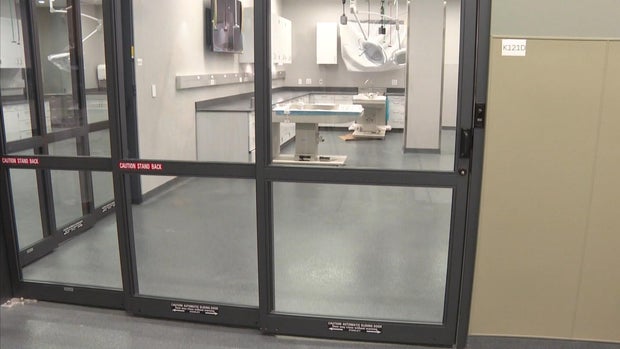
Starting this fall, 30 new students can join the program every year, with class sizes able to hold up to 180 students. Frye added that it's also a competitive program, with up to 4,200 applicants every year, and just over 140 seats currently available.
"There are a lot of individuals who are wanting to get into veterinary school, and so by expanding our class size ... we hope to accommodate more of those highly qualified candidates," said Frye.
With a new curriculum, students will also be able to work with patients earlier in their education. There will also be 24 new exam rooms, tripling the primary care exam space.
"The primary care certainly expands our ability to put students in the doctor's seat in partnership with an experienced clinician," said Frye. "It allows them to see a lot of those cases that they will see in practice, but also just builds general problem-solving skills and leadership skills as well."
There will also be new labs and simulation spaces.
"The simulation spaces offer great opportunities for practicing client communication skills, physical exam skills, and those types of activities," said Frye.
While most vets go into private practice, Frye also says they're seeing a greater demand for vets in innovative roles. She believes the new space will show students other roles that they could pursue outside of graduation.
"Veterinarians are so uniquely trained. I think with COVID, we started to see how many roles there were for veterinarians in public health, in the military, advocacy, conservation," said Frye.
Gimlet, an 11-year-old pup, is among the 42,000 animals seen at the vet hospital every year. His owner, Nick Davis, said Gimlet has been a patient for four years.
"He's a French bulldog and he has a little bit of a disc problem, so he's partially paralyzed," said Gimlet's owner, Nick Davis. "We bring him up here to CSU to do some rehab work, keep him in shape, and he does water treadmill. They have a fantastic orthopedic unit at CSU. It's one of the best in the country."
Davis said the new complex also means more opportunities for specialized care for Gimlet.
"I've been coming here for over 30 years with my dogs. I have had some special needs dogs. A couple of my dogs have been paralyzed. So having a state-of-the-art unit right here, is just fantastic," said Davis.
Faculty and staff will begin moving into the new building this summer, with students in the classrooms this fall semester.


