"This Land: Colorado at 150" documentary follows 5 families whose histories are woven into the land itself
As Colorado marks 150 years of statehood, CBS Colorado will air "This Land: Colorado at 150," a new documentary featuring the voices of five families and communities whose stories helped build the state we know today.
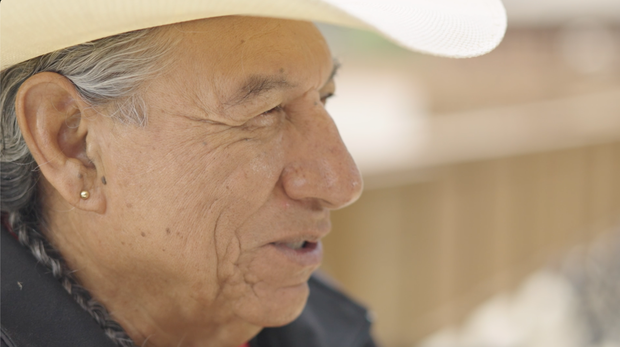
Moving across the state's Front Range, its mining canyons, its southern valleys and its eastern plains, letting its subjects speak for themselves about what it means to belong to a place that has changed hands, cultures and fortunes again and again.
The special opens with the people who were here first. Fred Mosqueda, a member of the Cheyenne and Arapaho Tribes, traces his people's homeland long before Colorado became a territory — and to the violence that followed westward expansion as the country developed.
"The Sand Creek Massacre was maybe for political gain for (then governor) Evans and (commanding officer) Chivington, maybe it was a way to totally remove us from Colorado," Mosqueda said.
For Lynnette Grey Bull, who is Northern Arapaho and Hunkpapa Lakota, returning to Colorado is less about reclaiming the past than about asserting the present.
"We are part of Colorado. We are the fabric of Colorado," Grey Bull says. "We have all consistently and collectively made a life here."
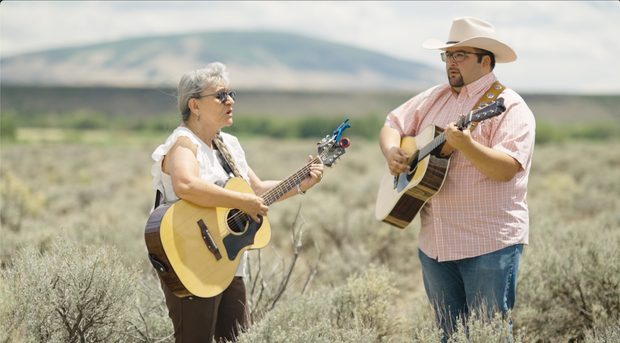
In the state's southern valleys, families who trace their roots to Spanish and Indigenous ancestors -- and to a border that once didn't exist -- have kept alive a musical tradition passed down for generations. Ruben Dominguez, a seventh-generation resident of southern Colorado and northern New Mexico, describes the region almost as a place outside of time.
Dominguez says, "My family has been here before the state was even a state."
His aunt, Rose Vialpando, says the old ballads carry more than melody.
"We are not Spaniards. We are not Españoles. We are not Mexican. We are not Native," Vialpando says. "We're a mix of all of these beautiful cultures, and what a wonderful, beautiful combination."
Dominguez adds, "Music to me is the greatest medicine that there is out there."
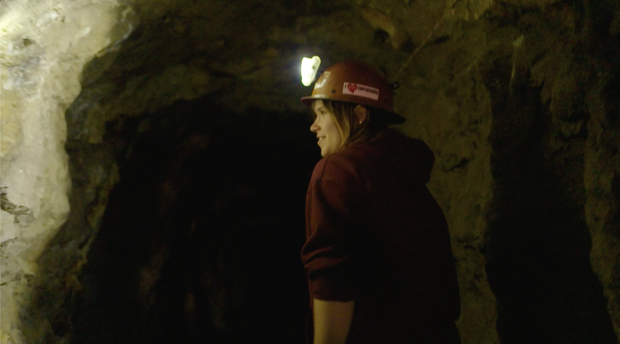
Gold brought the first wave of settlers to Colorado, and it's still pulling visitors into the hills west of Denver, where David Mosch runs a mine his family once worked for real.
"It was an honest-to-goodness real gold mine that my father and I actually extracted gold out of," Mosch says.
His daughter, Ruth Mosch, who manages operations for the mine, and led CBS Colorado through the old tunnels, sees something even older than the ore.
"This is some of the oldest rocks you'll ever be near or be around," she said. "This whole area you're looking is about 1.2 to 1.5 billion years old."
In Adams County, just 10 miles north of downtown Denver, the O'Dorisio family has stayed put in Welby for five generations, since Robin O'Dorisio's great-great-grandfather arrived from Italy to work the mines and then the fields.
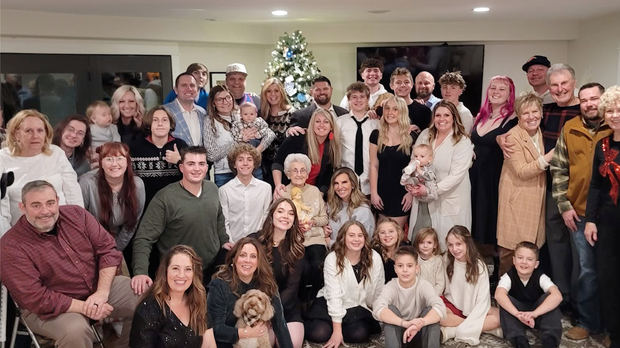
"My family immigrated to Colorado because there were opportunities here," O'Dorisio says. Today, six houses on the same land make up what the family calls "the compound" -- home to her mother, grandmother, brother, uncles and cousins.
"The fact that we're a fifth generation, and we're still doing some of the same traditions that we did more than 100 years ago, I think is a testament to who we are," she says.
On the Eastern Plains near Manzanola, Alice Craig McDonald, 91, lives near the homestead her grandparents claimed after leaving Oklahoma by wagon in 1916 -- descendants of people born into slavery who came west looking for land of their own. A community known as The Dry was once home to 100 families, Black and White.
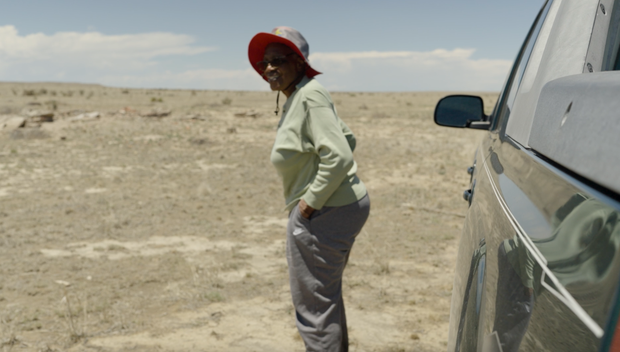
"Many of them had not had anything to call their own, their own home, their own farm, their own anything. So, to have ownership was very important to people," McDonald said.
Her grandmother's philosophy, passed down through the Dust Bowl and beyond, still guides the family.
"We're here. Let's stay and let's do what we need to do to survive and live and raise our families," she said.


