Quick response leads to Colorado stroke survivor's miraculous recovery

May is Stroke Awareness Month, a reminder that everyone needs to recognize the warning signs. One Colorado resident made a miraculous recovery following a stroke thanks to his wife's quick action.
According to the Mayo Clinic, the average age of a stroke patient is about 70, but doctors say a stroke can happen at any age, and how quickly someone responds can make all the difference.
In Jefferson County, CBS Colorado spoke with a stroke survivor and medical experts at Lutheran Hospital about what to watch for.
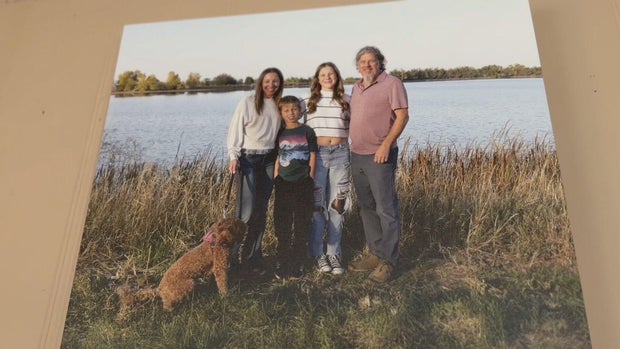
In February, Mike Studeny collapsed while getting his children ready for school.
"I just got faint and went down on the ground, and then I was kind of a little disoriented," he said.
He soon realized something was seriously wrong. Studeny said he could not feel or move his right arm.
"I thought, 'Oh, this is bad. It's probably time to call out to someone,'" he said. "Then I couldn't talk. I was trying to make the noises, and it barely happened."
His son found him and alerted Studeny's wife, Linda Lou Studeny, who immediately called 911.
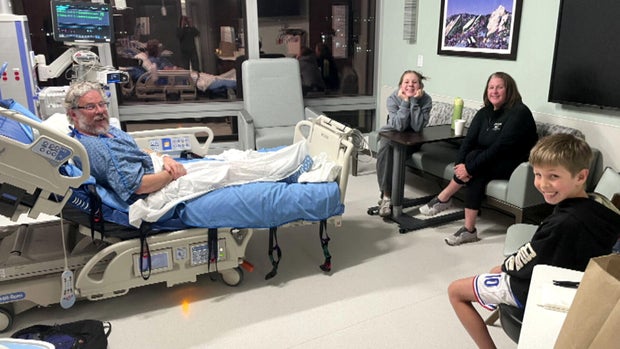
"I had it in my mind, I'm not going to be a widow today," she said. "That's not going to happen, that's not in my cards."
Doctors say her quick response set the course for his recovery.
"Time is brain," Linda Lou Studeny said, recalling what she had heard repeatedly.
"Every minute, you are losing about two million brain cells during a stroke," said Dr. Cynthia Dickerson, a stroke neurologist at Lutheran Hospital.
Dickerson was the first physician to treat Mike Studeny, who was diagnosed with a non-bleeding stroke.
"There are two main categories of stroke," Dickerson said. "The most common, about 80 to 85%, are caused by a blockage of a blood vessel. If you think about a heart attack as a blockage in the heart, a stroke is essentially a heart attack of the brain."
Within minutes of arriving at the emergency room, Mike Studeny was scanned, and a clot was found. He was treated with medication and then taken into surgery.
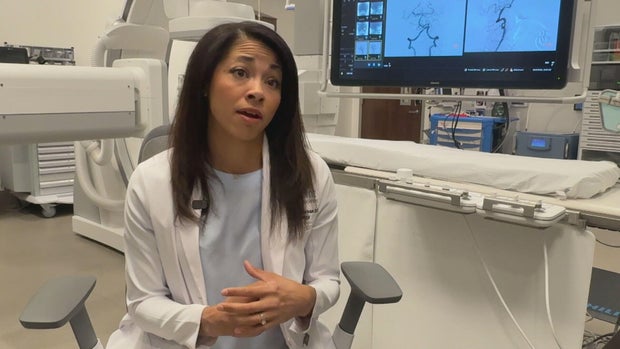
"Within 12 minutes of him being on the table, the clot was removed," Dickerson said. "When I saw him in the ICU about 30 minutes later, he felt back to normal. He was talking and moving. Both he and his wife were extremely grateful."
Dickerson said Mike Studeny's outcome could have been much different.
"This is a young individual who, had he not come in quickly and received those treatments, could have been paralyzed potentially for the rest of his life," she said.
At 55 and in good health, Mike Studeny is not a typical stroke patient. Still, doctors stress that strokes can affect anyone. Dickerson urges people to remember the acronym "BE FAST."
"B is for balance, an inability to walk straight," she said. "E is eyes, such as vision loss. F is facial drooping. A is arm weakness or numbness. S is speech difficulty. And T is time, don't wait."
While Mike Studeny says he feels almost fully recovered physically, he says there is still emotional healing underway.
"If I'm playing a song and singing it, that's all I'm really thinking about," he said. "I'm not thinking about all the other stressors."
And for him, that focus is helping strike the right chord in recovery


