Colorado funeral home owner who pleaded guilty to corpse abuse sentenced to 40 years in prison on state charges
Jon Hallford, a southern Colorado funeral home owner who stashed nearly 200 decomposing bodies and gave families fake ashes, was sentenced on state charges on Friday. The judge handed down 40 years in prison for corpse abuse.
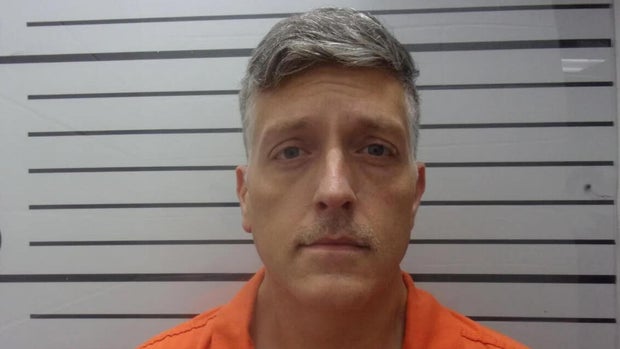
During the sentencing hearing at the El Paso County Judicial Building, family members told Judge Eric Bentley they have had recurring nightmares about decomposing flesh and maggots since learning what happened to their loved ones.
They called defendant Jon Hallford a "monster" and urged the judge to give him the maximum sentence of 50 years.
Bentley told Hallford he caused "unspeakable and incomprehensible" harm.
"It is my personal belief that every one of us, every human being, is basically good at the core, but we live in a world that tests that belief every day, and Mr. Hallford, your crimes are testing that belief," Bentley said.
Hallford apologized before his sentencing and said he would regret his actions for the rest of his life.
"I had so many chances to put a stop to everything and walk away, but I did not," he said. "My mistakes will echo for a generation. Everything I did was wrong."
Before the sentencing was announced, prosecution attorneys cited Hallford's previous claims that he "bit off more than he could chew" and "worked diligently to get caught up," blaming the COVID-19 shutdown. He told lawyers that storing the bodies was "never the plan," and he didn't open the business to "scam" people.
The prosecution also outlined a timeline, proving malice before the global pandemic:
- June 2017: Hallford and his former wife, Carie, created the Return to Nature Funeral Home
- March 2019-March 2020: Hallfords begin renting the Penrose building, 25% (35) bodies found with decomposition from this period of time
- March 2020-November 2021: Hallfords purchased the Penrose building, 34% (47) bodies found with decomposition from this period of time
- 2021-2023: 41% (56) bodies found with decomposition from this period of time.
Prosecutors confirmed 191 total bodies were discovered at the Penrose site, 67 inside and 122 outside.
The average body spent 847 days in the Penrose building. Prosecutors cited several strategies Hallford used to hide his crimes, including covering every window and door with blackout curtains, unscrewing light bulbs, and putting a notice on the door to redirect anyone from going inside.
Hallford's attorney unsuccessfully sought a 30-year sentence, arguing that it was not a crime of violence and that he had no prior criminal record.
His former wife, who co-owned the Return to Nature Funeral Home, is due to be sentenced on state charges on April 24. She faces 25 to 35 years in prison.
Both pleaded guilty in December to nearly 200 counts of corpse abuse under an agreement with prosecutors.
During the years they were stashing bodies, the Hallfords spent lavishly, according to court documents. That included purchasing a GMC Yukon and an Infiniti worth over $120,000 combined, along with $31,000 in cryptocurrency, pricey goods from stores like Gucci and Tiffany & Co. and laser body sculpting.
Prosecutors say the Hallfords were charging families $1,290 for cremation services and had an agreement for each body to be cremated for $200. Prosecutors conclude Hallfords had collected enough money from families to cremate all victims three times over.
"Clearly, this is a crime motivated by greed," prosecutor Shelby Crow said. The Hallfords charged more than $1,200 per customer, and the money the couple spent on luxury items would have covered the cost to cremate all of the bodies many times over, Crow said.
The Hallfords also pleaded guilty to federal fraud charges after prosecutors said they cheated the government out of nearly $900,000 in pandemic-era small business aid. Jon Hallford was sentenced to 20 years in prison in that case, and Carie Hallford's sentencing is pending.
A plea agreement in the corpse abuse case calls for the state prison sentence to be served concurrently with the federal sentence.
One of the family members who spoke at Friday's hearing was Kelly Mackeen, whose mother's remains were handled by Return to Nature.
"I'm a daughter whose mother was treated like yesterday's trash and dumped in a site left to rot with hundreds of others," Mackeen said. "I'm heartbroken, and I ask God every day for grace."
As she and others spoke of their grief, Jon Hallford sat at a table to their right, wearing orange jail attire and looking directly ahead. The courtroom's wooden benches were full of relatives of the deceased.
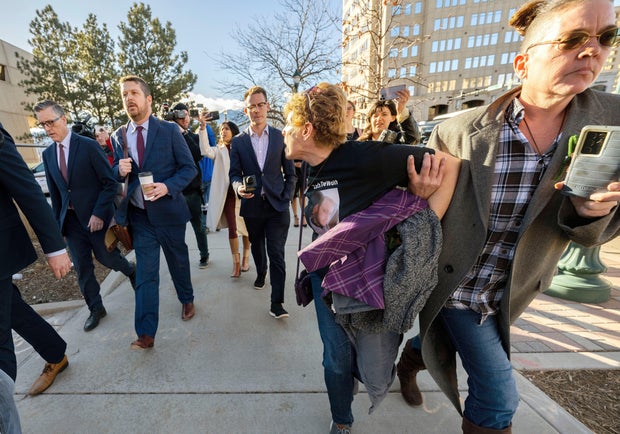
The Hallfords stored the bodies in a building in the small town of Penrose, south of Colorado Springs, from 2019 until 2023, when investigators responded to reports of a stench from the building.
Bodies were found throughout the building, some stacked on top of each other, with swarms of bugs and decomposition fluid covering the floors, investigators said. The remains -- including adults, infants and fetuses -- were stored at room temperature.
The bodies were identified over months with fingerprints, DNA and other methods.
Investigators believe the Hallfords gave families dry concrete mix that resembled ashes. Prosecutors said Home Depot receipts showed 606 pounds of concrete was bought by the Hallfords.
After families learned that what they received and then spread or kept at home were not actually their loved ones' remains, many said it undid their grieving process, while others had nightmares and struggled with guilt.
One of the recovered bodies was that of a former Army sergeant first class who was thought to have been buried at a veterans' cemetery, FBI agent Andrew Cohen said. When investigators exhumed the wooden casket at the cemetery, they found the remains of a person of a different gender inside, he said. The veteran, who was not identified in court, was later given a funeral with full military honors at Pikes Peak National Cemetery.
In a rare decision last year, Judge Bentley rejected previous plea agreements between the Hallfords and prosecutors that called for up to 20 years in prison. Family members of the deceased said the agreements were too lenient.