Wanted: Citizen Scientists Across Colorado To Monitor International Dark Sky Week
DENVER (CBS4) - If you're bored and looking for something to do during the COVID-19 quarantine then consider helping Colorado Parks and Wildlife observe International Dark Sky Week. It runs from April 19-26, 2020.
International Dark Sky Week was created in 2003 by high school student Jennifer Barlow and has grown to become a worldwide event and a key part of Global Astronomy Month. It is held each April during the week of the new moon, when skies are darkest. The goal is to monitor light levels to assess the quality of the night sky in your area.
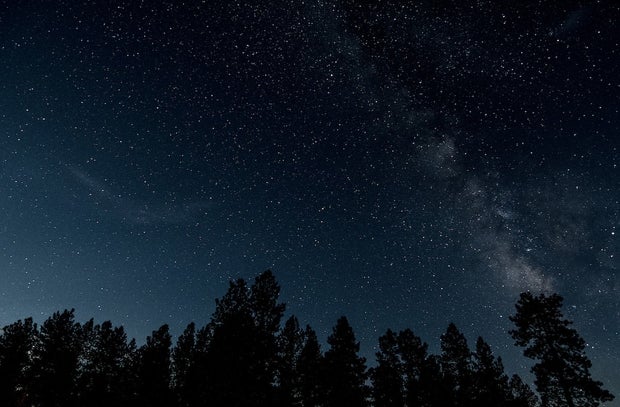
"It's important because at high intensities, light pollution can have a variety of impacts on wildlife, including plants, animals and humans," said Citizen Science Technician Audrey Spencer. "For instance, it can impact the migration patterns of nocturnally migrating birds as well as the hunting behavior of bats."
HOW TO PARTICIAPTE
No experience is needed and observations can be made with a smartphone. Volunteers can submit observations through the Globe at Night website or with Loss of the Night, a free app available for Android and iOS. If cell service is not available, downloadable star charts can be printed in advance and written observations can be submitted online at a later date.
While observations are specifically wanted between April 19-26 you can participate at anytime throughout the year. Reports should take place at least one to two hours after sunset or before sunrise, when the moon is not above the horizon.
RESOURCES
Click here for a table of daily moonrise/set times, moon phase, illumination, and lots of other information.
Click here for a link to several real-time maps from Colorado's Weather Center at CBS4 to help you gauge the current conditions, ranging from temperature to sky cover.
Click here for an interactive map that shows the impacts of light pollution around the world.