How Colorado researchers suggest combating the housing crisis for school workers

We know that housing is one of the largest issues facing the American public, but in Colorado, those issues are combining with education challenges to create a potentially dark landscape for the future, should nothing change.
That's according to the Keystone Policy Center's latest report, "Can't Live Where We Teach" which outlines how the state's housing crisis is crippling our education system and what can be done to avoid a bad outcome for everyone, especially those working in our schools.

The report reveals one key finding that might be surprising, according to the center: people working for school districts (teachers, bus drivers, and custodians) have shown that they're largely okay with the school district being their landlord, so long as it results in affordable housing.
"They would love to have access to workforce housing provided by their school districts," Van Schoales, the senior policy director at the Keystone Policy Center said. "They're comfortable with their school districts having some role in owning or facilitating the housing for them."
It's the potential for a mutually beneficial system: a school district has a vested interest in keeping its employees. Aside from time spent recruiting new employees, year-over-year employees tend to have better connection to their community and non-tangible value in the education system. But staff can't stick around if housing is too expensive, creating a symbiotic relationship where the district provides stable housing, and in return, it retains a stable workforce.
It's a model one Colorado district is already putting to the test. Eagle County Schools began developing a housing master plan nearly a decade ago to address the impossibility of recruiting essential staff.
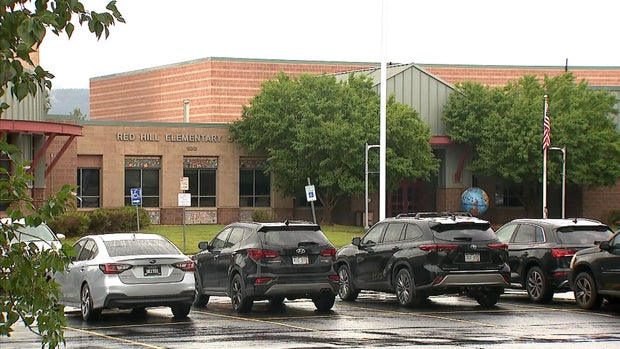
"It's impossible for people to move here on a teacher salary or a school bus driver salary and find a place to live," Philip Qualman, Superintendent of Eagle County Schools said. "The only way we can make that happen was to take the initiative to create affordable housing."
Thanks to that focus, the district's portfolio of employee housing has grown exponentially.
"We had about 35 units that we managed. Now we have over 130," Qualman explained. "(We're) opening another 40 in the next few months and slated to do another 130 after that."
"This was not a market we wanted to get into, not our expertise. But we had to out of necessity."
The housing has limitations, by design. It's only for Eagle School District employees, and if you leave your job with the district, you have 60 days to move out. Currently, most rental units have a five-year cap on how long an employee can live there. Despite these rules, the demand is overwhelming.
"We presently have about 150 people on a waiting list," Qualman noted, adding that another 50 units opening soon will not be enough.
The Keystone Policy Center's report argued this is a model every school district in the state needs to consider, if not to begin implementing immediately.
"I think more communities have this problem in Colorado than don't," Schoales said.
While the suggestion of simply increasing pay could seem like the obvious answer, Schoales argues even if that happened (which is its own issue) raised likely would not enough to compete with the runaway housing market. "The curve on the cost of housing and the availability of housing, regardless of even if we were to pay teachers 10% a year, we can't catch up. The gap is too large," he said. "We have to address the housing issue, and we have to address the salaries."
The report stresses that education and housing are not separate issues. Without a functional school system, every piece of society suffers -- and according to Schoales, we're already falling behind.
"Approximately about half the kids in this state are not prepared to actually go into the jobs that are now being created in the state," he warned.
The Keystone report urges districts to get creative, using their position as one of the largest landowners in their communities to build homes through bonds, tax initiatives, or partnerships with non-profits like Habitat for Humanity. While the effort in Eagle County has been a success, Superintendent Qualman is quick to point out that it's not a cure-all for the systemic problems facing public education in Colorado.
"I don't think that this fixes anything that's broken in the Colorado K-12 system. That still needs a major overhaul," Qualman admitted. "Even when we're able to provide this opportunity for affordable housing ... it's still very difficult for people to live here on what we can pay them as educators."
He describes the initiative as "high effort, high value," but ultimately a local fix for a much larger problem. Still, it's a critical step that has allowed his district to recruit and retain high-quality staff who would have otherwise been priced out.
For other districts considering a similar path, his advice is straightforward.
"Have a plan, and I'm here if school districts have questions."