Extensive rebuild of Grand Junction Union Station, a historic marvel in Colorado, shows signs of progress
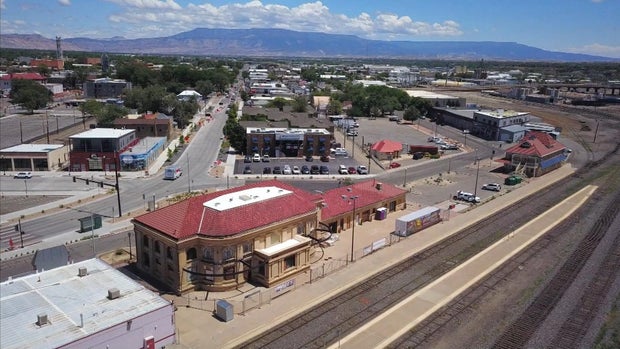
Another major train station rebuilding in Colorado is underway. After a more than 10-year journey for the owners, progress is beginning to show at the Grand Junction Union Station.
"I was so surprised that anybody from the public could just buy the historic train station," said Dustin Anzures, who along with his wife Veronica Sanchez purchased the depot for just $350,000 in 2016.
The couple made money in building and rehabbing housing the Phoenix area. Veronica Sanchez is a third-generation Grand Junction native.
"Her dad worked for the Rio Grande Railroad for 35 years," explained Anzures. "And so it's just the sentimental value far outweighs any kind of monetary return, which in all honesty is going to be meager at best."
They knew right away.
"You know, we walked into the building and I feel like it just had an emotional effect on us," said Anzures.
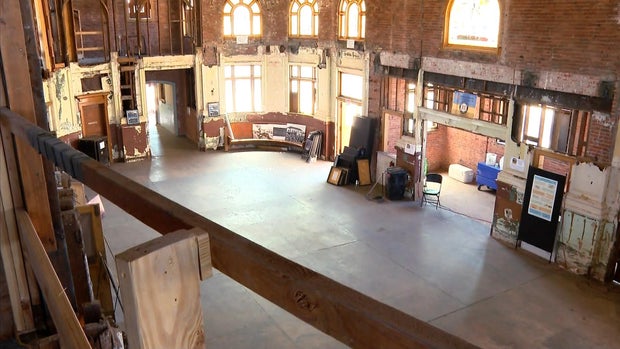
There hasn't been any return on investment yet. But there is hope for the future. Still, it is a labor of love trying to get the 120-year-old building fixed and re-open.
"The ROI being monetary, left a long time ago. All of the ROI now is emotional," said Anzures.
"This is so beyond like a development project. Like, this is labor of love," said Brandon Stam of Grand Junction's Downtown Development Authority.
"I think what's unique and cool about this building is that you get so many different cross segments of people that are really excited by it," said Stam.
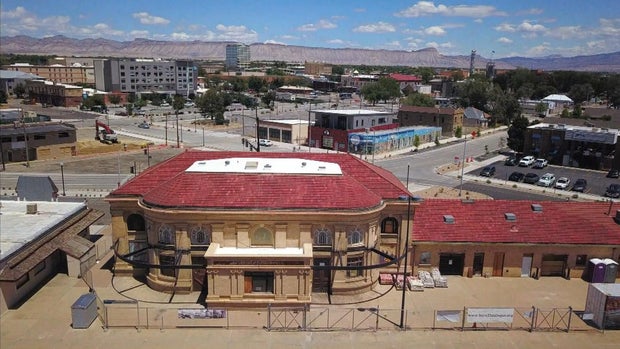
The building is an architectural treasure. It was designed by Henry Schlacks, a renowned Chicago architect known for the design of many churches.
"And so why on earth was Schlacks coming to Podunk, Colorado, to design a train station? And the truth was, well his brother Charles Schlacks was vice president of the railroad at the time," said Michael Nuttall, of The Friends of Grand Junction Union Depot.
Charles Schlacks was vice president of the Denver and Rio Grande.
The building opened in 1906 for what seems like the very reasonable equivalent of $2.7 million in today's money.
"This building was spawned out of a period which was called the City Beautiful movement. Which was really a response to the Industrial Revolution and the poor working conditions that existed during that time."
"Just like so many cities in America, Grand Junction exists because the railroad came the route that it chose," said Anzures.
It was put to immediate use right after its April opening.
"About 13 hours later in the early morning of April 18, 1906 was the Great San Francisco earthquake," explained Nuttall. "They have transformed this station into a makeshift refugee camp, with a soup kitchen with laundry with pre-packaged meals, with financial assistance, just about anything that you could possibly think of."
The people of Grand Junction would help first. Then put the station to nearly 80 years of use as a center of community transportation.
In 1912 there was a legendary robbery -- or at least that's what it seemed when a worker at the Globe Express Office said he'd been robbed of thousands in gold and silver bars used to exchange with banks for money to pay workers. The worker, Ben Gilbert, and another man were later found to be perpetrating a scheme to fake a robbery. The gold and silver was found at a ranch and returned.
During World War II, rail in the area was essential for the Manhattan Project to help build atomic bombs, Nuttall explained. The Uravan Mineral Belt included vanadium used for steel production and uranium as nuclear material.
In 1943, two boxcars carrying munitions started fire. Brave railroad workers managed to get the cars through to an area farther away from the station by a lumber company. As they burned through the night, they exploded in a massive fireworks show. No one was killed, but there were several serious injuries, including the town's fire chief who later had an arm amputated.
Grand Junction natives know stories of past family who worked there. The walls may hold many stories.
"I think it is vital for us to understand where we came from," said Nuttall. "Because if we understand where we came from, then we can probably get some sense of where we're going."
With grants to help from places like History Colorado, Anzures and Sanchez have been working to get the project started. It is a challenge to find people in Mesa County to do restoration work, but Colorado does have a good deal of that talent. They are planning a restaurant in the space on the main floor, with an upstairs lounge. The old ticket office will be a downstairs bar. Possibly there will be a meeting space above. The Amtrak ticket office, which is currently in a building next door, will hopefully move into a one floor portion of the depot.
It is not easy.
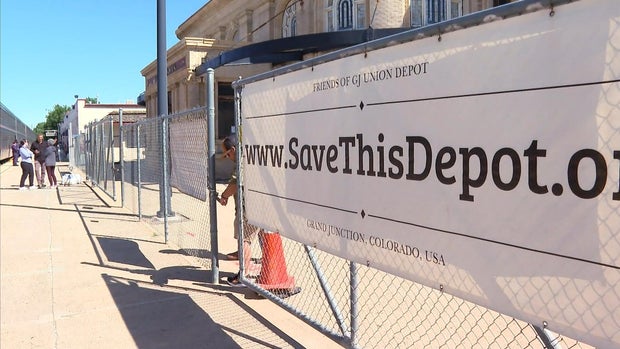
"There's good moments and bad moments. And the bad moments are really just fear, you're wondering can we get this done," said Anzures.
If they can get three grants they are hoping for now, there's potential to get the station open late next year.
"I think it's probably speaks to the reason we're doing it is we want to see the community interacting with the building," said Anzures. "The learning curve has been really steep but you know we wouldn't go back and trade anything or undo anything."
There's hope it will bring attention to the area two blocks of downtown, and maybe a new future.
"This seems like this is going to set the stage for the next 10, 20 years for this area and again become something that everybody's proud of," said Stam.


