Farm Bill deadline passes as Colorado farmer warns costs, uncertainty are piling up

As the latest extension of the 2018 Farm Bill expired Sept. 30, Congress remained without a new long-term agriculture policy despite years of negotiations and temporary extensions.
The Farm Bill is the sweeping legislation that governs many federal farm safety net programs, conservation efforts, crop insurance support and food assistance programs. While the U.S. House passed a new Farm Bill earlier this year and the Senate Agriculture Committee advanced its own version in September, lawmakers have yet to reach a final agreement.
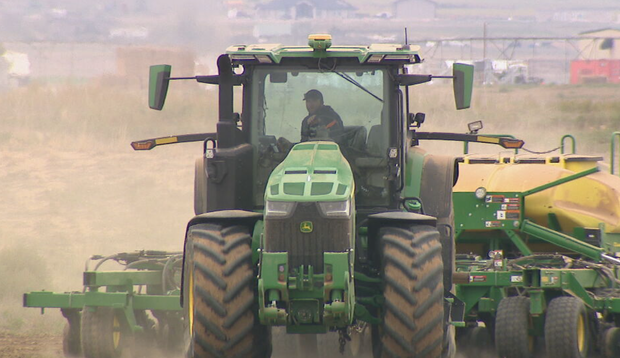
U.S. Rep. Lauren Boebert, whose district includes much of eastern Colorado's agricultural region, said partisan politics are slowing the process.
"I think we've done a good job over the years of producing a better Farm Bill. I think it still can have improvements," the Republican told CBS Colorado. "Unfortunately, because it is election season, we have Democrats who are currently holding our farmers and ranchers hostage and not passing this bipartisan farm bill, and it's very unfortunate."
Colorado's Democratic senators argued farmers are facing broader economic pressures that also need to be addressed.
"Colorado farmers, who are our best entrepreneurs, are getting squeezed from all ends. The president's war with Iran has sent fertilizer and diesel costs skyward, while drought and rising input costs are making it harder to keep farming profitable," Sen. John Hickenlooper said in a statement. "We have voted repeatedly to end the war and bring costs down for farmers, and remain committed to passing a bipartisan Farm Bill that supports farmers and Colorado's most vulnerable in every corner of the state."
Sen. Michael Bennet, who voted against advancing the Senate bill out of committee earlier this month, said he shares in Colorado farmers' and ranchers' frustration with another potential farm bill extension.
"I share Colorado farmers' and ranchers' frustration with another potential Farm Bill extension. But we need to pass a bill that meets today's producers' needs, not just a deadline. This bill fails that test. Producers have repeatedly needed billions in ad hoc assistance during crises. We should be asking why. We need a Farm Bill that builds a reliable safety net, confronts costs, expands markets, cuts red tape, prepares producers for drought and wildfire, and invests in strong rural communities. I hope we can use the rest of this year to come together around a bipartisan Farm Bill that reflects the realities farmers and ranchers face today."
For third-generation Weld County farmer Marc Arnusch, the delays in Washington come during one of the most challenging periods he has faced in agriculture. Standing in a field that produced nothing this year, Arnusch pointed to the toll drought has taken on his operation.
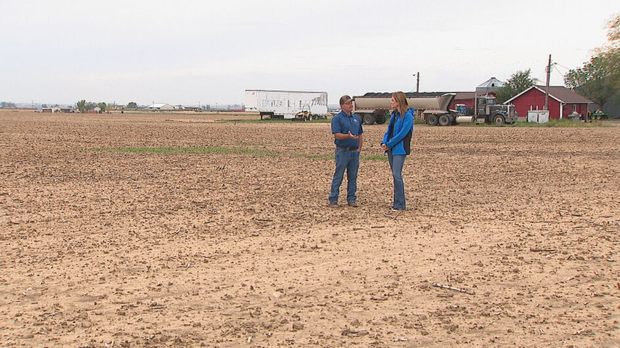
"We've grown a lot of crops of corn, sugar beets. We've had onions on this farm," he said, pointing to several hundred acres that remained barren this year. "This is sitting idle. It did not produce a crop at all in 2026."
Arnusch said persistent drought forced him to reduce the number of acres he planted this year, leaving some fields unseeded because there simply was not enough water available.
At the same time, he said operating costs have surged.
"In 2026, our costs have actually exploded on the farm," Arnusch said. "Diesel's up 90%, fertilizer's up 70%. Everything that it takes to run this farm is going up."
The combination of higher expenses, lower commodity prices and ongoing drought has squeezed profit margins across much of farm country, Arnusch said. That's why he and other producers are closely watching the Farm Bill debate.
"The last time the farm bill was negotiated and agreed to in Washington was 2018, and I can tell you there's very few things in my farming operation that are the same as eight years ago," Arnusch said.
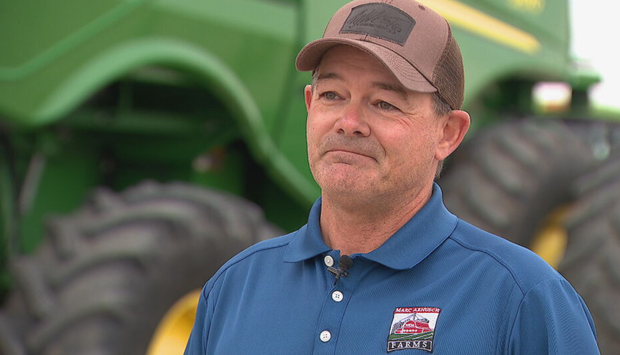
Congress has relied on short-term extensions instead of passing a new five-year bill, leaving many producers uncertain about the future of federal farm programs. Arnusch argues that while lawmakers acknowledge the challenges facing agriculture, the policies intended to support farmers have not kept pace with today's economic realities.
"The Colorado farmer, the American farmer, can overcome high production costs. We can overcome low commodity prices. We can even overcome a drought," Arnusch said. "But you layer all three of those together ... We need a safety net that we can see, that we can understand before we hit the ground, not afterwards, not with rescue policies."
The issue, he said, extends beyond individual farmers.
"The American public is at a turning point," Arnusch said. "We're not asking you to feel sorry for a Colorado farmer. We're asking you: Does agriculture still matter? You eat three times a day. We should all be interested in agriculture because we depend upon it each and every single day."
As Congress continues negotiations over the next Farm Bill, Arnusch said farmers are not asking for a bailout. They are asking for tools to manage increasingly unpredictable conditions.
"We're just asking to give us the tools to manage risk," he said. "Nothing more than that. Just give us the tools to manage risk. We'll take it from there."


