Equine herpes outbreak leaves Colorado veterinarians warning of dangers of traveling with horses

Veterinarians with Colorado State University's equine medical hospital are warning horse owners to be cautious amid an outbreak of equine herpes. An outbreak, first reported in Texas following a barrel racing event, has now spread to multiple states including Colorado.
There are two types of equine herpes virus. One is sexually transmitted, while the other is most commonly passed from horse-to-horse via mouth or nose. The current outbreak is known as "equine herpes virus one," which is transmitted most commonly by discharge in the mouth or nose.
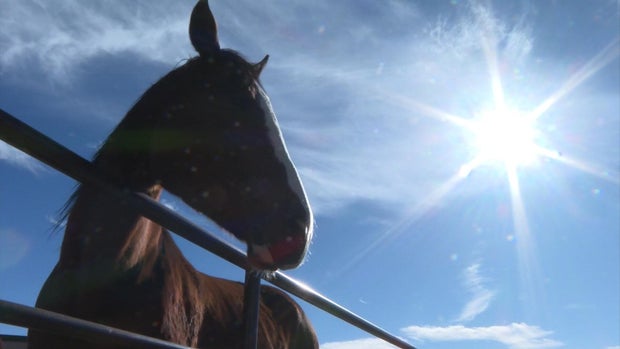
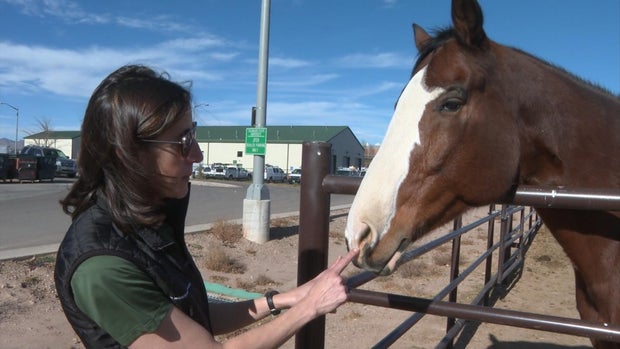
"Herpes in the horse is a viral disease, similar to people," said Kathryn Wotman, director of equine and livestock services at CSU in Fort Collins.
Wotman said the virus is typically transferred among herds from horse-to-horse facial contact. However, it is also possible for it to be transferred on surfaces like trailers or even in water from saliva in a trough.
"(Symptoms include) if your horse is starting to show signs of lethargy, not acting like themselves, or fever," Wotman said. "(Also look for) any nasal discharge, ocular discharge, or if your horse has inappropriate neurologic behavior."
Wotman said inappropriate neurologic behavior includes stammering, or inability to walk or stand in a normal manner.
Wotman said it is normal for horses to have small amounts of clear nasal or ocular discharge. However, if they are infected, it will likely be much more noticeable to the naked eye.
"That discharge typically comes from both nostrils. It is more than a trickle, it is quite profuse and thicker and more yellow," Wotman said.
If the symptoms are respiratory, Wotman said they most commonly resolve themselves with time. If it is neurological, there isn't a set treatment. And, in some cases, it could potentially be fatal.
"There is a vaccine out there for equine herpes virus. It is not 100% protective, but it may lessen the severity the clinical signs your horse is experiencing if they do, indeed, contract the virus," Wotman said.
Studies show that antivirals are also available for the virus, however they haven't proven to have strong efficacy for horses already infected.
CSU experts say the best practice, for now, is to keep your herd or horse isolated from other outside horses. Doing so will prevent the virus from coming into your herd as it is not transmitted by humans, and humans cannot be infected by it.
"Be careful bringing new horses into the herd, or having a horse travel to an event and then coming back to a herd," Wotman said.
Wotman said infected horses may benefit from daily rectal temperature exams. Any temperature of 101.5 degrees or higher should be flagged and brought to the attention of a veterinarian.
Wotman encouraged horse owners to not panic and to simply be cautious with where they allow their horses to go.
"Good common sense always prevails," Wotman said.