Likely demise of former El Rancho restaurant in Colorado may hold a lesson
Two years after it closed, Evergreen's storied El Rancho restaurant appears ever more likely to face a wrecking ball.
The former Colorado gathering place that opened in 1948 struggled through the years since Interstate 70 opened, diverting traffic from Highway 40, where El Rancho was a destination. But it held a romantic charm and the log architecture made it an iconic building.
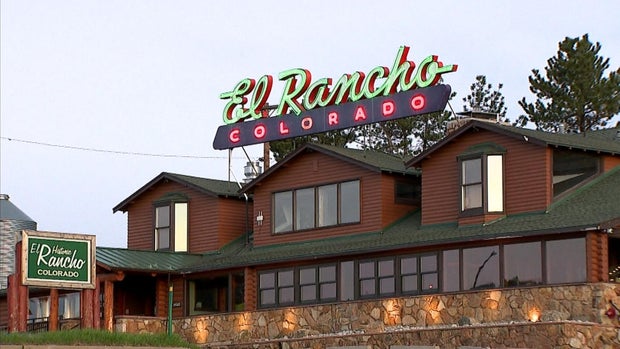
A proposal to remove the old restaurant to allow for the construction of a QuikTrip convenience store and fueling station does not need a zoning change and is likely to gain eventual approval.
"It's an allowable use for QuikTrip to come in. That's not an issue," said Jennifer Orrigo Charles, executive director of Colorado Preservation Inc., a nonprofit involved in preservation efforts around the state.
"It's hard when the sale has already happened and the zoning is already confirmed to really change the momentum of that process."
Jefferson County has weaker protections for historic properties than some other communities in Colorado. An historic designation must be placed on a property by the building's owner. In the case of the El Rancho building that has never been done.
"That's something specific to Jefferson County's landmark designation. It's not like that in other communities," said Orrigo Charles.
In places like Denver there are ordinances that allow for outside input on historic properties.
"Denver has really strong ordinances. It allows for landmark designation of places that go beyond owner consent," said Orrigo Charles.
"When you look at what saves a place it's all about that local involvement and the local protections that are placed."
Cities and towns and counties can seek certification to gain the ability to have greater influence on preservation, but it's an involved process. Jefferson County is looking at the idea.
"Right now there's about 130 local governments in Colorado that do have a preservation ordinance of type, but not a certified local government," she explained. "That's kind of a higher classification that comes from the state and the National Park Service."
In the case of the El Rancho building, the developer involved in the sale of the building to QuikTrip said they wanted to move the building across Highway 40 to a site with a view of the Continental Divide. But that plan tanked when the developer was denied a proposal for a special metropolitan district.
The developer sought to create the Observatory Metropolitan District Service Area covering five lots on nine acres of property.
Jefferson County's Planning Commission rejected the proposal unanimously, sighting vague planning including the lack of a site development plan and cost estimates.
QuikTrip's plans remain in a public comment period. CBS Colorado reached out to the company to ask if and when a demolition permit would be sought for the El Rancho building, but got no response.
Iconic parts of the building are currently planned to be incorporated into a new facility being constructed in Buchanan Park by Evergreen Recreation District. But the log style building will not be moved there.
Even if there was historic designation, noted Orrigo Charles, there is no guarantee that it will mean the building would be preserved.
"A national or a state listing will give it the recognition that it needs and can open it up to funding but it has nothing to do with demolition."
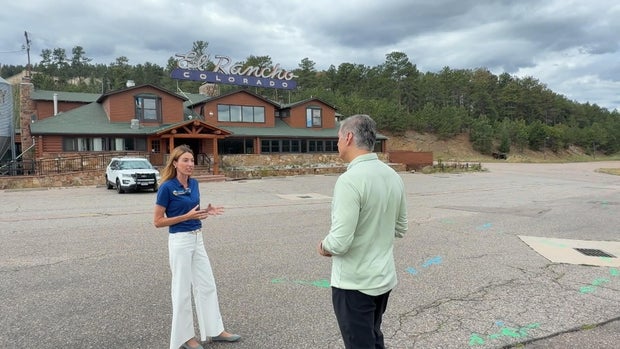
In fact federal protections could be weakened soon.
In mid-July, the federal Advisory Council on Historic Preservation put out what Colorado Preservation Inc. called, "A sweeping rewrite" of the regulations that go with a piece of the National Historic Preservation Act passed in the 1960s called Section 106.
A vote from members of the Advisory Council is expected Friday.
"These revisions would devastate our ability to protect and preserve historic places and would dramatically reduce public participation in federal decisions that affect local communities," said Colorado Preservation Inc. in a statement.
"It takes away the collaboration. It takes away state coming to the table and discussing designations. Certified local governments will no longer have a required say. And everything down the level of what is historic is changing," explained Orrigo Charles.
Colorado offers some state money to help in preservation projects. Gambling money helps fund preservation projects, although it is highly competitive.
"Colorado also has a state historic preservation tax credit. As much as 20% and it's higher in rural areas. These tools can be made to kind of close that gap," Orrigo Charles pointed out.
Preservation, she believes, can stop the loss of history both in in the sense of the physical place, but also in collective memory. The possible loss of the building might be a lesson for local communities all over.
"Really what I would say for local communities to do is really take the time, use this as a case study on how you can make sure that the places that are community landmarks that you truly love have the protections in place that can ensure they'll be there for future generations," said Orrigo Charles.


