All lanes of I-70 reopen in western Colorado after flash flooding, mudslide
All lanes of I-70 reopened Thursday morning in western Colorado, days after flash flooding and mudslide debris forced officials to close the interstate. According to the Colorado Department of Transportation, all lanes in both directions of I-70 reopened between New Castle and Silt.
CDOT said around 7 p.m. Monday, the area became impassable after a massive flash flood brought tons of mud and debris. Officials said the heavy rain and hail overwhelmed the drought-stricken ground, which was unable to absorb the high volume of water. The drainage was covered by two to four feet of mud, rocks, logs and other debris. That flooded I-70 and parts of Highway 6.
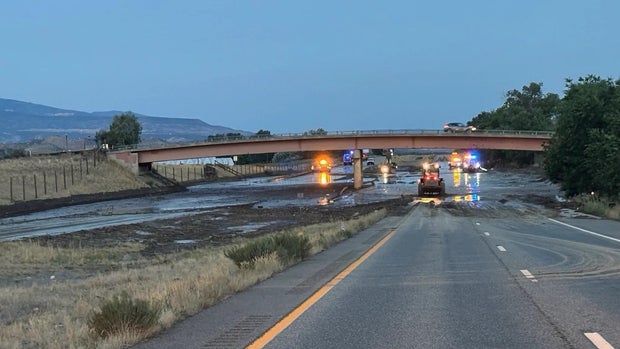
At one point, the mud and debris covered more than 300 yards of I-70 and was roughly seven feet deep at the lowest point in the road.
More than a dozen maintenance personnel were on scene with heavy equipment and travelers were being detoured onto the frontage road and Highway 6, which run parallel to the interstate.
"This was a massive undertaking that required a high level of coordination and movement of people, equipment and material in a short period of time," said CDOT Executive Director Shoshana Lew in a statement. "The ability to open the interstate to move goods, services and everyday commuters across the I-70 corridor is an absolute priority for us and I'm proud of the work the team did here."
CDOT crews worked 24-hours a day to open one eastbound lane at 6 a.m. on Wednesday. By 4:30 p.m. Wednesday, crews were able to open a westbound lane. Crews opened the second eastbound lane at 3 a.m. Thursday and the second westbound lane by 4:30 a.m.
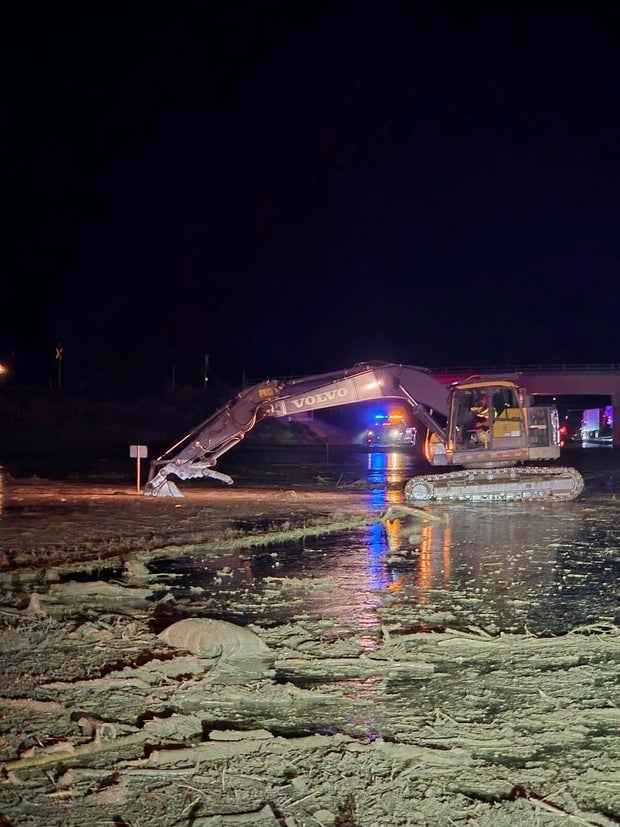
Crews will continue to move debris along that section of I-70, so drivers are urged to observe posted speed reduction and use caution when traveling through the area.
"This clean up project was not just as simple as pulling the drain plug from your bathtub," said Regional Transportation Director Jason Smith in a statement. "Moving a lake's worth of water and tons of debris took significant work. I'm proud of the diligence the team had by first assessing the issues, then creating the strategy to get the roadway open and for their non-stop effort."
Crews used an excavator, front-end loader, vacuum trucks, six plows, two street sweepers, and numerous other support vehicles in the clean up effort.


