Drought could make Colorado's fall colors arrive early and fade fast, CSU expert says. Here's where to go.

Colorado's fall colors season is coming -- but this year, leaf peepers may want to make their plans sooner rather than later.
After a hot and dry summer, drought stress could change not only when Colorado's leaves turn, but also how vibrant the display will be and how long it lasts.
According to John Murgel, an extension specialist in horticulture and natural resources with Colorado State University, trees take their cue to begin preparing for winter primarily from the changing length of daylight.
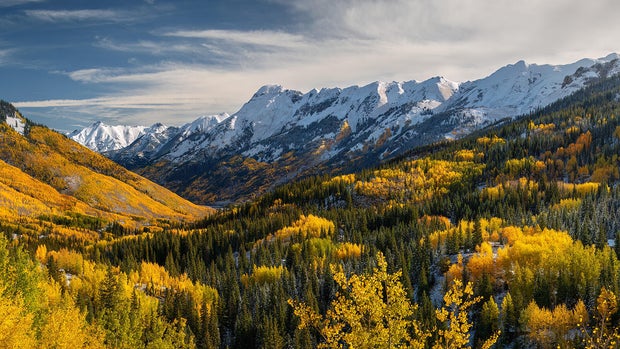
As the days get shorter and nights get longer, trees begin shutting down for the winter. Temperature then helps determine how quickly that process happens and how long the fall color display lasts.
For a healthy tree that has had adequate moisture through the summer, that transition can be gradual and orderly.
"The vibrant colors are the results of healthy trees living their best life," Murgel said.
According to Murgel, as trees prepare for winter, they reclaim nutrients from their leaves and break down chlorophyll -- the pigment responsible for the green color. Once that green fades, the yellow, orange and red pigments that have been there all along become visible. But drought can disrupt that process.
Trees entering fall already stressed by a lack of moisture may not have the resources to make that gradual transition. Instead, once the signal from shorter days arrives, the process can happen quickly.
"We might see a quicker show and it might be a more muted show," Murgel said.
Severe drought stress can also cause leaves to turn brown before they ever have a chance to put on a colorful display.
Murgel said one of the most obvious signs is browning along the edges of leaves that gradually moves toward the center. Murgel said drought-stressed trees can also drop leaves outside of their normal fall dormancy process. That is one reason some trees, particularly maples along the Front Range, can begin showing red leaves as early as August. That early color isn't necessarily a sign that the tree has decided to enter fall early. Instead, stress is forcing the tree to shed some of its leaves.
Aspens are among Colorado's most iconic fall-color trees — and unfortunately, they are also particularly sensitive to hot and dry conditions. Aspens naturally thrive in cooler environments with moist soils, often at higher elevations and on north-facing slopes.
"When it's hot and dry, we are really pushing them out of their comfort zone and that can result in a less vibrant fall display," Murgel said.
Despite the drought, Murgel doesn't expect Colorado to completely miss out on its annual fall show.
Instead, the biggest difference could be timing and longevity.
Murgel's advice for leaf peepers: don't wait.
Because stressed trees can move through the transition more quickly, waiting an extra week could mean missing the best colors.
"Don't say, 'I'll go next week,' because by then it might be over," Murgel said.
Where could you find the best fall colors? One strategy is to follow the water. Areas that received more precipitation through the summer may have healthier, less-stressed trees -- and potentially a better fall color display.
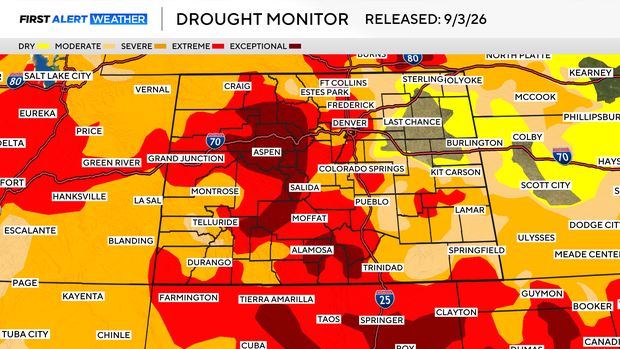
Murgel points to areas including Vail, Teller County and locations west of Denver as places that have received roughly 4 to 5 inches of precipitation since the beginning of July.
By comparison, Crested Butte has received less than 2 inches during that same period.
That doesn't guarantee what the colors will look like, but Murgel said precipitation can be a useful tool for identifying areas where trees may have experienced less drought stress.
So, if you're deciding where to go this fall, consider checking a precipitation map from the Colorado Climate Center and comparing it with a fall-color tracker.
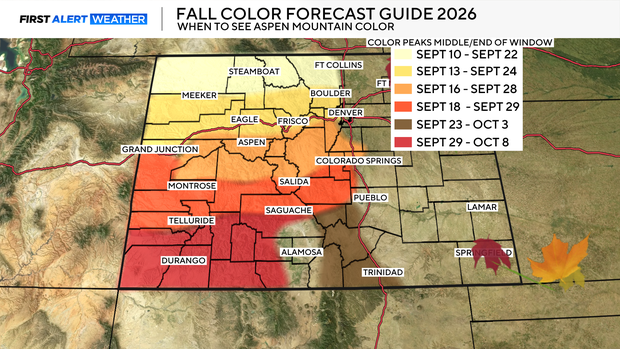
Colorado's dramatic elevation changes are actually an advantage for leaf peepers. Trees at higher elevations typically begin changing sooner, while lower-elevation trees follow later. That creates a longer overall fall-color season across the state — even if individual trees may have a shorter peak.
The ideal conditions for a long-lasting display are relatively calm weather, with cool days and cool -- but not bitterly cold -- nights.
This year's drought may not cancel Colorado's fall color season, but it could make it more fleeting.
Watch for the first signs of changing leaves, then be ready to go.
As the leaves begin to change across Colorado, we want to see what you're seeing. Send CBS Colorado your best fall colors photos by using the QR code below or by clicking here.