Low water levels at Colorado's Dillon Reservoir force early marina closures

Dillon Reservoir, the state's largest reservoir in the Denver Water system, is running low. That's forcing boat ramps to close earlier than usual and raising concerns about water supply for the immediate future of the reservoir.
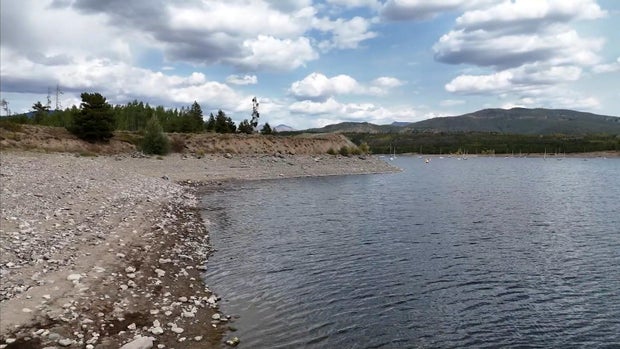
The reservoir in Summit County is currently 86% full, compared to 95% at this time last year and below the historic average of 98%. The reservoir's water elevation is at 9,005 feet, about seven feet under the 30-year seasonal average.
Frisco Bay Marina Manager Logan Snyder said water levels have been dropping one to three inches per day since late June, even with the recent onset of storms.
"There's a lot of folks that are bummed out that the season's ending a little bit early," Snyder said. "It's kind of a blow to see it go this low."

This weekend marks the last chance for deeper water boats to exit the reservoir before ramps close roughly a month ahead of schedule.
Denver Water spokesperson Todd Hartman said a combination of factors drove the drop: weak summer monsoons, low inflows and heavy demand downstream.
"All that dry weather on both sides of the (Continental Divide) means less water going into it, and it means we're pulling more water out of it," Hartman said.
Denver Water also points the finger to the South Platte River system, which also saw added stress this summer as farmers and ranchers with older water rights called for water deliveries. At the same time, construction at Gross Reservoir in the foothills west of Boulder limited how much Denver Water could draw from that system.

"Everyone's thirsty," Hartman said. "We really do make every effort to pull from our Front Range supplies and leave that water in Dillon to the best of our ability."
Dillon Reservoir, with a capacity of 257,000 acre-feet, is considered the workhorse of Denver Water's system, providing both storage and recreation. Officials said they typically aim for 9,012 feet in elevation by Labor Day but fell short this year.
With the boating season cut short, officials and residents alike are hoping for relief in the months ahead.
"We're unfortunately in a position where we are going to be kind of doing the snow dance and hoping for a big snowpack and a wet spring to help fill it back up."