New Denver elevator inspection program called "money grab" by private contractors

The Denver Fire Department has begun a new program, conducting elevator inspections in the city in what the department describes as "taking action to address a growing public safety crisis." But a private elevator inspection contractor says the city move will negatively impact elevator inspection companies in what he calls "100% a money grab."
Up until recently, elevator or "conveyance" inspections in Denver were left to private contractors whose inspectors were licensed and trained and the Denver Fire Department oversaw the inspection program. But in September, Denver Mayor Mike Johnston announced that in the face of a massive budget deficit, the inspections themselves would be taken over by the Denver Fire Department with an aim of raising another $2.1 million per year.
Johnston said the new city service would be a "one stop shop" that "saves the customer time."
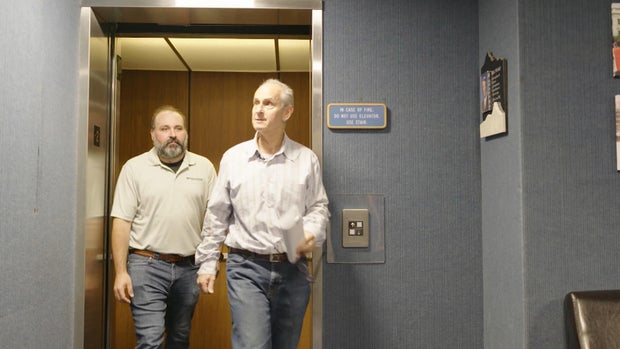
Jared Broach, the Vice President of Inspections for High Sierra Elevator Inspections in Denver, says the city move will likely cost his company at least 25% of their business.
"If not more as it goes down the road. We're probably looking at layoffs or reorganizing our guys. It's definitely going to hurt," he said.
Broach went on to predict, "You're going to see the entire third party inspections collapse in the whole state. Without Denver, there's not enough business for all of us.
"They're stealing from our business," said Broach, "because they didn't have the proper budget."
While the mayor mostly characterized the new inspection process as a plus for the city budget, the Denver Fire Department wrote, "The Denver Fire Department (DFD) is taking action to address a growing public safety crisis caused by prolonged elevator failures and third-party inspection delays throughout the City and County of Denver."
The DFD statement said there has been "widespread community concern and follows multiple reports of residents being confined to buildings for extended periods, especially those who are elderly or non-ambulatory, due to non-functioning elevators that could not be certified for use. By bringing inspections under DFD oversight," said the department statement, "the department aims to reduce delays, improve transparency, and hold conveyances within the City and County of Denver accountable to a higher and more consistent safety standard."
Broach claims the department is misleading the public, as he contends elevator problems in Denver have mostly occurred in older buildings, and are overdue maintenance issues, unrelated to annual inspections.
"I think the city looked at it like, what's the easiest thing we can do that we can say is a safety thing and get the most money for, and that's where they went," said Broach.
He also contends the new city program will end up costing building owners, building managers and developers far more than they have been paying for private contractor inspections.
A cost list sent out by the Denver Fire Department and obtained by CBS suggests Broach may be right. For a newly installed elevator that cost more than $42,000 for labor and materials, the fire department plans to charge the building owner 1.8% of the valuation. For inspection of an elevator alteration that costs more than $33,000, DFD plans to charge 2.3% of the valuation.
"You could get an elevator certified for $1,500," said Broach.
"Now you're looking at some of these buildings will be hundreds of thousands of dollars per elevator," he said.
Michael Stewart, the Denver Fire Department's Conveyance Program Manager, indicated the department currently only has two inspectors licensed to check elevators. He said the department will need to train at least four other firefighters in elevator inspections, at a cost of $5,000 per person.
"The feedback has been mixed," wrote Stewart. He said "responses have varied" from private elevator inspection companies. But he said feedback from general contractors and elevator contractors has been "overwhelmingly positive."
Stewart said since the program began, DFD has completed 15 inspections and has another 16 scheduled.
Broach says the program is "a backdoor tax. This is unfair to our business."