County caseworkers are on the front lines of Colorado child welfare cases
When it comes to child welfare cases, it's the county caseworkers who are on the front lines. They're assessing families, living conditions, and behavior and contributing to decisions that change people's lives. Recently, several Denver County caseworkers were honored by the Colorado Department of Human Services for their commitment to excellent work. Two of those caseworkers sat down with First at Four anchor Mekialaya White to talk about the work they do.
"It was nice to know that I actually had an impact on somebody that they felt the need to reach out to the state to let them know that the work that I was doing with them was really beneficial," said TaWanna French.
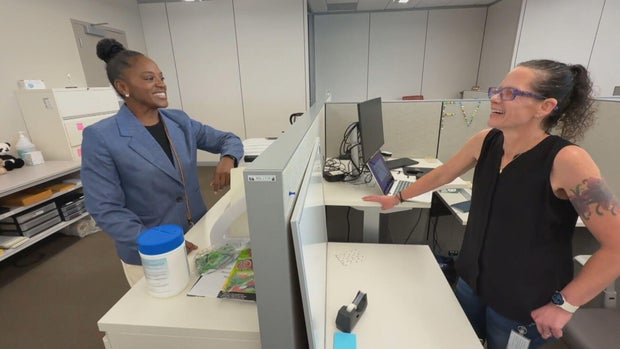
TaWanna French is a social worker who works with foster and kinship families. Kim Smith is an intake worker with Denver Human Service. Both have spent more than 20 years impacting children and families in Denver.
"What I've found doing this work, you're able to see that sometimes they just need that one person to breath that belief in them, and if I can be that person than great," French said.
They both agree that over the years, they've seen big changes in the way the system works.
"I started in the early 2000s and I know at that point in Colorado we removed a lot of kids who didn't need to be removed," Smith said.
Now the goal is to connect families with resources and work with them in the home.
"We've really, I think, done a lot of work around studying the impact of removal, even short term. And so, a lot of those were very short term removals, but they weren't effective because we treated a kid and not the environment," Smith explained.
"What I've found is that treating the family as a whole and not just individuals is where the work really, really happened and the change really, really happened," French added.
Denver Human Services got 13,000 child welfare referrals in 2025. 90% of those cases were able to be resolved with an initial assessment. French and Smith point out that poverty and homelessness may look like abuse, but they often are not.
"I think Colorado does a good job as far as supports and resources in comparison to a lot of other states. There's just a lot of resources out there," Smith said.
"What's the most fulfilling part of what you do?" White asked both caseworkers.
"To be able to see them smile, to see them achieve a level of success for them," responded French.
"Being able to see families succeed and kids be safe and, you know, just being able to support our community is what keeps me going," Smith replied.
It's important to note that in Colorado, a child cannot be removed from their home without the approval of a judge or law enforcement agency, so it doesn't fall to caseworkers along to make those big decisions.


