Colorado River Trail to close as wildlife officials remove invasive fish from Rocky Mountain National Park
In an effort to protect and reintroduce native fish, wildlife officials in Rocky Mountain National Park are closing several popular hiking trails along the northeastern end of the Colorado River this week.
After the removal of non-native fish species like brook trout, National Park Service staff will reintroduce Greenback cutthroat trout, the NPS said in a statement earlier this month. As a result, some areas in the Kawuneeche Valley, including the Colorado River Trail and the Grand Ditch, are expected to be closed through Sunday, Aug. 31.
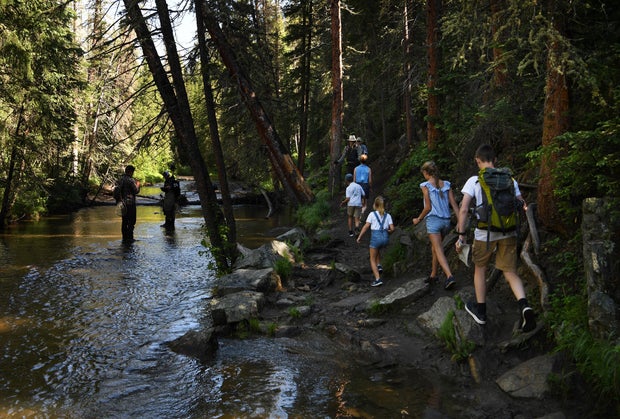
All activities, including hiking and fishing, will be prohibited in those areas during that time. The project, dubbed the "Poudre Headwaters Project," will include adding a piscicide called "rotenone" to the 14.3-mile Grand Ditch system and its upstream and downstream tributaries.
Rotenone is the preferred chemical for this purpose, experts say, as it degrades quickly and poses no known risk to humans or animals other than fish. Areas treated with rotenone could appear red in color and will be marked with signage.
"Do not pick up dead fish, consume fish, or drink water that has been treated with rotenone," national park officials warned.
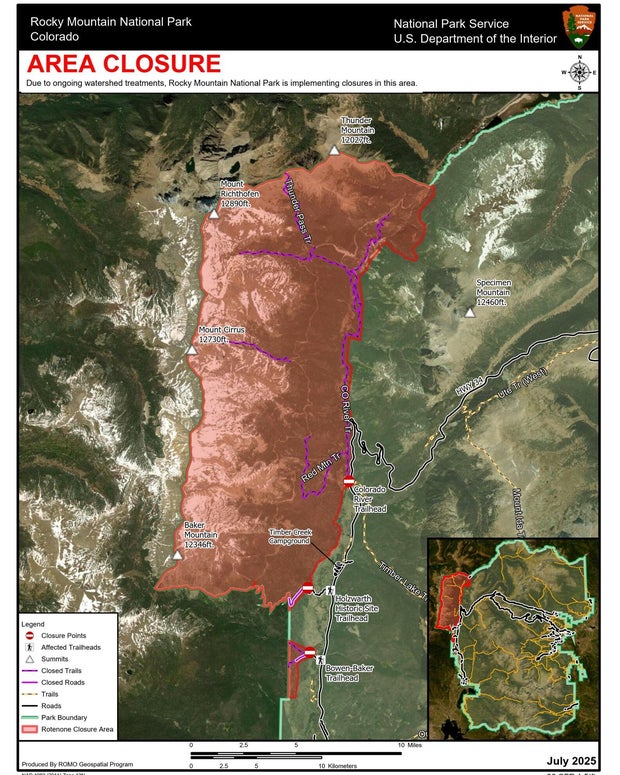
Visitors to the park can still enjoy several areas of the Kawuneeche Valley, including the East Inlet Trail, North Inlet/Tonohutu Trail, Green Mountain Trail, Coyote Valley Trail, Onahu Trail, and Timber Lake Trail. The Holzwarth Historic Site and Harbison Meadows Picnic Area will also remain open.
Fishing will be allowed in all areas along the Colorado River south of the Colorado River Trailhead, including near the Holzwarth Historic Site and Coyote Valley.
"Water in the Colorado River may appear brown in color due to the treatments upstream," park officials say. "This water is safe for people and fish."
The Colorado River is the fifth-longest in the U.S. at 1,450 miles long. It starts in Grand County, Colorado, in the national park and flows southwest through Utah, Arizona, including through the Grand Canyon, Nevada, and California into Mexico, where it empties into the Gulf of California.
The river is the source of intense battles over water rights, water quality, and conservation. Colorado receives about 40% of its water supply from the river and about 10% of all Americans rely on water from the river for municipal and drinking water, according to the U.S. Geological Survey. It also provides water for irrigation, billions of dollars in tourism revenue in and around the national parks it flows through, and electrical generating capacity for millions of Americans.