Funding for Arkansas Valley Conduit close to approval, but rural Colorado towns may not be able to connect
Water quality along the Arkansas Valley in southeastern Colorado has always been something of an issue. Many communities draw their water from the Arkansas River Alluvial, and some from deeper aquifers. Water that comes from the ground brings some of that ground with it. Therein lies the issue.
"From the ground water, we have high amounts of uranium and radium that needs to be treated," said Rocky Ford mayor Duane Gurulé.
While Rocky Ford and other municipalities treat their water to bring those contaminants within safe levels, it's an expensive process and regulators at the state and federal levels keep a close watch.
"Many of the water companies, Rocky Ford included, are under compliance orders, and that's been in place for decades. Part of that compliance order is what is the solution you're going to implement."
To put things simplistically, there are two possible solutions available to these water districts. The first is to invest in better water treatment technologies so you can clean the water you draw from your current wells. That's the approach that La Junta took. In 2004, they invested in a new reverse-osmosis water treatment plant. It's not a cheap solution by any measure, but it allows La Junta to deliver very clean water to their customers. But there are drawbacks in addition to the high cost of building the system.
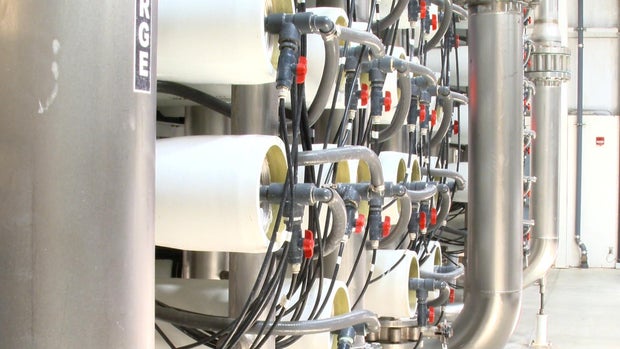
"It all comes back to the waste stream on the back end," said Tom Seaba, La Junta's director of water and wastewater. "Our customers never have to worry about the quality of water they're receiving, but we have to worry about the regulations as to what we do with the wastewater after process."
All the minerals La Junta's filters clear out need to be discarded somehow. They currently blend them with their sewer wastewater and pump that water back into the Arkansas River.
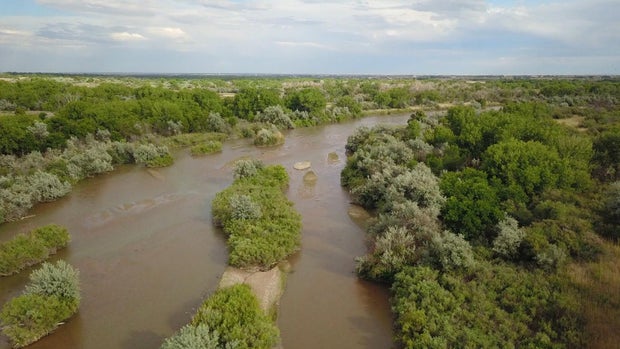
Regulations limit the levels of concentrate that can be reintroduced into the river. But the benefits outweigh drawbacks, and La Junta views themselves as a source of quality water not only for their customers, but other nearby communities.
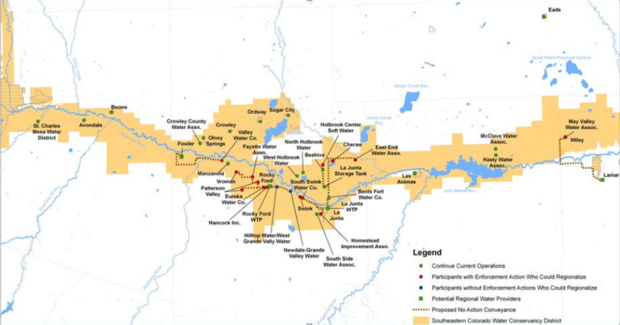
"It was built with the idea that we could hopefully be a regional provider to some of the smaller systems and communities," Seaba said.
Seaba notes that they share their water with four other districts. Which brings us to the second solution -- get your water from somewhere else. For the past 60 years, "somewhere else" has been, if you'll pardon the pun, a pipe dream. In this case, that pipe is the Arkansas Valley Conduit, or "AVC." It's part of the much broader Fryingpan-Arkansas Project, a water infrastructure package signed into law by President Kennedy in 1962. The AVC is one of the last pieces of that project.
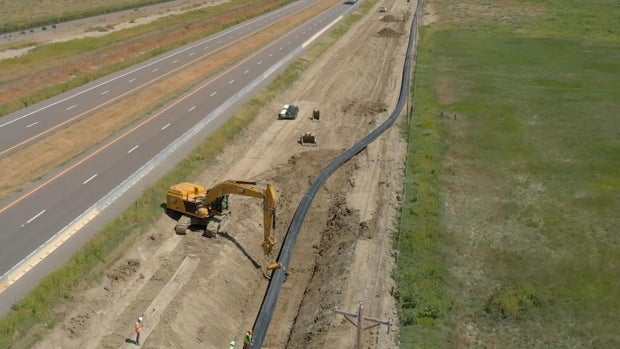
Construction began in 2020 after President Trump and Gov. Jared Polis approved both federal and state money to begin to pay for it. Water districts would individually provide additional funds. That's where things hit a snag. The rural Colorado water districts are not rich. They don't have millions of dollars, so they need to spread those payments out over a long period of time.
In 2025, Rep. Lauren Boebert, who represents Colorado's 4th Congressional District, introduced a bill to ease the financing burden for these rural districts to make it easier for them to fund the pipeline. It passed unanimously. But despite President Trump's support of the project during his first term, he vetoed the legislation in his second term, citing increased cost estimates. Those increased costs impose a significant hardship on local municipalities. La Junta's mayor Joe Ayala says the cost estimates have more than doubled.
"Money is a big deal in what's holding it up. When I became mayor, we were looking at around $600 million. Now the estimates are saying close to $1.3 billion -- with a "B."
Politics, Ayala says, is a big stumbling block.
"Anytime you get politics involved, it gets really hard to get things done and across the finish line. The change of stance from the White House frustrated Boebert as well.
"President Trump was the one who made more than double the investment in that project had ever received" during his first term, she said in an interview with CBS Colorado. "After that was unfortunately vetoed, I realized I had to play the worst swamp game there is and that's avoid single-subject legislation and get something into a bigger, must-pass piece of legislation."
Boebert included her Arkansas Valley Conduit bill in the 2026 Agriculture appropriations bill. That bill passed out of the house in early June and is expected to be signed into law before the August recess. She says the president originally supported clean water for southeast Colorado and she is "going to help the president keep his promise."
Nothing is that easy, though. Even with the approved funding for the pipeline itself, the municipal water districts have costs associated with the pipeline that the funding does not cover.
"Right now, our infrastructure is built for treating groundwater," said Gurulé. "We would need to put in infrastructure that could treat the surface water. That's pretty much anything from the conduit, the spurs, and getting into our end delivery. The municipalities are responsible for those tier three costs."
That's a tall order in one of the poorest counties in the state. La Junta's mayor says he ran the numbers, and expects water bills to triple.
"The conduit's a great idea. We support it, but it's got to be economically feasible as well. If it's going to be at a range that's too high for us, I don't know how we can say yes even if we wanted to."
La Junta's reverse-osmosis plant gives them the luxury of choice. For Rocky Ford, it's not as easy. Gurulé ponders "if our decision is to keep costs low and have low, possibly hazardous drinking water versus higher cost and higher quality and safe drinking water, I know a lot of the community prioritizes health and life over costs.
"We all need water to survive. We know it's the lifeblood of everything, so I think that's a really good question to consider."


