Colorado trucking school ordered to shut down as federal crackdown targets fraudulent practices

A federal agency coalition called for at least 270 commercial truck-driving training schools across the country to shut down on Monday, amid reports of fraud. The U.S. Department of Transportation announced that 110 CDL training schools were being ordered to shut down over a lack of English proficiency.
The agency also recommended shutting down more than 160 additional schools over unsafe training practices. At least one Colorado school was among those.
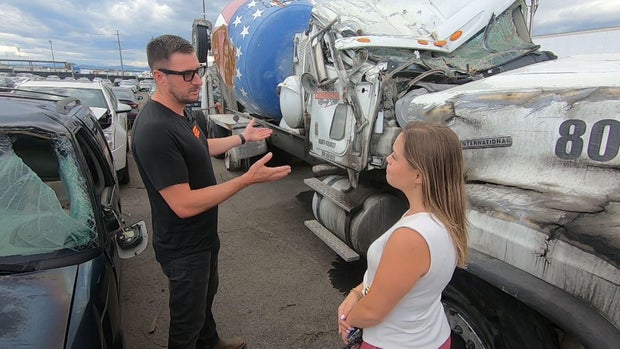
As the founder of truck rescue company Mountain Recovery, Charlie Stubblefield says some of the drivers he encounters have trouble understanding basic instructions about their trucks, raising questions about how well some commercial drivers are being trained before getting behind the wheel.
"I see that every single day, where drivers are out there, they can't communicate with me on the side of the road. They have no idea what's going on. I talk to them about basic functions of their truck. No idea what that's about. You know that language barrier," Stubblefield said.
Stubblefield says his crews with Mountain Recovery cleared a truck from I-70 last year after he says the driver blew past two runaway truck ramps.
"Something of this size rolling over. It's giant, right? It's loaded with concrete. Like this is a big deal," Stubblefield said.
He said drivers sometimes miss critical warnings along the mountain highway.
"At Exit 205 in Silverthorn, where there are big signs that say, 'Hey, if you lost your brakes, do not take this exit.' And we get trucks that take that exit, and then they end up in an intersection rolled over on top of vehicles," Stubblefield said.

Now, the federal government is cracking down on commercial driver training schools across the country.
Greg Fulton with the Colorado Motor Carriers Association said the federal findings are consistent with problems he has seen in the industry.
"In many cases, they weren't actually having drivers behind the wheel. You know, a certain amount of time is required. They weren't actually truly testing them to make sure they were clearly qualified to go out on the road," Fulton said.
Stubblefield said he's noticed similar issues in the industry as he works with new drivers.
"There's definitely certain schools that we avoid. Yeah, for sure. It's because of, you know, pumping people through. It's because of lack of information. It's because of the equipment that [drivers are] training on that's old and antiquated," Stubblefield said.
The concern is bigger on Colorado's mountain highways, where heavy-weight commercial trucks traverse at times in severe weather.
"It's like being an 80,000-pound missile that could be down that roadway, and you've got to be very sharp. You know, make appropriate actions within a short period of time," Fulton said.
The crackdown involves more than the Department of Transportation; the Department of Homeland Security is also involved.
The Trump administration says the agencies' involvement will bring more resources to the effort. But similar immigration related actions have raised concerns among advocacy groups in the past.
Additionally, more than 20 states, including Colorado, recently sued the Trump administration over its demand for personal information on 17 million commercial drivers, but a judge has temporarily blocked that request.
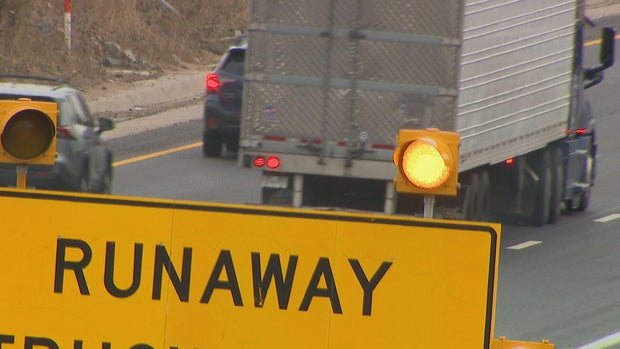
For Colorado drivers, the issue is playing out on a familiar stretch of road where tow crews like Stubblefield's say they see the consequences when commercial drivers aren't prepared for the demands of the job, pushing for safety.
"It's not in my mind a political thing. It's not a red thing, it's not a blue thing, or anything in between. It is simply, hey, we speak a certain language, and the drivers that are out there, they have to speak that language too," Stubblefield said.