Federal government issues emergency order defying Colorado's plan to shut down coal power plant
The tug of war over energy production between several states and the federal government continued Friday when the U.S. Department of Energy renewed an emergency order to keep a Colorado coal-fired power plant operating months after it was scheduled to shut down during a transition to clean energy sources.
The DOE first ordered Unit 1 of the Craig Generating Station in northwest Colorado to remain operational in December of 2025. It did so two more times in 2026 to keep it running, and then again Friday.
The most recent order directs the six utilities that co-own and operate the facility -- Tri-State Generation and Transmission (primary operator), Platte River Power Authority, PacifiCorp, Xcel Energy, Salt River Project, and Southwest Power Pool -- to continue Unit 1's power generation through the end of the year.
Colorado belongs in a northwest power region which includes Colorado, Idaho, Montana, Oregon, Utah, Washington, and Wyoming. In the most recent DOE order, Energy Secretary Chris Wright cited a 2024 long-term reliability assessment. That report claimed "'[e]nergy variability is greater in the Northwest" than other regions "due to the large share of wind and hydro in the portfolio.'" Supply chain issues have delayed the construction of battery energy storage systems key to the reliability of those alternative energy sources, according to the report that Wright cited.
Meanwhile, electricity demands continue to rise, Wright explained. The NERC's 2026 State Of Reliability report, which Wright also referenced, found large load growth is increasing the system's vulnerability: "[D]ata center and computational loads continued emerging as a major reliability consideration due to their scale, speed of development, and unique operational characteristics."
Prior to the first emergency order last December, President Donald Trump had issued three executive orders, one which declared the state of the nation's electrical grid a national emergency.
"Without sufficient coal-fired baseload power, the United States will lack the stable electricity required to support defense installations, industrial expansion, and the high-energy demands of emerging technologies, such as [AI]," Wright says Trump wrote to him in a memo concerning that particular executive order.
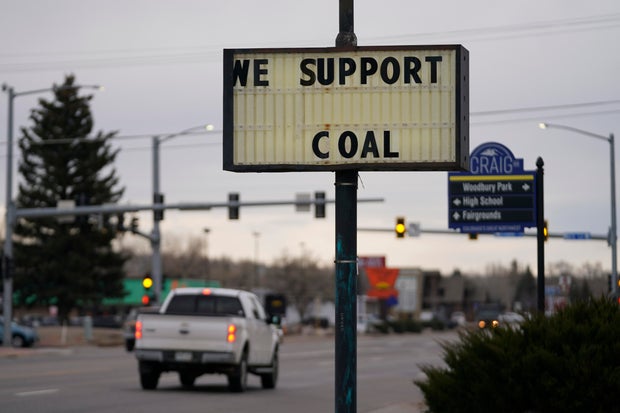
The recent federal directives contradict previous instructions given to the Colorado plant's operators. Craig Unit 1 was scheduled to be retired on Dec. 31, 2025, following the Colorado Air Quality Control Commission's passage of the Regional Haze Implementation Plan in 2016. According to the commission, the U.S. Environmental Protection Agency approved that state plan in 2011.
Meanwhile, Tri-State, in a press release, stated its own studies indicated adequate resources would still exist after Unit 1's planned retirement, allowing the Tri-State system to maintain reliability.
Unit 1 broke down 12 days before its planned retirement due to a mechanical failure of a valve, according to Tri-State. Extra measures were taken to bring it back online at the DOE's request.
"Tri-State has a policy of 100% compliance, and we will work with Unit 1 co-owners, and federal and state governments to determine the most cost-effective path to that end," said Duane Highley, Tri-State CEO, at that time. "We are continuing to review the order to determine what this means for Craig Station employees and operations, and the financial impacts. As a not-for-profit cooperative, our membership will bear the costs of compliance with this order unless we can identify a method to share costs with those in the region. There is not a clear path for doing so, but we will continue to evaluate our options."
Repairs to Unit 1 were completed Jan. 20, per Tri-State.
Unit 2 and Unit 3 of the Craig Generating Station are still scheduled for retirement in 2028.
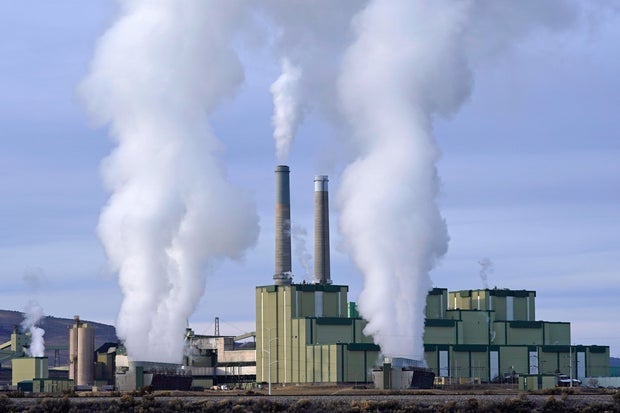
The Colorado Attorney General's Office filed a lawsuit in March against the DOE's first emergency order. The lawsuit, filed in the U.S. Court of Appeals in Washington D.C., claimed the order "tramples on the state's authority" to manage its power resources, and was an abuse of emergency orders.
The case remains unresolved.
"DOE keeps renewing the order to keep the Craig unit open, and we've challenged each order," wrote Lawrence Pacheco, spokesperson for the Colorado AG's Office, in an email to CBS Colorado. "The Energy Department's order keeping the Craig coal plant open is an unlawful abuse of the department's emergency authority and it should be canceled."
Pacheco pointed to a ruling by that same court earlier this month. In that ruling ruling, the appelate judge called the DOE's emergency order to keep a Michigan coal plant going "disruptive" to complex local and state planning processes.
"The Department's reading of 'emergency' invites frequent federal interventions that are unsupported by the statute and threaten the stability of the energy market," as stated in the Court of Appeals's Sept. 11 ruling. "By directing a generator approved for retirement to remain operative while effectively walling it off from planning and market frameworks, the Order challenged here interferes with
ordinary methods to assess a region's true generation capacity and distorts price signals that otherwise prompt appropriate
capacity investments. DOE's use of its expansive interpretation of 'emergency' to prevent planned retirements of generators
slated to close, for example, will likely discourage development of needed new resources by artificially lowering capacity market prices and destabilizing those markets."
In 2019, Colorado passed a law to make a "moral commitment" to a "just transition" for coal plant workers and their communities toward clean energy, as stated in a press release from the governor's office. The Office Of Just Transition was created, and assisted in acquiring more than $1 million in state assistance for the City of Craig and Moffat County.
Tri-State, too, promised in 2024 to provide $70 million in assistance to its workers and their communities.
With emergency orders in 2025, the DOE directed a dozen coal-fired power plants to remain operational in 10 states. That includes Units 2 and 3 of the Comanche Generating Station in Pueblo. The Comanche 3 unit suffered a mechanical failure in August 2025 and required major repairs. It resumed operation earlier this month. Its planned for retirement in 2030, Unit 2 for retirement in 2028. Comanche Unit 1 was retired in 2022.
Only four coal plants were retired last year, according to DOE, "the least in 15 years."


