Some of Colorado's reservoirs aren't full due to low snowpack, and now they'll start losing water

There's a chance reservoirs in Colorado have seen all the water collection they're going to get, and from here on out, Colorado will start sucking the water away from them for the rest of the year.
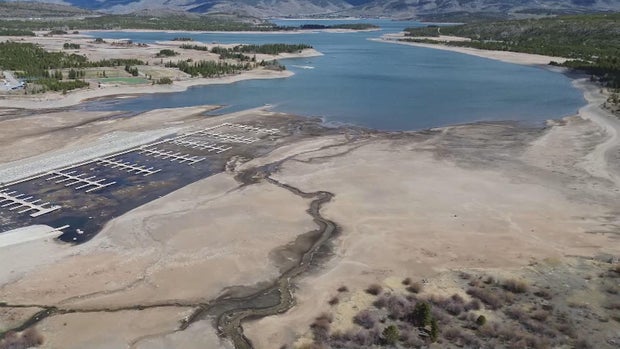
Colorado's snowpack is sitting at just 24% of normal statewide, with headwaters in Summit County only slightly higher at 27%. A recent storm gave a small boost, but not nearly enough to change the bigger picture, according to Denver Water. At the same time, its overall reservoir system is about 80% full, with Dillon Reservoir around 76%. That might paint a picture that we're on our way up to 100%, but that's the thing: the reservoirs might not get much higher.
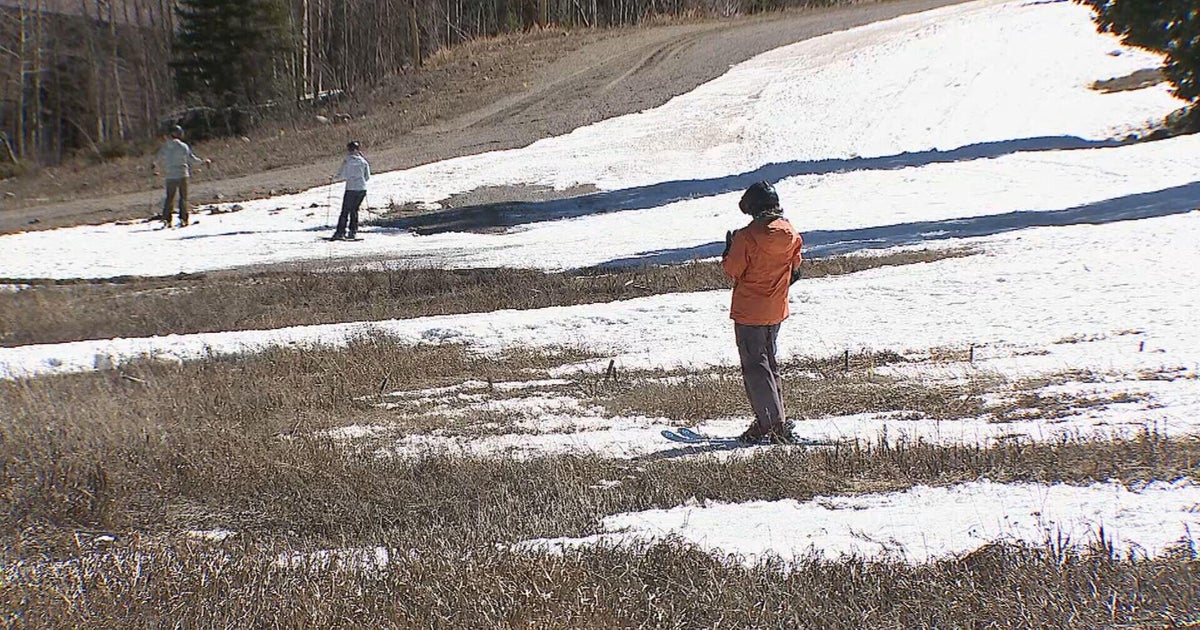
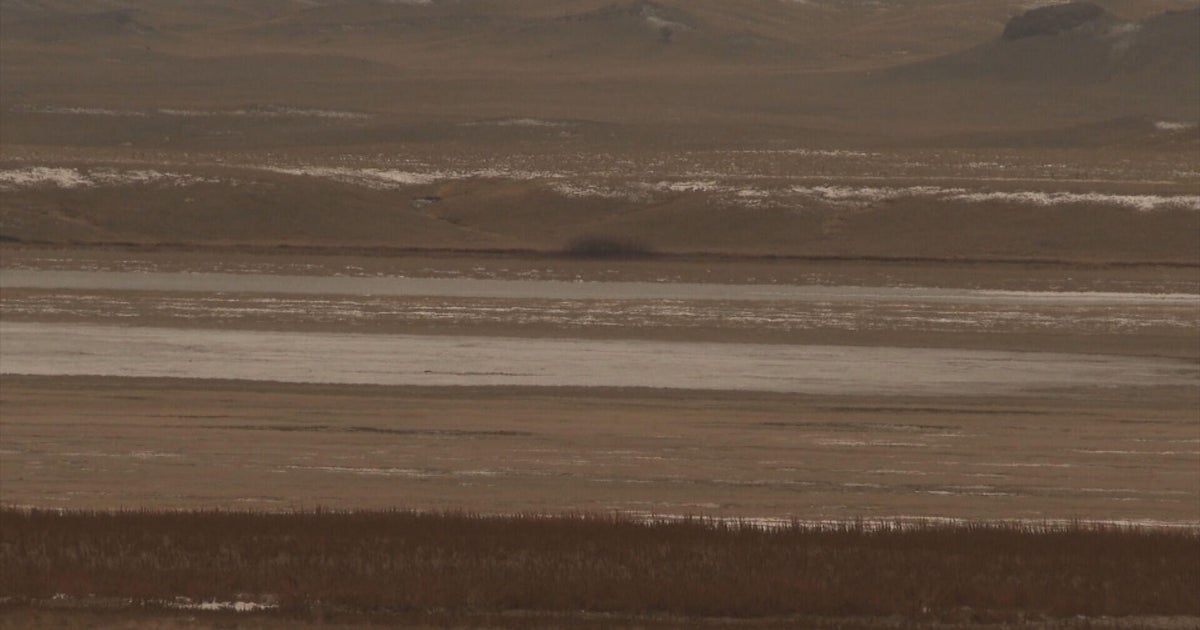
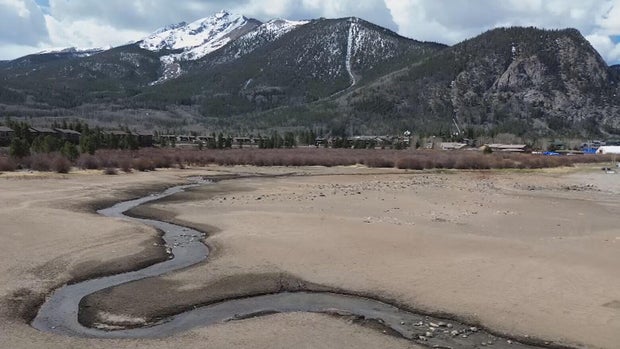
At Dillon Reservoir, areas that are typically underwater at this point in the season are dry. Denver Water told CBS Colorado that it's the culmination of a few factors: low snowpack, dry temperatures, and lack of moisture overall. Denver Water's Nathan Elder said the recent snow barely moved the needle on our record-breaking low snowpack.
"A lot of the areas are almost completely melted out," Elder said. "At some of our snow measurement spots, there's no snow left, and it should be at its peak right now or approaching that peak."
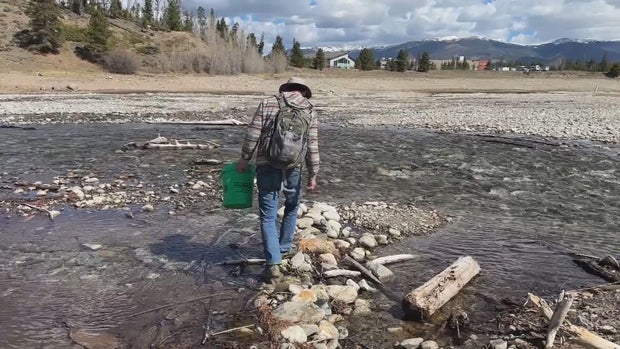
"We've never had a zero-snow measurement in April, and we just saw that," he said. "This is by far the worst snowpack we've had here in Colorado."
That ties into our reservoirs; snowpack typically supplies the vast majority of the state's water stored in places like Dillon.
"Eighty to 90% of our water comes from that snowpack," Elder said. "This will be a year where we don't fill reservoir storage, and instead we're drawing on it."
Denver Water pointed towards warm temperatures in March, which accelerated melting weeks earlier than normal, cutting short what little accumulation there was. Now, water managers are already thinking ahead and hoping Coloradans are too. "Whatever you can do to conserve is going to be extremely important," Elder said. "Let your grass in your lawn stay dormant. Keep your sprinkler systems off until May 15."
There is still a chance that spring rain could help improve conditions, but experts say it would take an aggressively wet stretch to make a meaningful difference. Still, Denver Water points out this is the exact reason Colorado has reservoirs in the first place, for years when we'll desperately need that stored water.