Colorado reports 90 cases of cyclospora this year: Here's what health officials want you to know

As health officials investigate a growing multistate cyclospora outbreak, Colorado public health leaders say there is no evidence of an increased risk from produce sold in Colorado.
The Colorado Department of Public Health and Environment has recorded about 90 cyclospora cases so far this year, according to State Epidemiologist Dr. Rachel Herlihy.
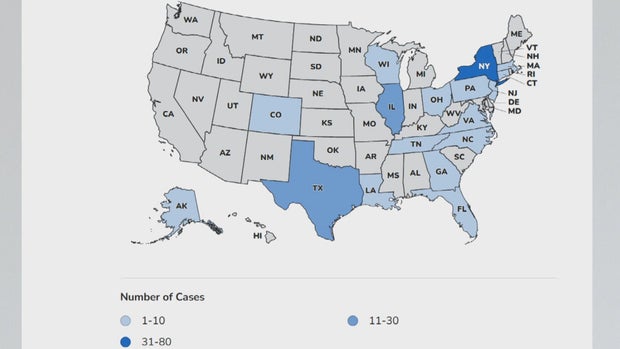
"We typically annually see about 167 cases of this infection in the state," Herlihy said. "We do typically see more infections due to cyclospora in the spring and summertime."
Cyclospora is a parasite that causes an intestinal infection known as cyclosporiasis. Symptoms typically begin about a week after exposure and commonly include watery diarrhea, stomach cramps and nausea.
"It is not pleasant, that's for sure," Herlihy said. "But we don't see high hospitalization rates associated with this particular infection."
The parasite is most often spread through contaminated food or water. Produce such as leafy greens, herbs and berries has been linked to previous outbreaks.

"This particular parasite can be difficult to wash off of produce," Herlihy said. "It can stay attached to greens or herbs or berries, even after you wash them."
The warning comes as federal investigators work to identify the source of a growing outbreak affecting several Midwestern states. While the CDC's public dashboard currently lists only 1 to 10 Colorado cases, Herlihy said those numbers are outdated because they only include reports through the middle of June.
"The outbreak that is occurring outside of Colorado really appears to have started to increase significantly in late June," she said. "We certainly expect the CDC numbers to go up because the state health department numbers that are not yet reported on the CDC website are much higher."
Reba Pousma, who lives in the Denver area, has been suffering from symptoms like the parasite for a week. A doctor she spoke with believes cyclospora could be the cause of her illness, though her source of exposure has not been confirmed.
"It's definitely different from regular food poisoning," Pousma said. "I wouldn't wish this on my worst enemy."
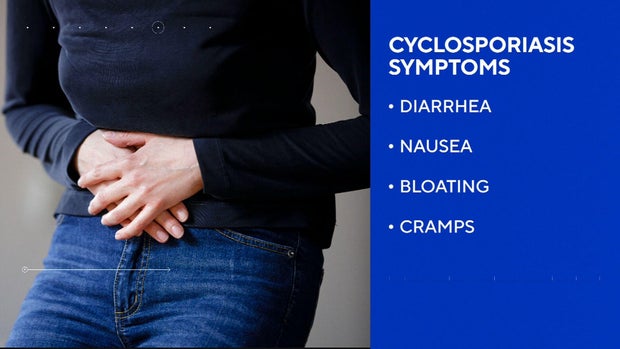
She believes her symptoms started after eating a salad last week. She's still battling stomach cramps, exhaustion and relentless trips to the bathroom.
"I'm on day five now of going to the bathroom over 40 times a day, and nothing has been solid," she said.
She posted about her experience online, and the video has drawn thousands of comments, many from people who say they're experiencing similar symptoms.
"There's a lot of people commenting that they're experiencing the same symptoms," Pousma said. "I think some people are worried, and some people are like, 'Oh my gosh, this is me too. Thankfully, somebody's talking about it.'"
Unlike the Midwest outbreak, Herlihy said most Colorado cases reported so far this year have been linked to international travel, not food purchased or consumed in Colorado.
When someone tests positive, CDPHE investigators conduct detailed interviews about where they traveled, what they ate, restaurants they visited and grocery stores where they shopped to help identify possible sources of exposure.
Testing for cyclospora requires a stool sample, typically using a PCR test that detects the parasite's DNA.
Most people recover without treatment, but Herlihy said symptoms can linger for weeks and may come and go. Antibiotics can shorten the illness, particularly for people at higher risk, including young children, older adults and those with weakened immune systems.
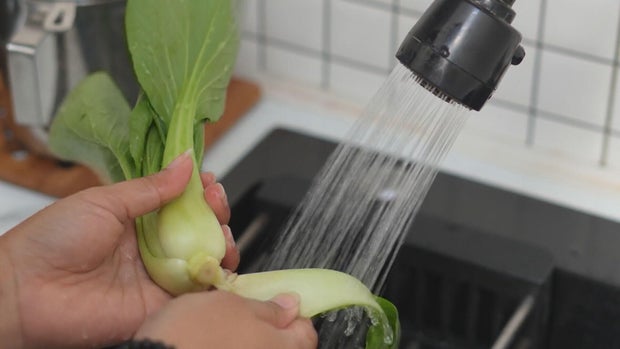
For now, CDPHE says Coloradans don't need to avoid fresh produce but should continue to follow safe food-handling practices by washing produce under cold water, washing their hands before and after handling food, scrubbing firm fruits and vegetables when possible, and refrigerating cut or cooked produce promptly.
"There is no reason to believe that there's any increased risk of exposure to cyclospora from eating produce in Colorado," Herlihy said. "But it is always a good idea to thoroughly wash produce."
For more information, visit the CDC website.


