A Colorado father's loss inspires AI technology that could change pregnancy care

In the basement of his Colorado home, Robert Bunn types commands into a computer he built himself.
"Looks like everything is running great," he said.
Bunn, with a hint of humor, says his setup at his house in Littleton is a bit of a cliché.
"What respectable startup hasn't started in a basement?" he joked.
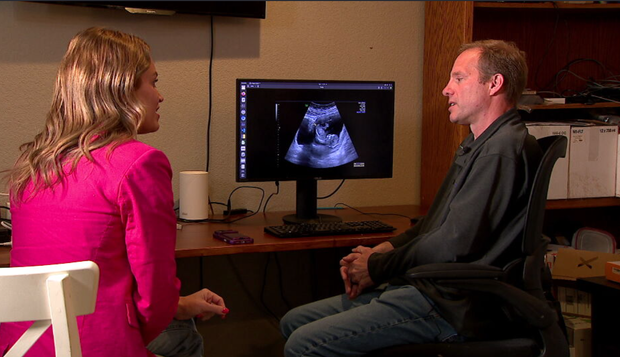
Bunn is the founder of Ultrasound AI, a company he has spent more than a decade building around a central idea: Using artificial intelligence to better predict when a baby will actually be born and to identify pregnancies at higher risk for premature delivery.
"A lot of doctors have said this is going to completely change their clinical practice," Bunn said.
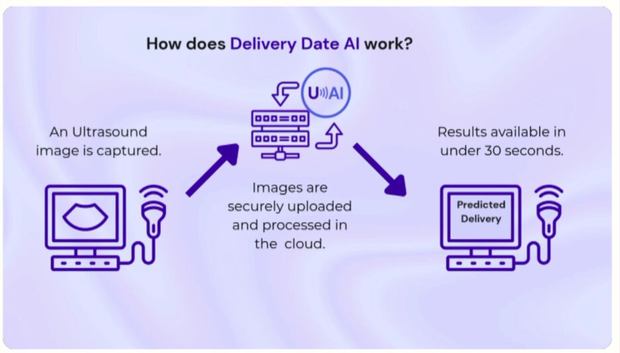
The technology he developed, called Delivery Date AI, analyzes standard ultrasound images to estimate when a baby is likely to arrive, rather than relying solely on a traditional due date based on a 40‑week pregnancy. Bunn says the approach could give doctors an earlier warning when something may be wrong.
"I did a bit of research and found the problem with premature births and miscarriages is their surprise," he said. "By the time they're happening, it's too late to do anything about them. I got to thinking, if doctors had weeks or even months of warning, they might be able to change the outcome of the situation."
Premature birth is a widespread problem. One in 10 babies is born prematurely in Colorado each year, according to the March of Dimes. Babies born too early face higher risks of serious medical complications due to underdeveloped organs, and preterm birth is among the leading causes of newborn death in the United States, according to the National Institutes of Health.
Bunn explained that Delivery Date AI was trained using millions of anonymous ultrasound images from the University of Kentucky, paired with information about how long each pregnancy lasted. Over time, the system learned to identify patterns associated with pregnancy length – including abnormalities in a mother's uterus and ovaries – that doctors hadn't previously determined.
"Now they can identify those women who would've been classified as low risk and get them the care they need now," Bunn said. "That improves outcomes, instead of having a surprise, spontaneous preterm birth."
After years of testing and refinement, Delivery Date AI can now predict a delivery date with a relatively small margin of error.
"Basically, within eight days," Bunn said. "Which is shocking."
For Bunn, the work has always been deeply personal.
"It was a lot of work. There was a lot of struggling," he said, fighting back tears. "It's actually emotional when I think about it."
While trying to grow their own family, Bunn's wife, Nicole, experienced multiple miscarriages, including back‑to‑back losses.
"Those losses change you," Nicole said. "You're not the same person afterwards. You're not calm, cool, collected, 'this is a great pregnancy,' mom. Every single thing stresses you out and causes anxiety."
That fear – and the uncertainty that followed – became a driving force behind Robert's work, and a source of hope for Nicole.
"I just feel like if more people can have access to this, they can have those clear answers," she said, "or at least guidance, or some ideas as to what could be causing it."
Delivery Date AI is already being used in parts of South America. Two months ago, the technology received approval from the U.S. Food and Drug Administration, allowing it to be used by doctors in the United States.
Bunn stresses the tool is not designed to replace doctors, but to support them.
"Any way AI can help expand the capabilities of doctors and make them more efficient, I think, benefits all of us health‑wise," he said.
He says many doctors believe the technology could be especially valuable in rural areas or so‑called medical deserts, where pregnant patients may live hours away from an obstetrician or hospital. More accurate delivery predictions could help ensure patients receive timely care.
"Especially in Colorado, where there's a lot of rural areas, and there's a lot of medical deserts and obstetrics deserts," he said. "We can make sure these women who live in these rural areas are getting the care they need and are where they need to be when they need to be there to have the maximum possible chance of success."
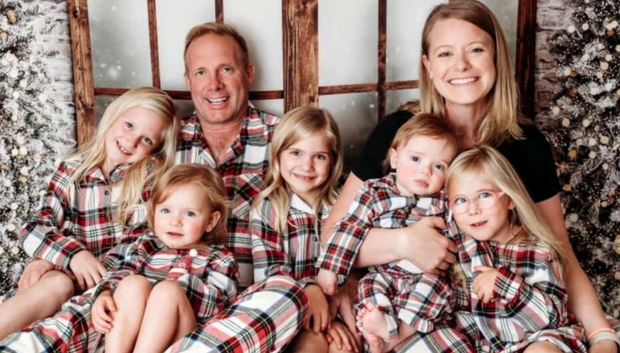
Today, Robert and Nicole are parents to five healthy children. They say the ongoing work and technology being developed by Ultrasound AI gives meaning to what they lost.
"I think there's a little relief in knowing my pain maybe doesn't have to be everyone else's pain in the future," Nicole said.
Robert echoed that sentiment.
"Sometimes that past is what's necessary to make you try to change the future," he said, "and how the future plays out."