Colorado court orders new training for Immigration and Customs Enforcement agents after "unlawful warrantless arrests"
On Tuesday, a Colorado district court judge ruled that Immigration and Customs Enforcement has continued to make unlawful warrantless arrests in the state despite an injunction and has ordered them to take additional training.
The 60-page decision requires ICE to develop and conduct training on making arrests in compliance with federal law. The training must be completed within 45 days and forbids ICE agents from conducting warrantless arrests unless they complete it within that time. It also dictates that agents hired after May 12 cannot make warrantless arrests until they complete the training.
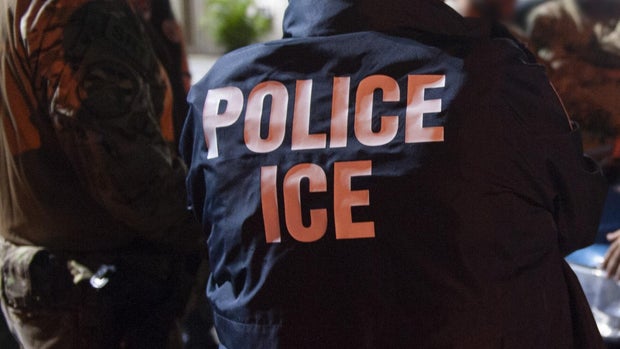
A preliminary injunction was granted in Nov. 2025 requiring ICE to provide documents to the ACLU of Colorado to ensure it does not conduct warrantless arrests without first determining the person's flight risk. The court determined that agents have continued to make unlawful warrantless arrests after that injunction was granted.
"This is a profoundly important decision for the rule of law and the people of Colorado," said Tim Macdonald, legal director for the ACLU of Colorado. "The court made clear that ICE is not above the law and cannot continue to violate the law. The decision ensures that we can monitor ICE's behavior going forward and continue to work to prevent unlawful warrantless arrests across the state."
ICE is now required to provide its new training materials to the ACLU of Colorado. It has also been ordered to provide additional documentation for warrantless arrests and arrests with field warrants. The court ordered that a list be provided that includes the names and countries of origin of those arrested, their A-number, the date they were arrested, and whether the arrest was warrantless.
CBS Colorado reached out to the Department of Homeland Security and received this response: "ICE has authority for lawful arrests under 8 USC 1357. Law enforcement officers use 'reasonable suspicion' to investigate immigration status and probable cause to make arrests consistent with the Fourth Amendment to the U.S. Constitution. The Supreme Court has already vindicated us on these practices."


